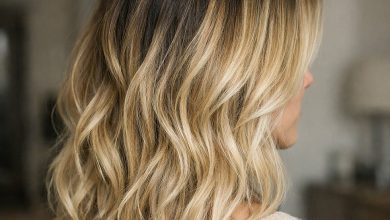
Simple Gray Blending is a technique that weaves cool, silver strands into your natural base for a seamless, grown-in look. Curtain bangs and soft, face-framing layers are the current go-to shapes for keeping that blend modern and wearable.
This collection of 21 ideas spans mid-back lengths to short bobs, covering low-upkeep cuts and more tailored shapes. It solves the two biggest struggles with gray: avoiding a stark root line and keeping fine hair from looking flat. Simple Gray Blending works best when the cut supports the color, so each look here pairs a smart haircut with a lived-in tone.
Mid-Back Length Wavy Hair With Gray Blending
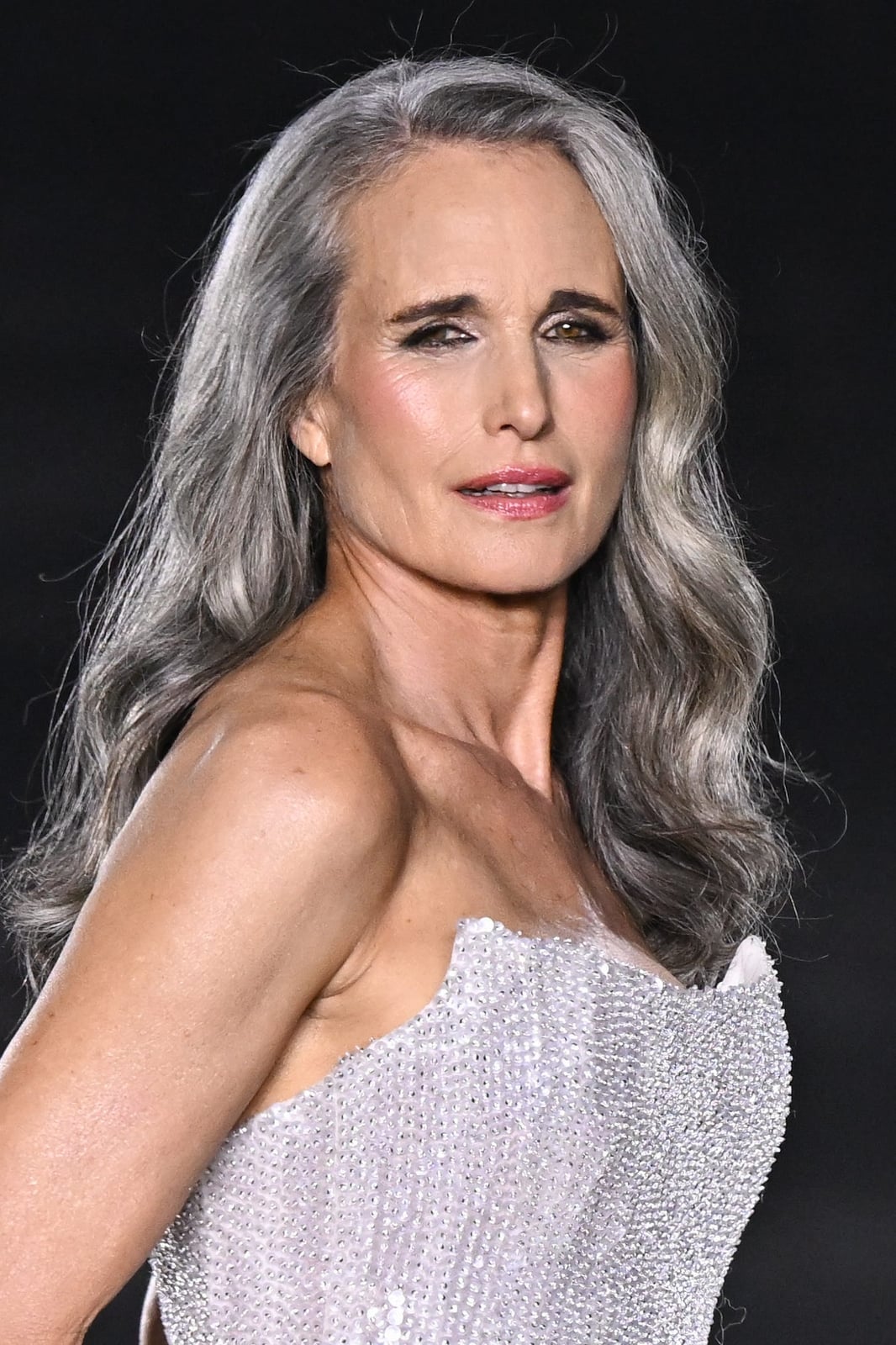
A side parting and a wavy blowout do the quiet work of making gray look like the plan all along. The cut runs mid-back with layers that give the curl room to move, and curtain bangs sweep off to one side rather than sitting square across the forehead. Medium-density wavy hair needs at least shoulder length to support this shape; finer hair tends to go limp past the collarbone. A side part softens square and round faces, while a long face does better with the volume pushed wide at the sides. Ask your stylist for: mid-back length, soft layers, curtain bangs, side parting. The layers matter here, since they break up the line where natural gray meets the lighter silver pieces. A large-barrel iron makes the loose waves; a trim every six to eight weeks keeps the shape from dragging.
Mid-Back Length Straight Hair With Gray Blonde Blend

Straight mid-back hair shows every tone shift, which is why a gray and blonde blend needs to be placed with care. Set against the wavy version above, this one trades movement for a cleaner read of the color: the gray and blonde sit in visible ribbons through the length, and a middle parting splits them symmetrically. The subtle layers keep the straight fall from looking flat, and there are no bangs to interrupt the line. Medium-density straight hair handles this best; very fine hair can look thin at mid-back. A middle part elongates oval and long faces. Ask your stylist for: mid-back length, subtle layers, straight style, gray and blonde blended color. A flat iron gives the sleek finish, and a trim every six to eight weeks keeps the ends sharp.
Collarbone Length Wavy Hair With Gray Blending and Side Parting
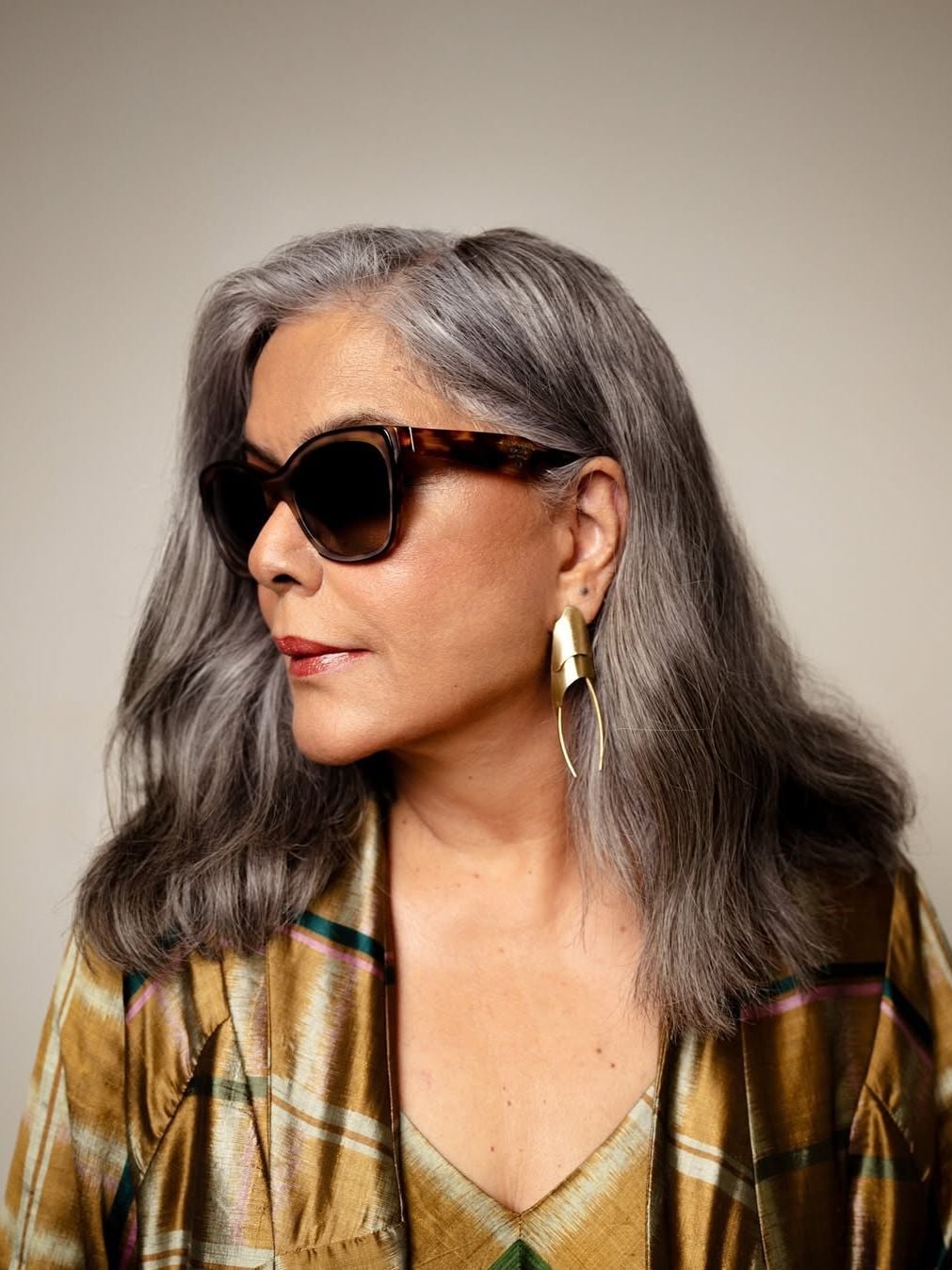
What exactly do you say to get this lived-in blend of natural gray and silver strands, rather than a stripey grow-out? The cut lands at the collarbone with soft layers that let the loose waves move freely, and a side parting keeps the gray from sitting in a solid block across the front. Medium-density wavy hair starting at this length holds the shape without needing a curling iron every morning. Ask your stylist for: collarbone length, soft layers, loose waves, blended gray and silver tones. The key is specifying that the lighter pieces should land on the ends, not the roots, so the blend looks natural.
Wavy Collarbone Long Bob With Face Framing
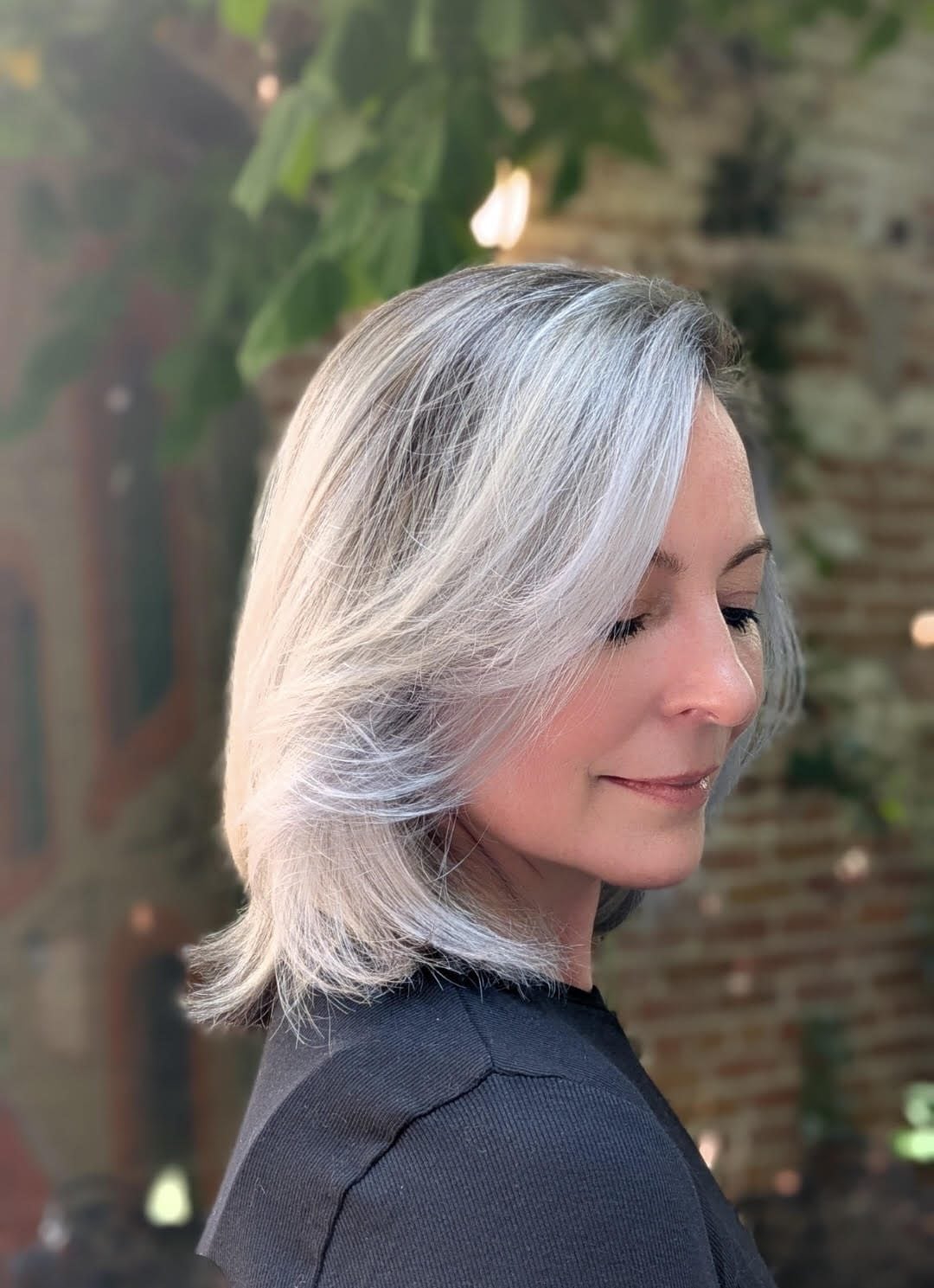
Face-framing layers on a collarbone long bob are the first thing to grow out, and the first thing anyone notices. The cut sits at the collarbone with a side parting, and the wavy blowout pushes the framing pieces back off the cheek. Medium-density wavy hair holds this shape well; finer hair needs the layers kept long so they do not spring up. Round and oval faces get the most from the softness around the jaw. Ask your stylist for: collarbone length long bob, face-framing layers, wavy style, blended gray color.
Upkeep is where this cut asks for attention. The framing pieces hit the cheekbone within about four weeks and start to read as a grown-out fringe by week six, so plan a trim every six to eight weeks. Gray blending grows out kindly here, since the lighter pieces near the face hide the root line longer than a solid color would. Blow-dry the front sections away from the face, or tuck them behind the ear on rushed mornings.
Glossy Collarbone Long Bob With Gray Blend
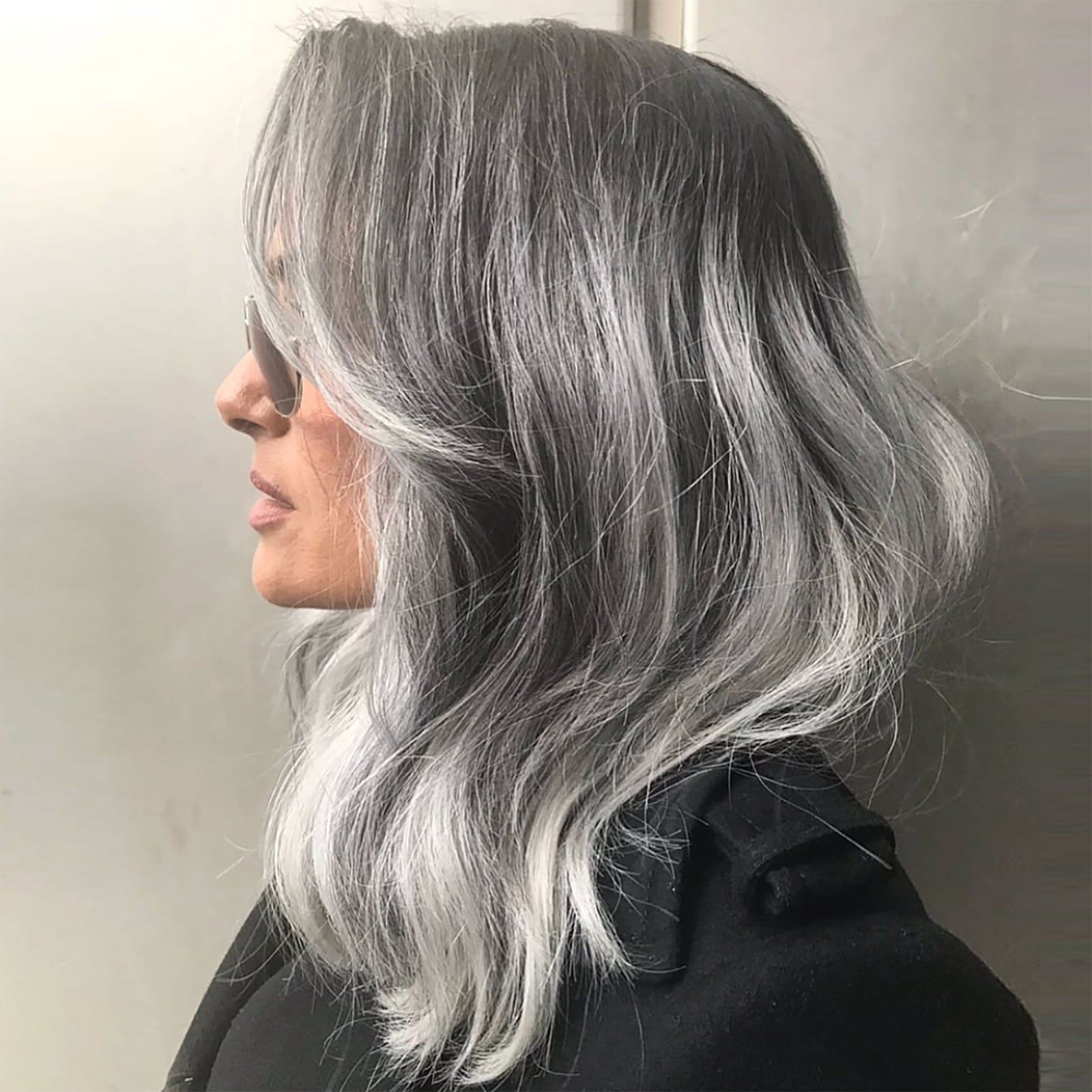
A glossy finish on a collarbone long bob looks polished in a way that wavy, medium-density hair does not always cooperate with. The shine serum that creates the gloss also highlights every frizzy strand, so the styling has to be smooth before the product goes on. Face-framing layers and a side parting keep the shape soft, and the gray blend stays visible through the length. Ask your stylist for: collarbone length long bob, face-framing layers, glossy finish, natural gray blend. If your waves fight a sleek finish, a matte texture spray and a little roughness will serve you better than chasing shine.
Shoulder Length Layers With Natural Gray
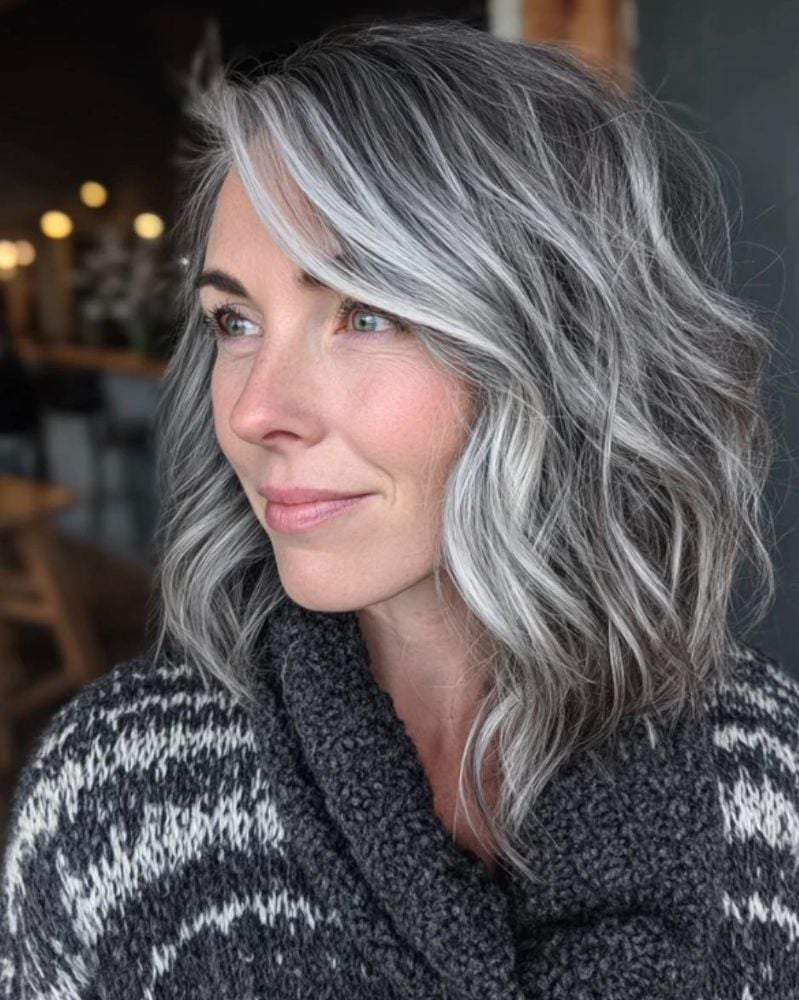
A shoulder-length cut with soft layers and face-framing pieces does most of the blending before the color even starts, because the shorter pieces around the face catch light at a different angle than the back. That is the trick behind a natural gray blend: keep the layers soft and the ends slightly textured, so gray strands sit beside the lighter base instead of pooling in a flat block. Ask your stylist for: shoulder length, soft layers, face-framing pieces, side parting, glossy gray blend. Your colorist can then paint the blend through those face-framing pieces, where regrowth shows first. Medium density wavy hair holds this shape well; the face-framing pieces soften an angular jaw. Apply a smoothing cream before blow-drying, and book a trim every six to eight weeks to keep the layers from collapsing into one length.
Shoulder Lob With Gray Ash Blonde Blend
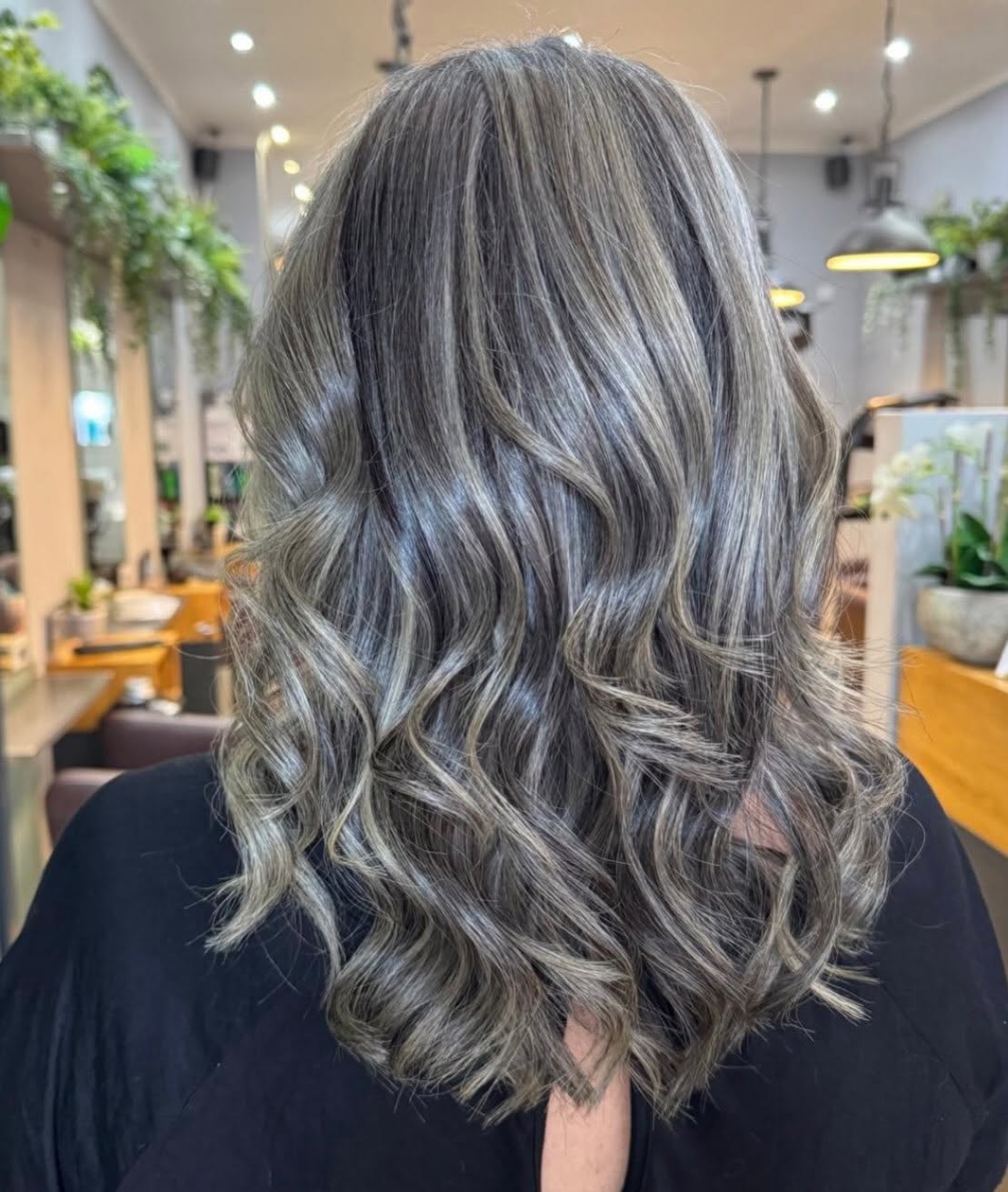
Will a shoulder-grazing lob make fine hair look thinner? Not if the cut stays blunt at the ends and the color stays close to your natural gray. A lob that ends at the shoulder suits medium density wavy hair, and the loose waves add width without layers chopping up the perimeter. A middle parting works on most face shapes, though a round face gets more elongation from a part that sits slightly off center. Ask your stylist for: shoulder length lob, loose waves, middle parting, gray and ash blonde blend. The gray ash blonde lob reads as one soft shade from the back, which is the point of a seamless blend. Skip it if your hair is very fine and limp; the weight of a lob can pull the wave out.
Mid-Back Length Layers With Gray Gradient
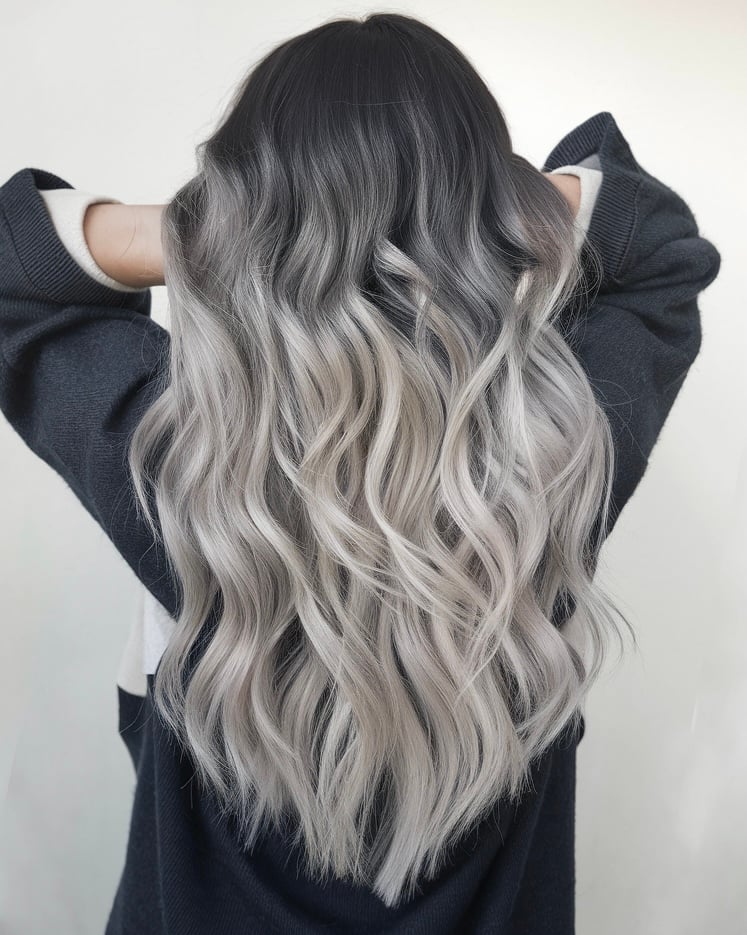
A deliberate gradient from dark roots to silver ends changes the whole equation of growing out gray, because the dark root line is part of the design instead of a problem to hide. The cut is mid-back length with subtle long layers, and the loose waves run through the whole length so the transition looks like movement, not a stripe. Medium density wavy hair carries this well; long layers give thick hair somewhere to go.
Daily styling is where the time goes. Loose waves need a heat protectant and a curling iron or a round brush, and the wave has to be set in sections or the gradient looks flat. Plan on fifteen to twenty minutes on wash days. Trims every eight to ten weeks keep the ends from splitting, which matters more with light silver ends because damage shows. The grow-out is forgiving: as the silver creeps up, the gradient just moves with it.
Collarbone Lob With Curtain Bangs And Gray Blend
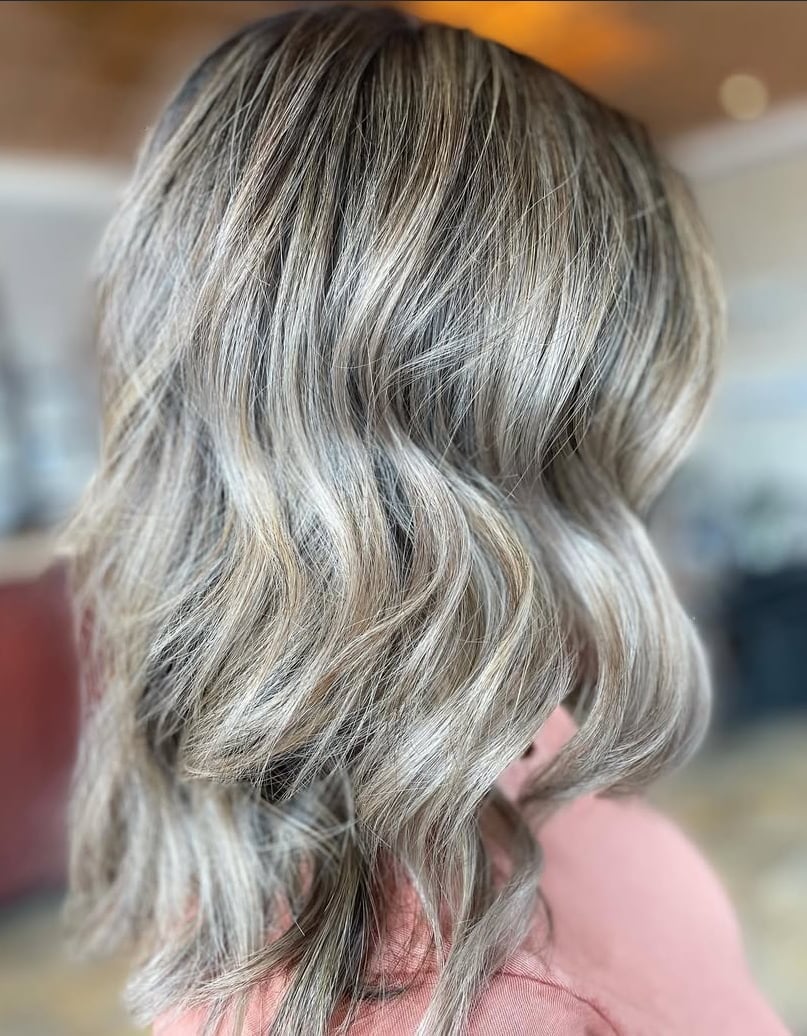
Then be specific about the bangs, because curtain bangs on gray hair need to be cut to move away from the face, not straight across. Ask your stylist for: collarbone length lob, curtain bangs, wavy texture, natural gray blend. The bangs should start at the middle parting and sweep outward, with the shortest point at the cheekbone. Medium density wavy hair holds that sweep without help. Use a round brush to blow-dry the bangs away from the face, and keep the trim every six to eight weeks so the curtain doesn’t collapse into a heavy fringe.
Collarbone Bob With Curtain Bangs And Gray Blend, Wavy
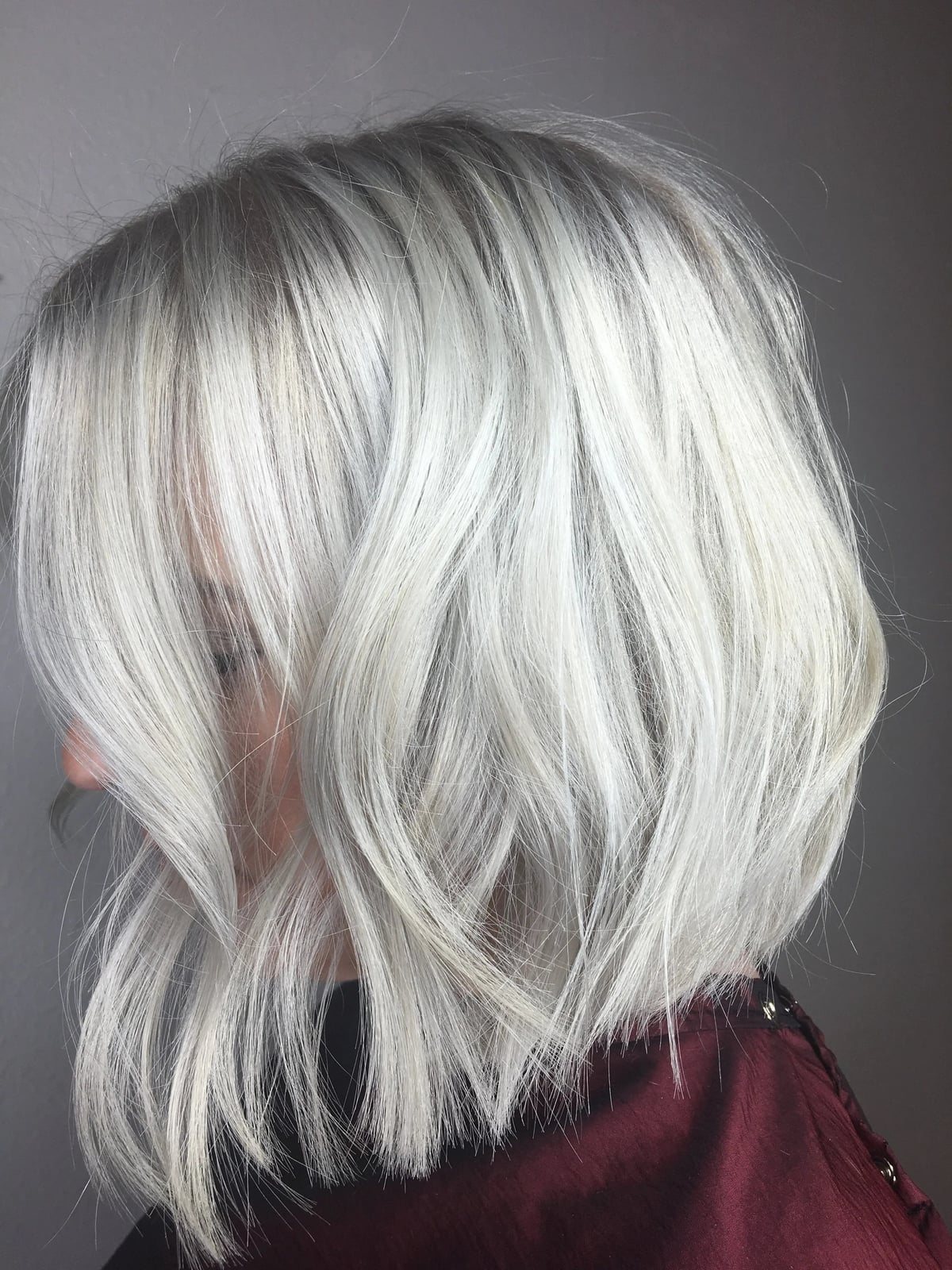
A wavy collarbone bob with curtain bangs and a side parting requires less morning effort than a straight bob, which needs a blow-dry to look finished. The wave does the work: a wavy blowout with a side parting gives the bob soft dimension, and the curtain bangs follow the same direction. This cut suits medium density wavy hair at collarbone length, and the bangs complement most face shapes. Ask your stylist for: collarbone length bob, curtain bangs, side parting, dimensional gray blend. A straight bob shows every uneven gray patch; the wave scatters them. Trim the bob line every six to eight weeks.
Collarbone Layers With Dark Gray Blonde Blend
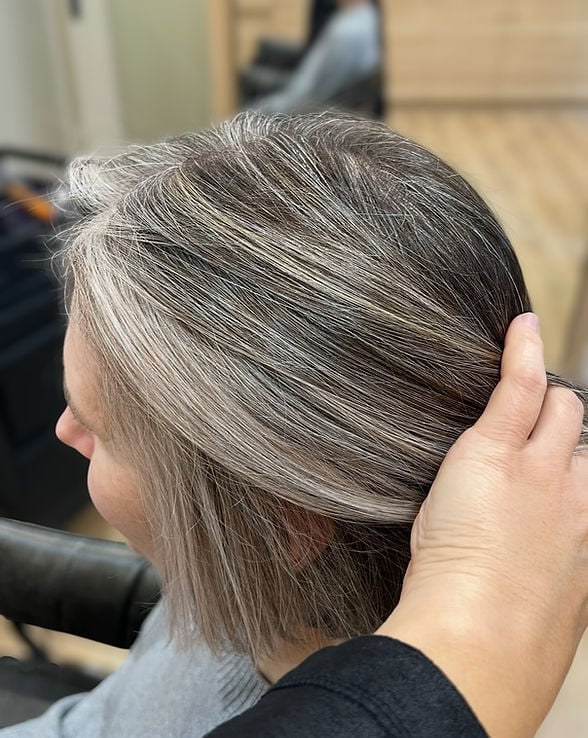
The side part and blowout on this collarbone cut push the dark brown, gray and blonde pieces into visibility instead of letting them collapse into each other. Fine wavy hair at this length benefits from that separation because the blend is more complicated than a single glaze. A salon is the only route here; the layering and multiple tones demand precision a box dye cannot deliver. Ask your colorist for a collarbone layered cut with a dark brown, gray and blonde blend. The layers need a trim every six to eight weeks to hold their shape.
Mid-Back Layers With Face-Framing Highlights
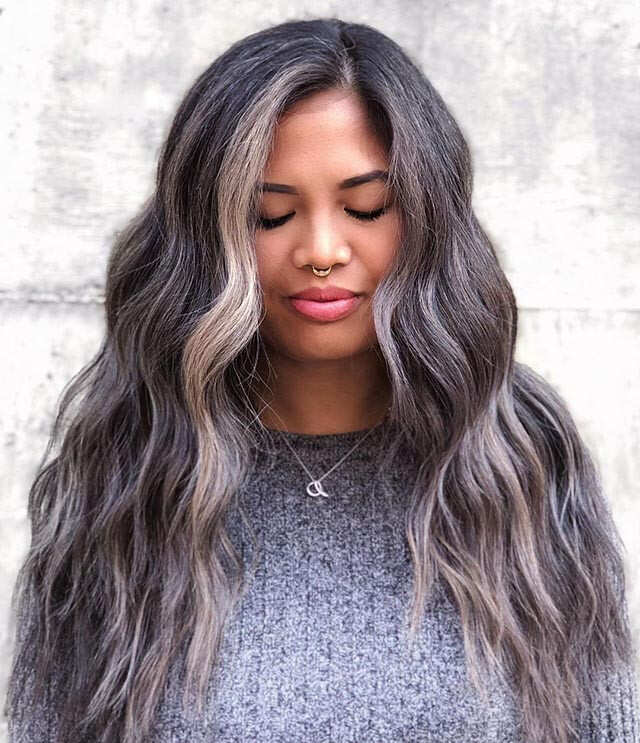
Balayage on dark brown hair usually stays subtle, but here the ash blonde and gray pieces create deliberate contrast. The thick, wavy texture holds each highlight visible, and the curtain bangs carry the lightest tones forward so the face gets the brightest part of the blend. Thick hair with some natural wave is the ideal starting point because the highlights need volume behind them to look full rather than sparse. Ask your colorist for mid-back long layers with curtain bangs and ash blonde and gray face-framing highlights. A texturizing spray on damp waves keeps the shape from falling flat by midday.
Mid-Back Layers With Ash Blonde Balayage
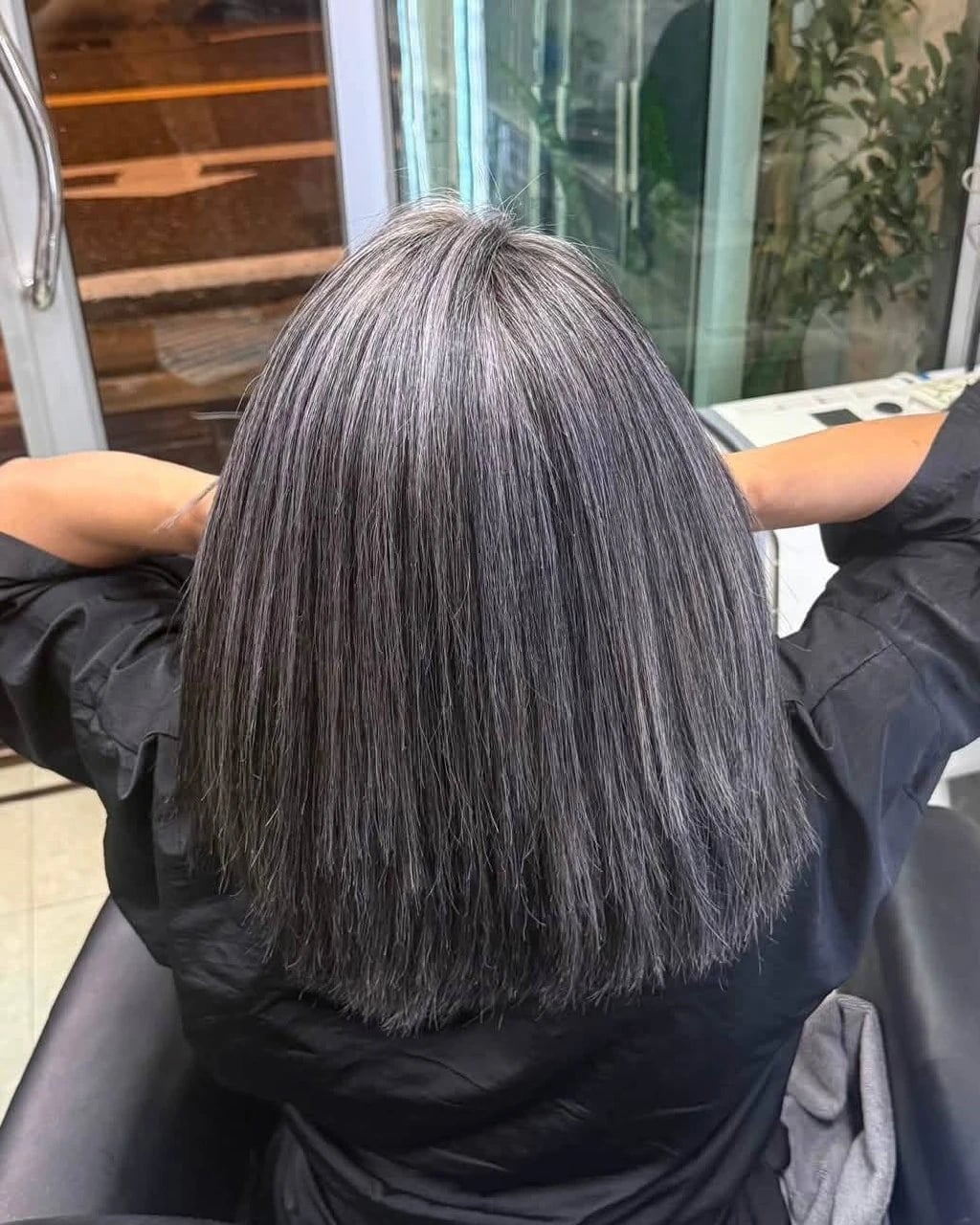
Does a gray base with ash blonde balayage work on hair that is not naturally thick? Yes, if the density is medium and the layers are subtle. The back view here shows why: the balayage lands on the ends, so the color does not overwhelm the hair or require extreme lift at the root. Medium-density wavy hair at mid-back length can carry this without looking thin. Ask your colorist for mid-back subtle layers with a middle part and a gray base blended into ash blonde balayage. A styling product on the lengths preserves the wave pattern, and the cut holds for eight to ten weeks between trims.
Collarbone Layers With Side Swept Bangs
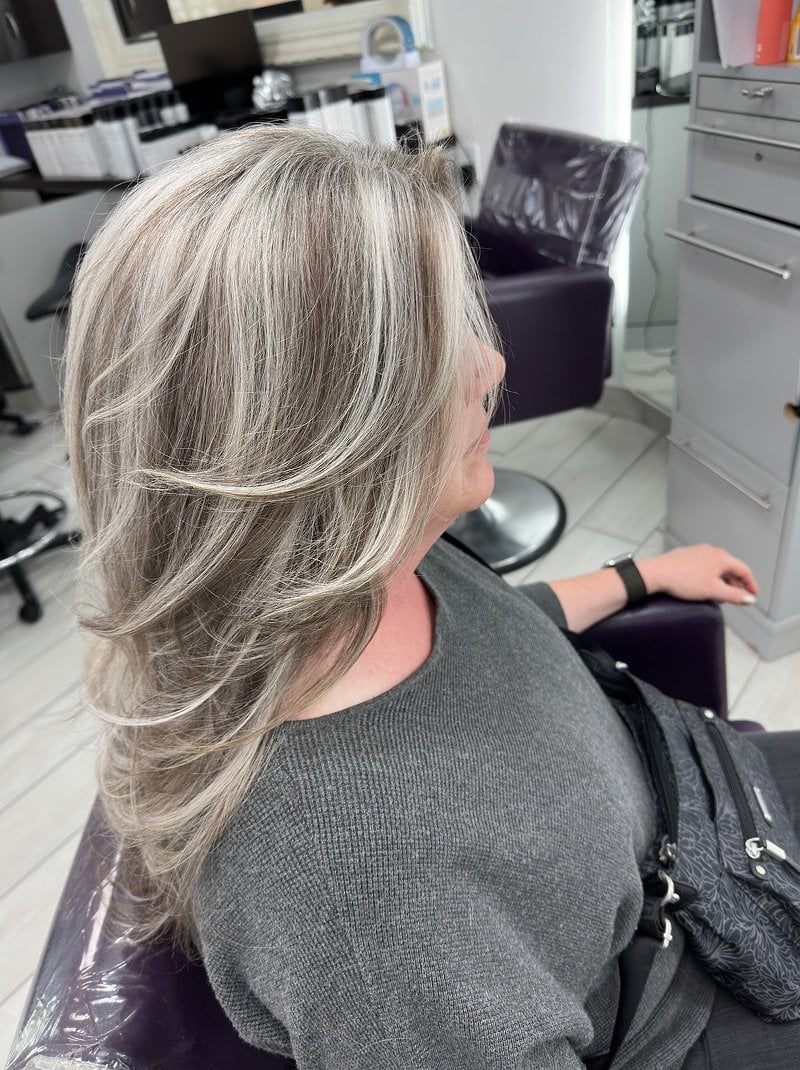
Side-swept bangs on a gray blend have a habit of drifting into the eyes by hour three, which is why the wavy blowout here is not just styling. It is survival strategy. The collarbone layers and side part give the gray and silver tones enough movement to look blended, and the bangs sweep across without needing constant re-drying. Medium-density wavy hair at this length holds the shape well. Ask your stylist for a collarbone layered cut with a side part and side-swept bangs in blended gray tones. A texturizing spray keeps the bangs from separating, and a trim every six to eight weeks prevents the sweep from turning into a curtain.
Mid-Back Straight Hair With Gray Blend
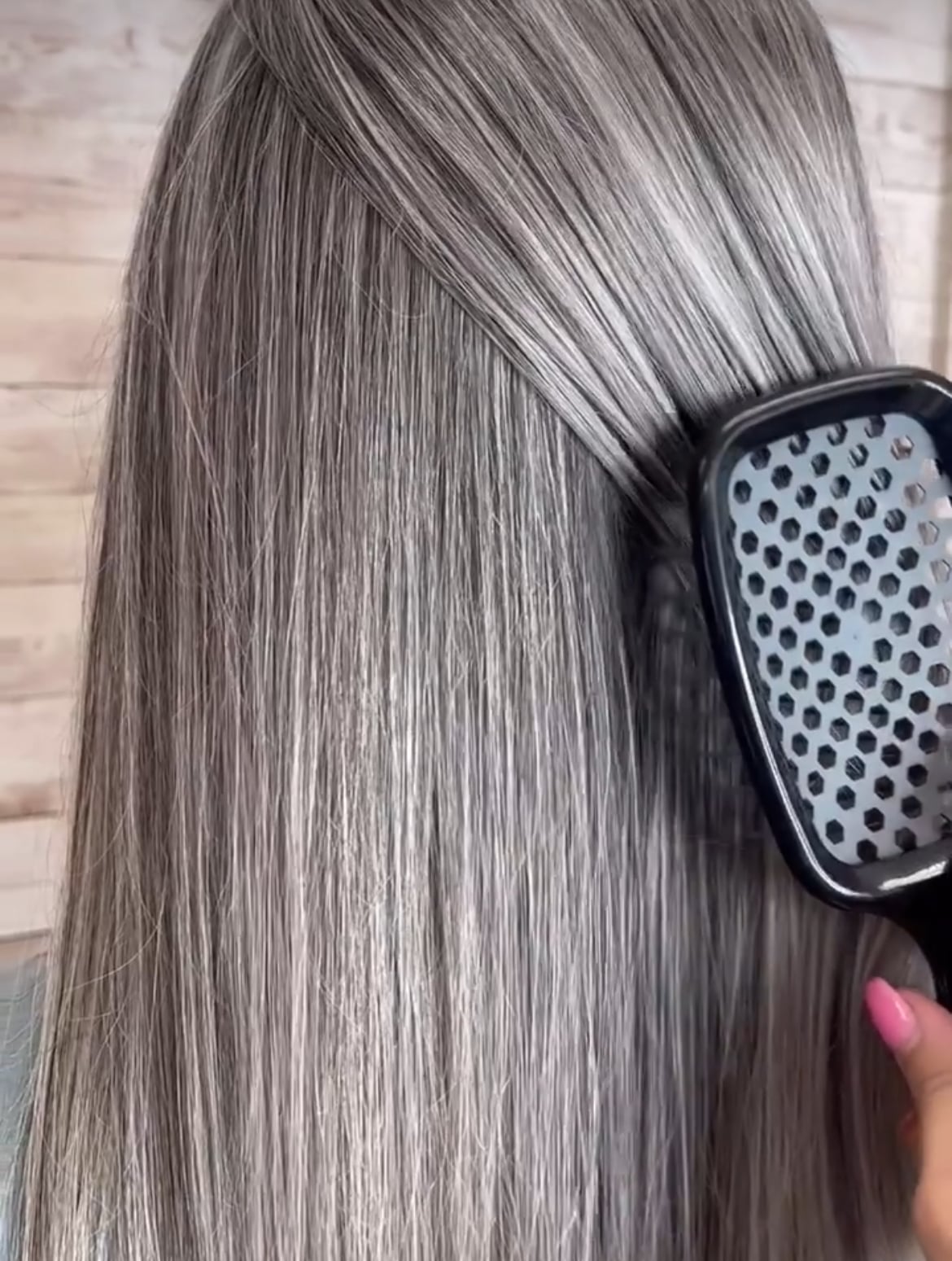
How do you ask for a gray blend that looks polished? The key is the transition from darker roots to lighter ends, visible here on this straight mid-back cut. The middle part and long layers keep the blend linear and clean, which matters more on straight, thick hair because there is no wave to disguise the demarcation line. The darker root anchors the look, so the lighter gray ends appear as a planned fade. Ask your colorist for a mid-back straight cut with a middle part and a natural gray blend from dark roots to light ends. A smoothing serum keeps the length sleek, and a trim every eight to ten weeks maintains the clean line.
Collarbone Layered Cut With Gray Blend
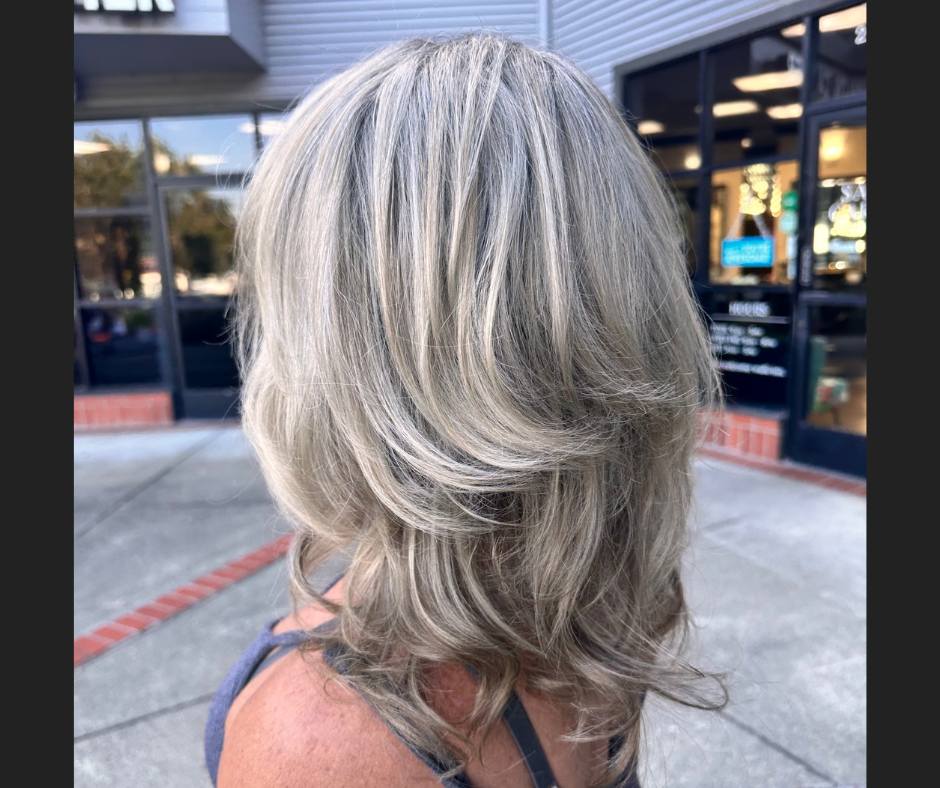
A collarbone-length layered cut with a side part relies on soft waves to show off a seamless gray blend. Thick, wavy hair at this length holds the shape well, and the side part adds softness to angular faces. The challenge with this texture and color is that the density can swallow the lighter tones if the blending isn’t precise. Ask your stylist for a collarbone-length layered cut with soft waves and a seamless gray blend. A salon handles the placement and the foils. At home, a texturizing spray and a diffuser are your tools. A trim every six to eight weeks keeps the layers from weighing down the waves.
Mid-Back Layers With Dark Gray Blonde Blend

Long layers that start below the shoulders let a dark base fade into gray strands and blonde highlights without a hard line. The middle part and loose waves make the transition look like a deliberate gradient. This combination of a dark root and lighter ends works especially well from late September through March, when cooler light picks up the ash tones in the blonde pieces. Ask your colorist for a dark base with gray and blonde highlights through mid-back-length long layers. The color is the part of this look that takes the salon visit. The cut itself needs a trim every eight to ten weeks to keep the ends from thinning out.
Short Bob With Textured Layers And Gray Blend
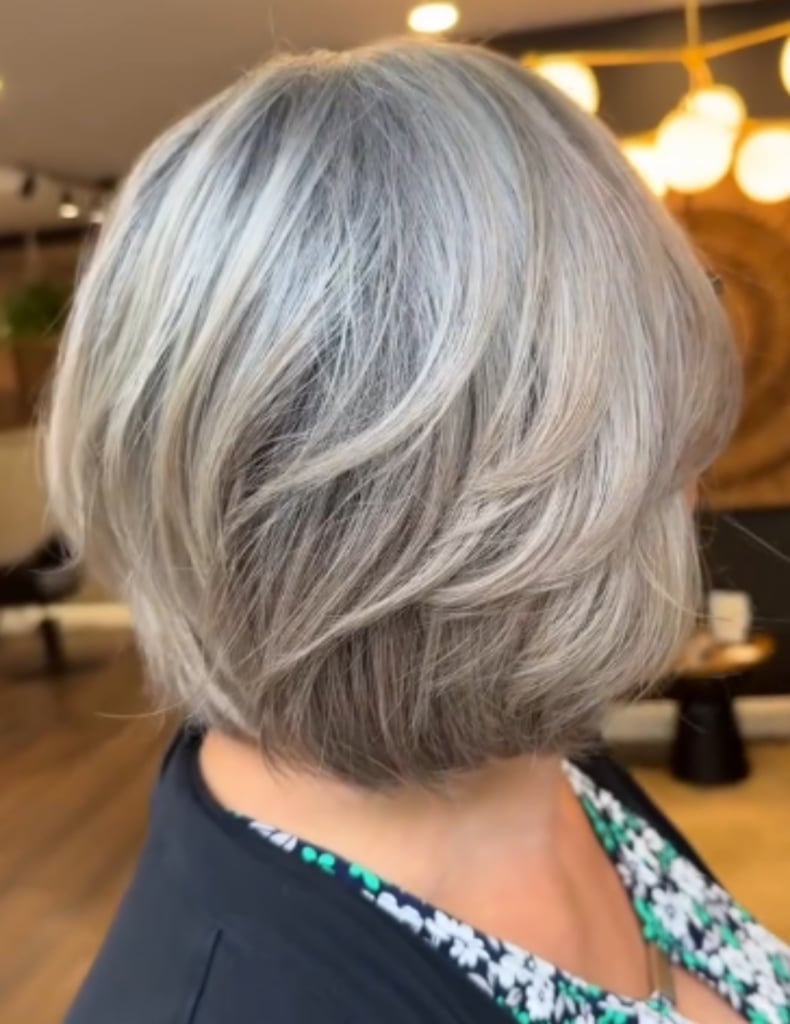
An ear-length bob with textured layers and a side part creates a compact shape that shows off gray and silver tones. Fine, straight hair at this length benefits from the layers adding volume at the crown. The common mistake is over-layering, which makes the blending look sparse and can let warm tones peek through. Ask your stylist for a short bob with textured layers and a gray and silver blend. The drawback is that this cut shows every uneven section. A trim every four to six weeks is non-negotiable to keep the silhouette clean.
Collarbone Layers With Curtain Bangs And Gray Blend, Side
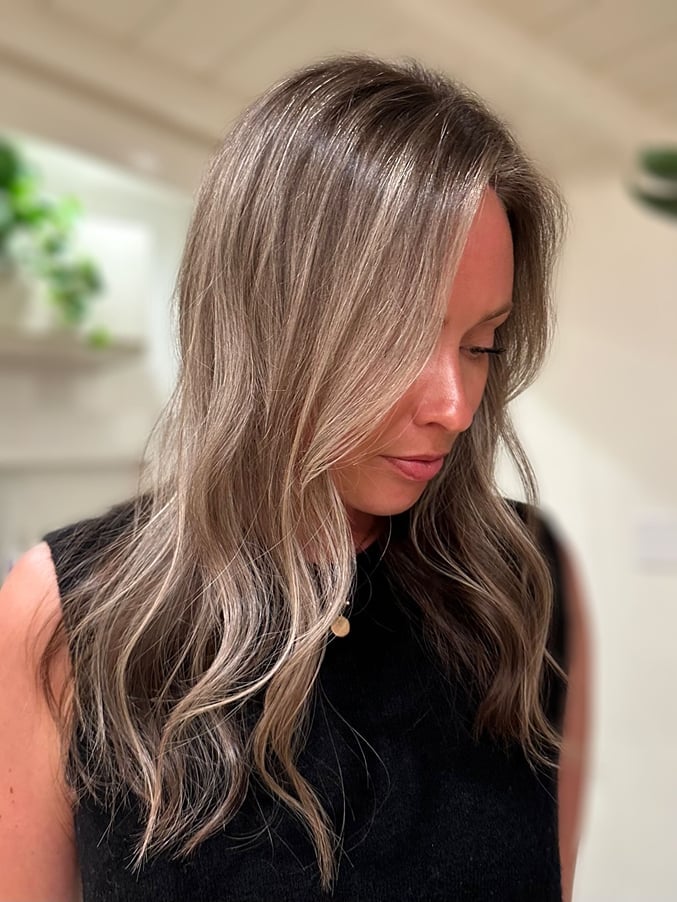
Soft layers ending at the collarbone paired with curtain bangs frame the face without committing to a full fringe. The side part and the blend of gray and blonde tones create a lived-in look that doesn’t depend on a perfect blowout. Medium-density wavy hair holds the curtain bangs in place, and the shape suits round and oval faces by drawing attention outward. Ask your stylist for collarbone-length soft layers with curtain bangs and a gray and blonde blend. A blow dryer with a round brush shapes the bangs in about three minutes. A trim every six to eight weeks keeps the bangs from turning into a triangle.
Collarbone Waves With Curtain Bangs And Gray Blend, Close-Up Take
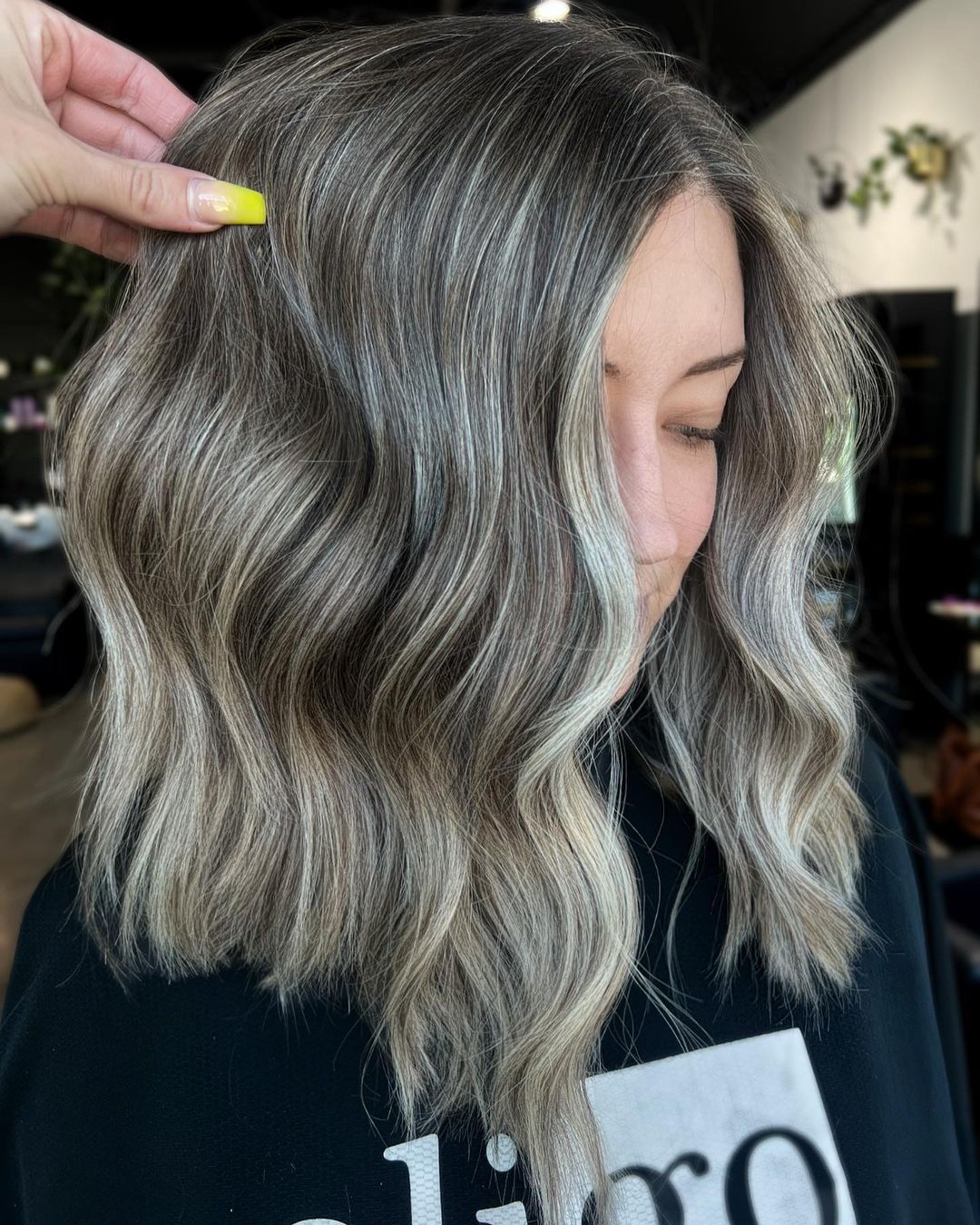
A seamless blend of gray and ash blonde tones through collarbone-length waves and curtain bangs avoids a grown-out look. Loose waves distribute the lighter pieces evenly, so the gray does not cluster at the front. Medium-density wavy hair holds this texture without product. Ask your colorist for a seamless gray and ash blonde blend through collarbone-length loose waves with curtain bangs. A sea salt spray and scrunching revive the waves between washes. The blend holds its shape for about eight weeks before the ash tones need a toner refresh. A trim every six to eight weeks maintains the curtain bangs.
Collarbone Layers With Curtain Bangs And Gray Highlights
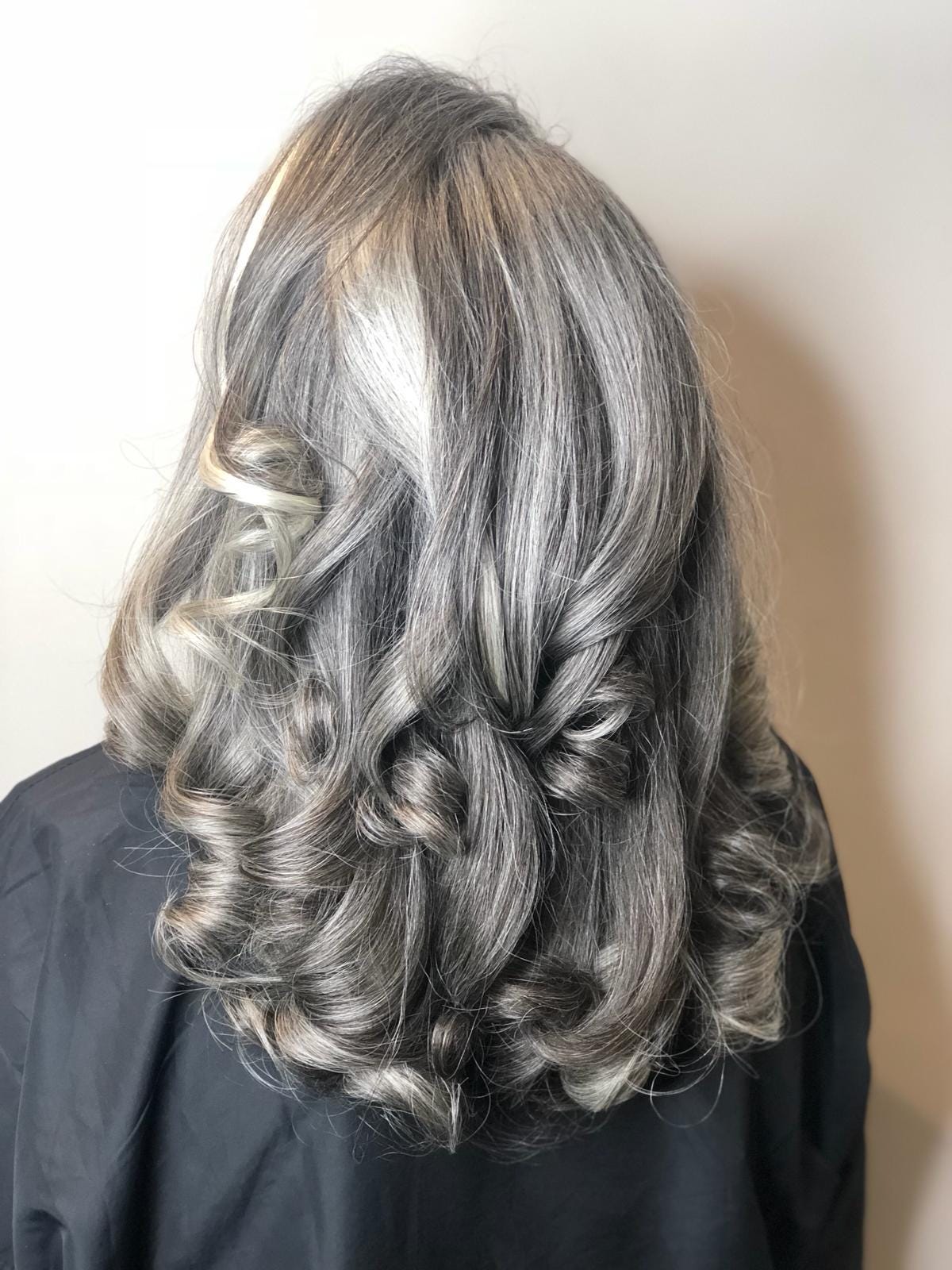
Curtain bangs direct attention to where the gray and lighter highlights merge, a design choice that looks planned. Medium to thick wavy hair at collarbone length holds this structure best, with the curtain bangs softening most face shapes without demanding daily commitment. Ask your stylist for: collarbone length, layers, curtain bangs, side parting, blended gray and lighter highlights. A round brush and a medium heat setting create the wavy blowout that showcases the blend; a volumizing mousse at the roots keeps the shape from falling flat by midday.
Final Thoughts
For fine hair, keep one blunt baseline and skip heavy layers to preserve density. For thicker hair, embrace layers to add movement and reduce bulk. Discuss your desired maintenance level with your stylist.
- Trim every 6-10 weeks to maintain shape and line.
- Use a purple or silver-toning shampoo once a week to keep cool tones bright.
- Incorporate a deep conditioning treatment weekly to combat dryness.
- Protect hair from heat styling with a thermal spray.
Embrace your gray with confidence and style.