Braids are a practical styling solution that can transform any hair type into a polished, long-lasting look. In 2027, the focus is on intricate patterns and sleek finishes, moving away from messy buns and simple three-strand styles toward more deliberate designs.
This collection of 20 classy braiding hair ideas covers everything from short cornrows with pearl accents to long knotless braids with amber beads. Whether your hair is fine, thick, curly, or straight, you will find styles that hold their shape, require minimal daily effort, and solve common struggles like a fringe that will not sit or ends that fray by midday.
Intricate Cornrows to Braided Updo
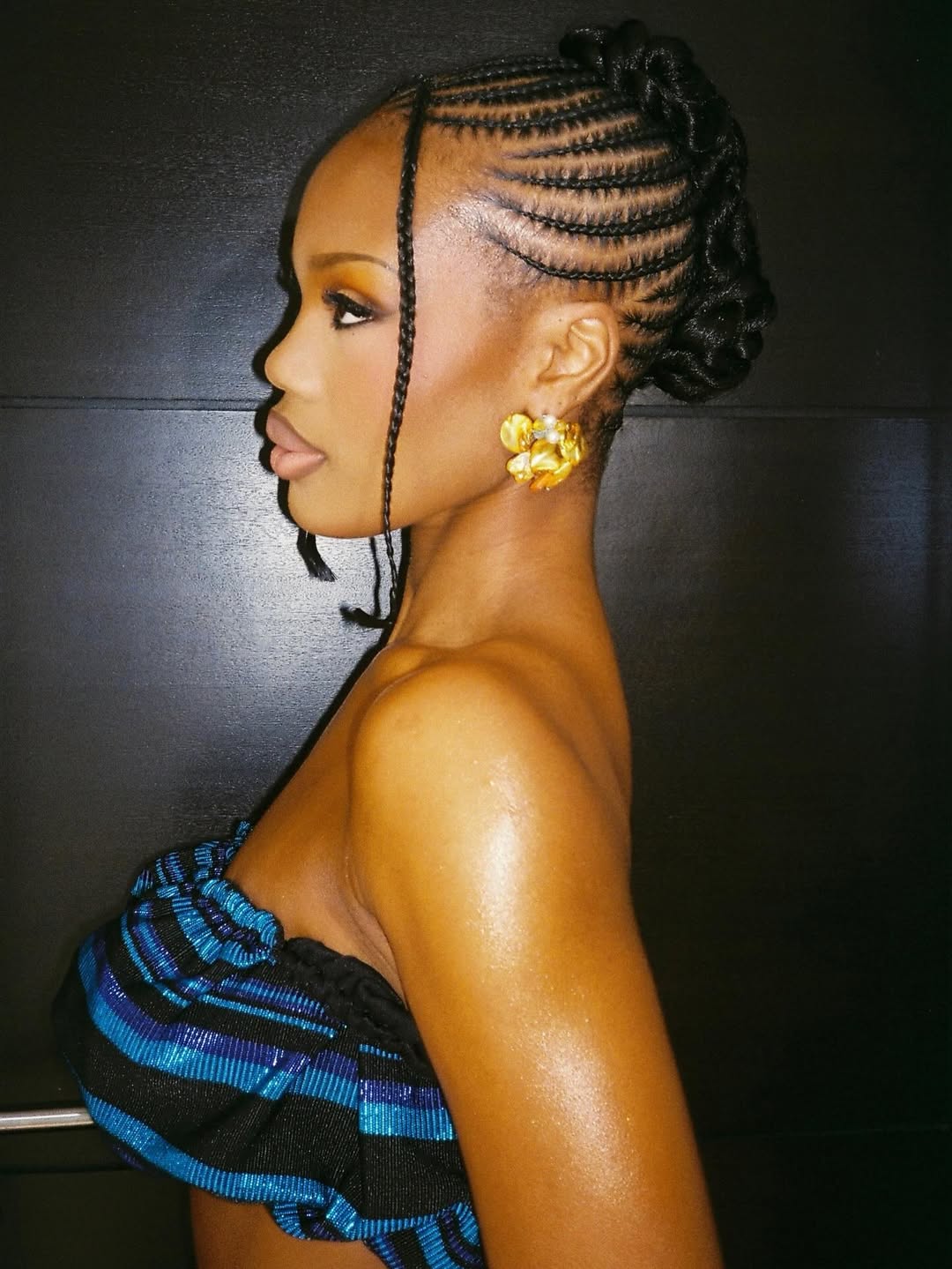
A side view reveals the real work here: the cornrows shift direction as they travel back, creating a raised geometric pattern before feeding into a braided updo that sits at mid-back. That precision is the point. Thick, coily hair holds this kind of detail best because the texture grips each section and keeps the lines crisp. Anyone with at least mid-back length and a willingness to sit for a few hours can get there. Ask your stylist for: intricate cornrows leading into a braided updo.
The finish is glass-smooth, which means a light-hold gel brushed along the hairline each morning keeps the baby hairs in line. A professional refresh every two to three weeks handles the regrowth and maintains the tension so nothing loosens before you are ready.
Sleek High Braided Bun
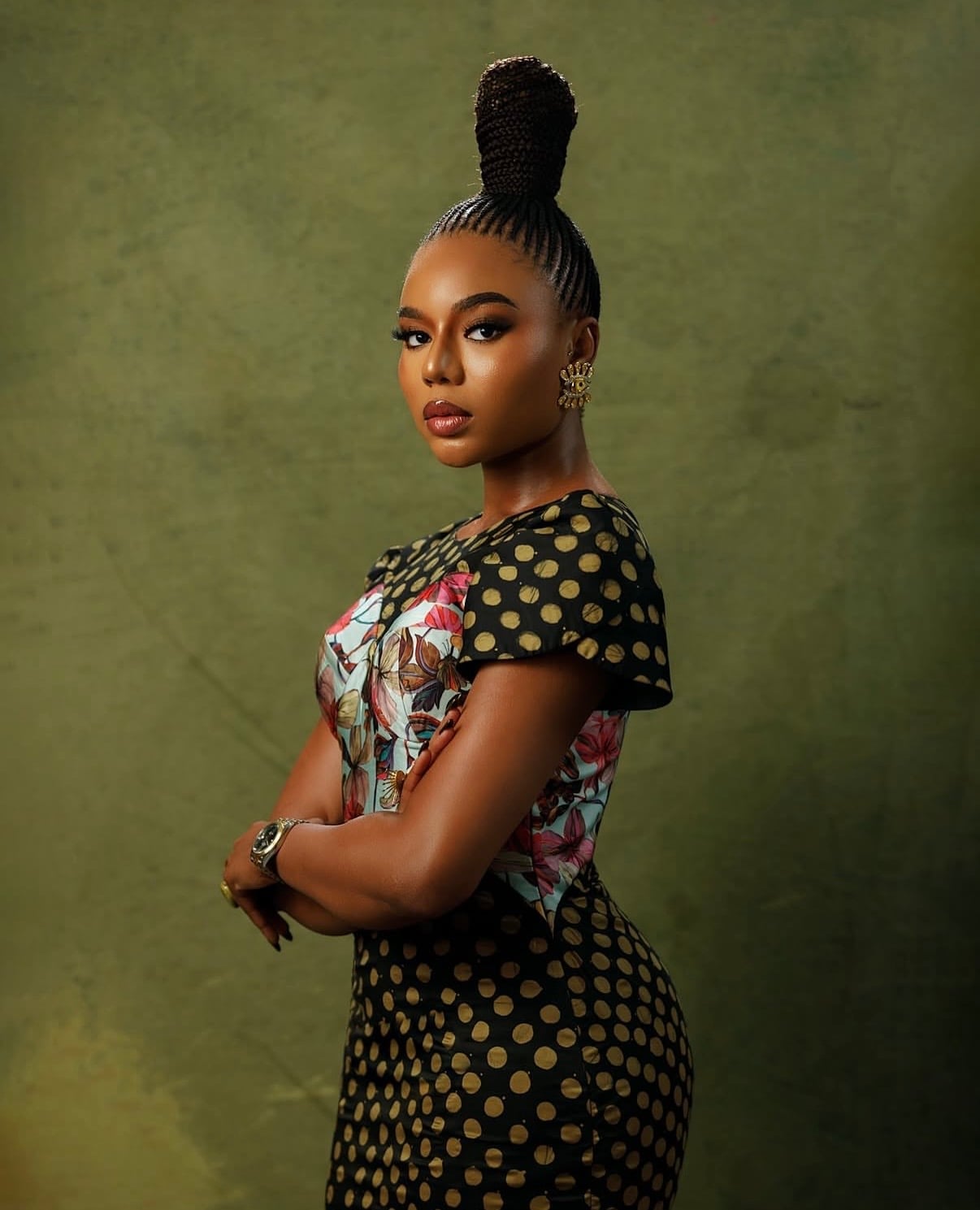
Can a high braided bun work on hair that is not stick-straight? It can, but the sleeker the texture, the cleaner the result. Here the black hair is pulled taut from a middle part into an intricate high bun, every braid visible and deliberate. Straight or smooth textures of medium to long length hold the shape without frizz fighting the part. Ask your stylist for: high braided bun with a sleek middle part. A boar bristle brush swept around the hairline before securing the bun catches the flyaways that would otherwise break the line. Professional styling is the route here; a steady hand and sectioning clips make the difference between polished and pulled.
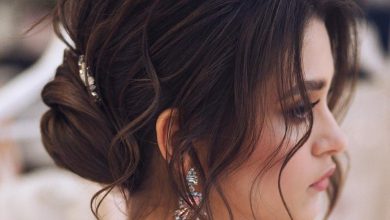
Ornate Dark Brown Braided Updo with Pearls
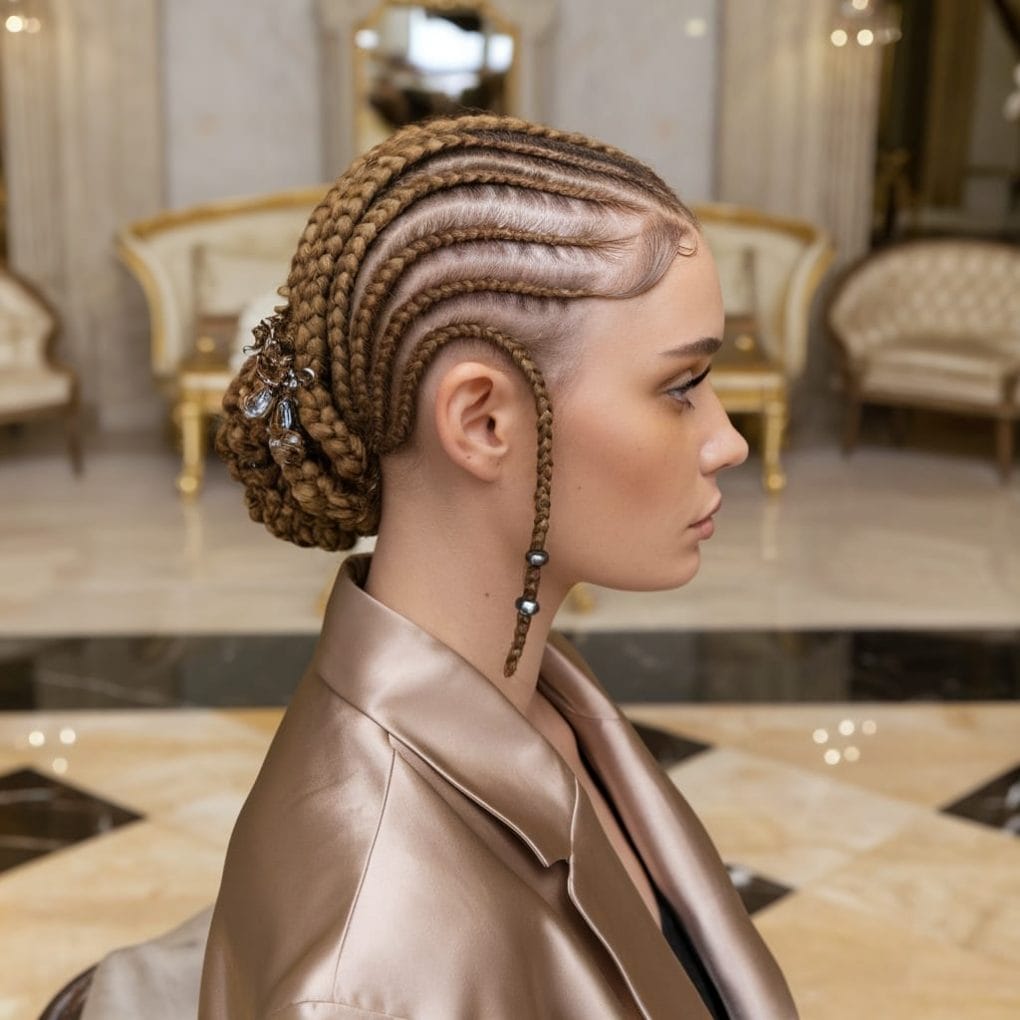
Pearls and beads woven into dark brown braids sound like a wedding guest move, but the baby hairs left out at the hairline keep it from feeling costume-like. The updo sits at mid-back, thick braids stacked and pinned so the decorative elements sit on top of the structure rather than hidden inside it. This is a style for formal occasions where the hair needs to hold from ceremony through dancing. Ask your stylist for: intricate dark brown braided updo with pearls and beads. The ornaments are best handled by a stylist who can wire them in securely; brushing through them at home is a fast way to lose a pearl.
Cornrows to Nape Bun
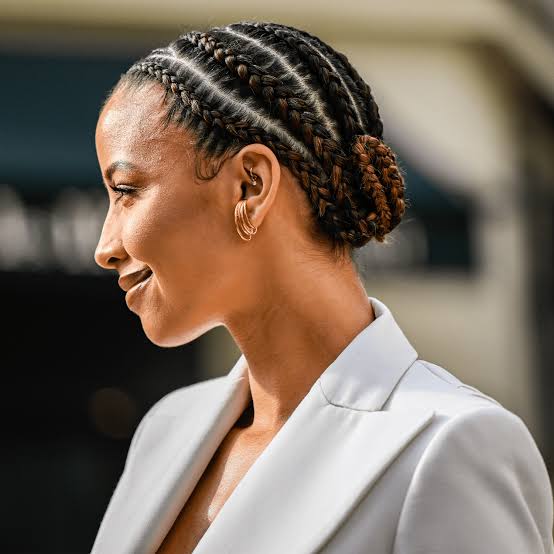
Cornrows that end in a nape bun look straightforward until you compare them to a version on straight hair. On thick, wavy dark brown hair the braids have natural grip, so the cornrow lines stay defined and the bun sits without slipping. The middle part swings the eye down the center, which works well on oval and heart-shaped faces. Ask your stylist for: cornrows leading to a nape bun. The wavy texture means a smoothing serum patted over the bun keeps the finish polished without weighing the cornrows down. Salon maintenance is standard; the regrowth timeline runs about three weeks before the part needs tightening.
Short Black Cornrows with Pearl Accents
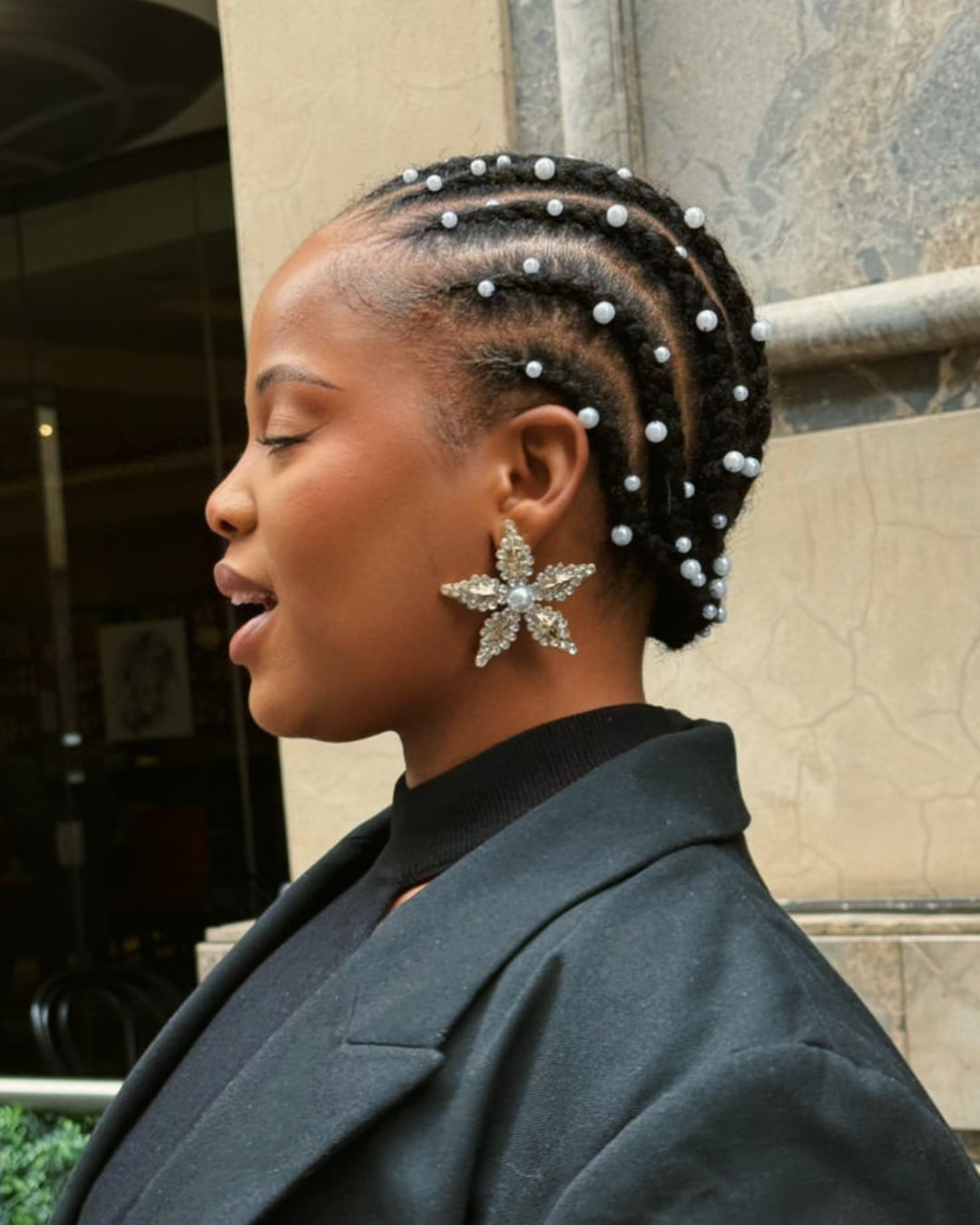
A short updo built from black cornrows and dotted with small white pearls has a deliberate look. The middle part splits the braids evenly, and the smooth finish against the scalp means the pearls sit flush rather than dangling. Short hair or hair that braids tightly to the scalp works best; the length keeps the style from looking heavy. Ask your stylist for: short cornrows into an updo with small pearls. This is a salon-only situation, a stylist secures each pearl so it stays put through sleep and movement, and DIY versions tend to lose beads within a day. Keep the scalp moisturized between appointments to avoid tightness.
Sleek High Ponytail of Box Braids
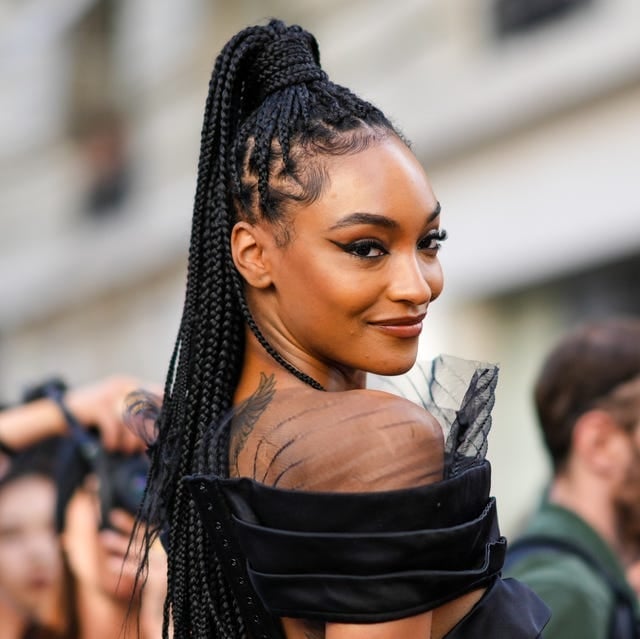
A high ponytail of box braids looks polished from every angle, but the scalp is where the real conversation lives. Thick black braids are gathered at the crown and fall to mid-back, with no bangs to distract from the clean line. This style works best on hair that is already mid-back length or longer, and the uniform thickness keeps the ponytail looking substantial.
Ask your stylist for: High ponytail made from thick box braids. The tension at the hairline is the main trade-off. A style this smooth pulls firmly, so expect some scalp awareness for the first day or two. Wrap a few braids around the base to hide the elastic, and keep the ends moisturized to prevent fraying. A trim every eight weeks maintains the blunt finish.
Dutch Braids with Floral Embellishments
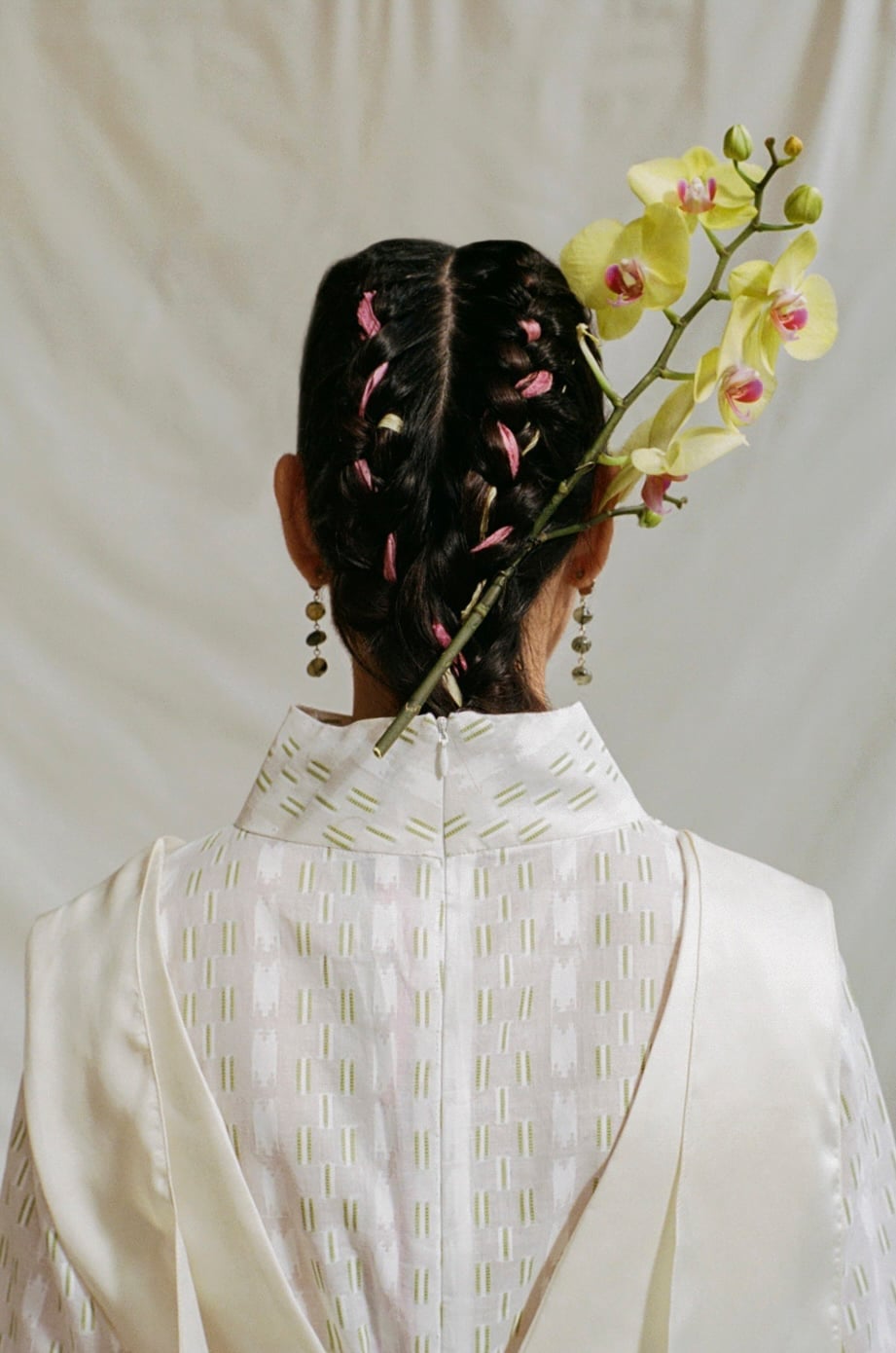
Want orchids in your braids without looking like you raided a florist in the dark? The trick is precision placement. Two Dutch braids are woven from the crown to the nape on thick, straight dark brown hair, with pink flower petals integrated into the plaiting and a yellow orchid stem tucked behind one braid. The result is a coordinated look, not a random arrangement.
Ask your stylist for: Two Dutch braids with woven flower petals and orchids. Bring a photo of the exact flower arrangement you want, orchids hold up better than soft blooms, and petals woven into the braid stay fresher than stems pinned on top. A middle part keeps the look symmetrical. This is a salon-only request; expect about two hours for the braiding and placement.
Long Knotless Braids with Amber Beads
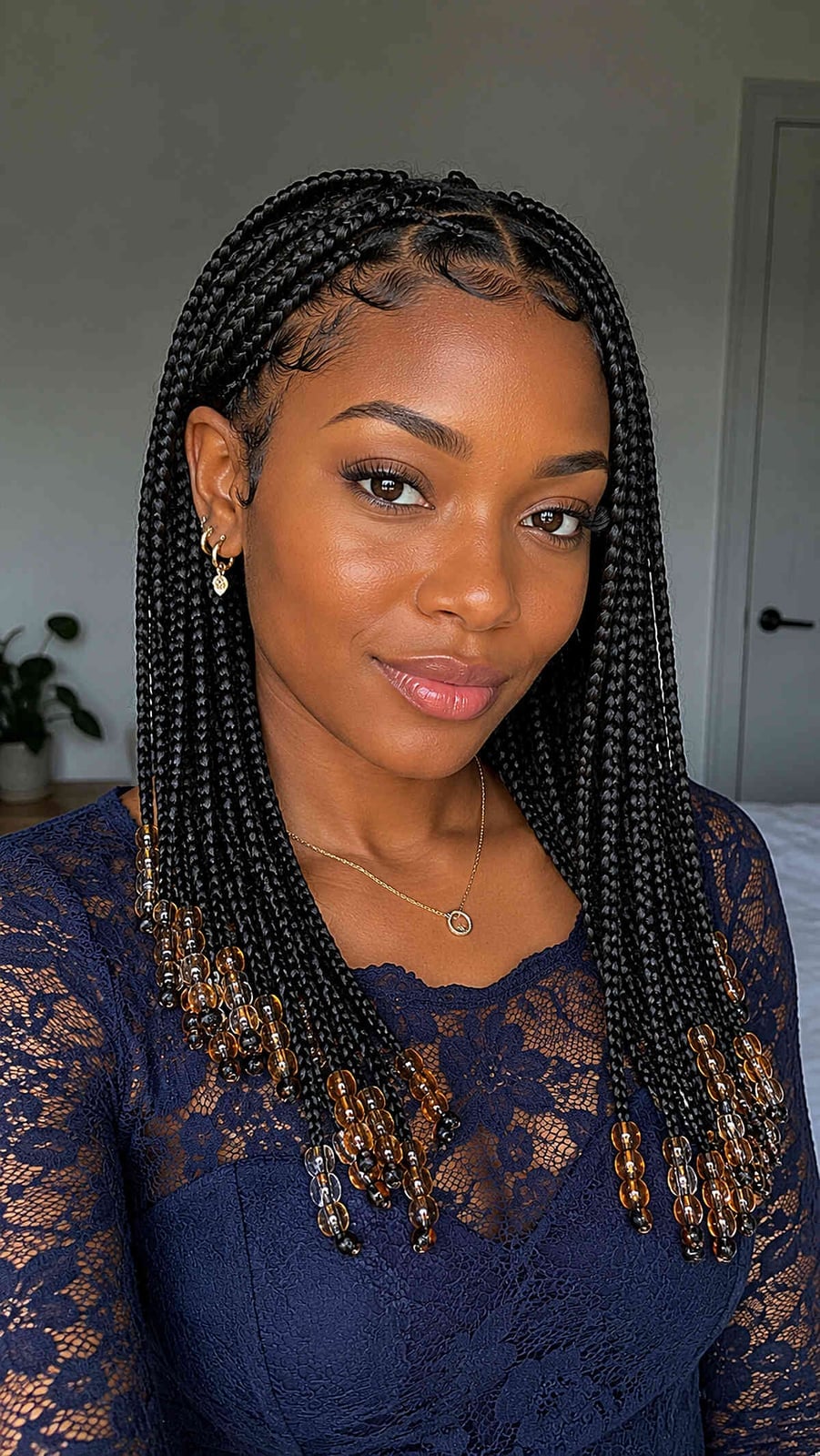
Knotless braids already reduce tension at the root, so adding beads seems like a harmless flourish. But those amber beads have weight, and over time they can pull on the ends and stretch the braids. On straight black hair parted in the middle and braided to mid-back, the beads catch the light and break up the solid color, visually, it works. The question is whether your scalp agrees.
Ask your stylist for: Long knotless braids with amber beads. The honest trade-off is that beads snag on collars and pillowcases, and they add enough weight that the braids may not swing as freely as unadorned ones. Stick to smaller beads placed only on the lower half of each braid to minimize strain. A scalp oil applied weekly keeps the partings from looking dry.
Textured Fishtail Braid with Ribbon
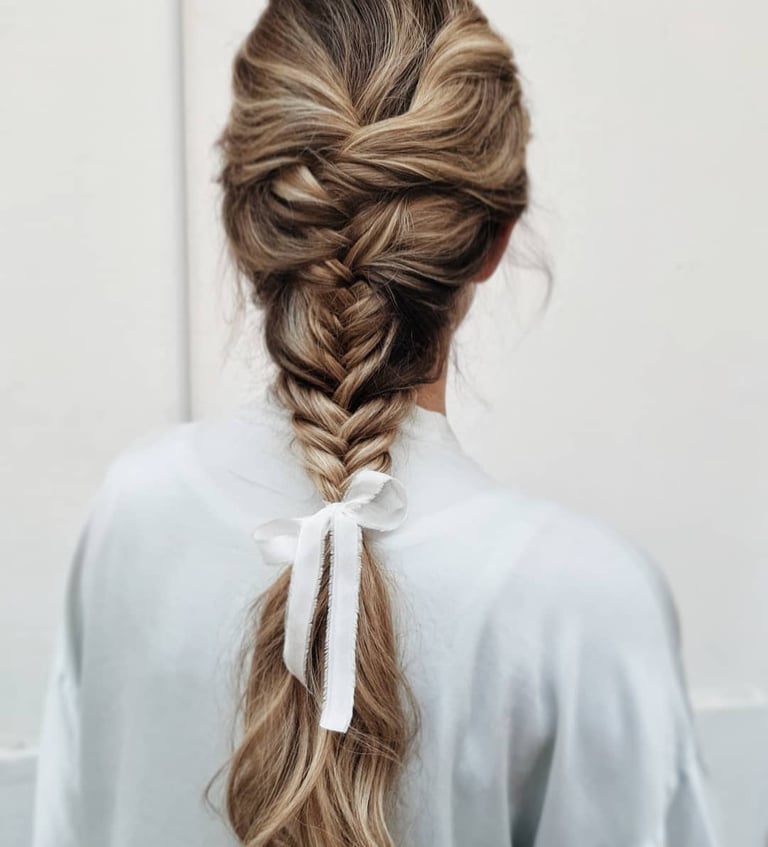
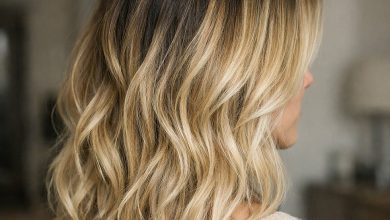
A fishtail braid on thick, wavy hair already has visual depth, but the blend of brown and blonde tones multiplies it. This one works down to mid-back, with a white ribbon tied at the end. The contrast between the ribbon and the dimensional color keeps the eye moving. Loosen the braid slightly after securing for a softer, more voluminous silhouette. Ask your stylist for: Textured fishtail braid with a ribbon. The trim rhythm stays at every eight weeks to keep the ends from looking stringy.
Braided Accents with Voluminous Curls
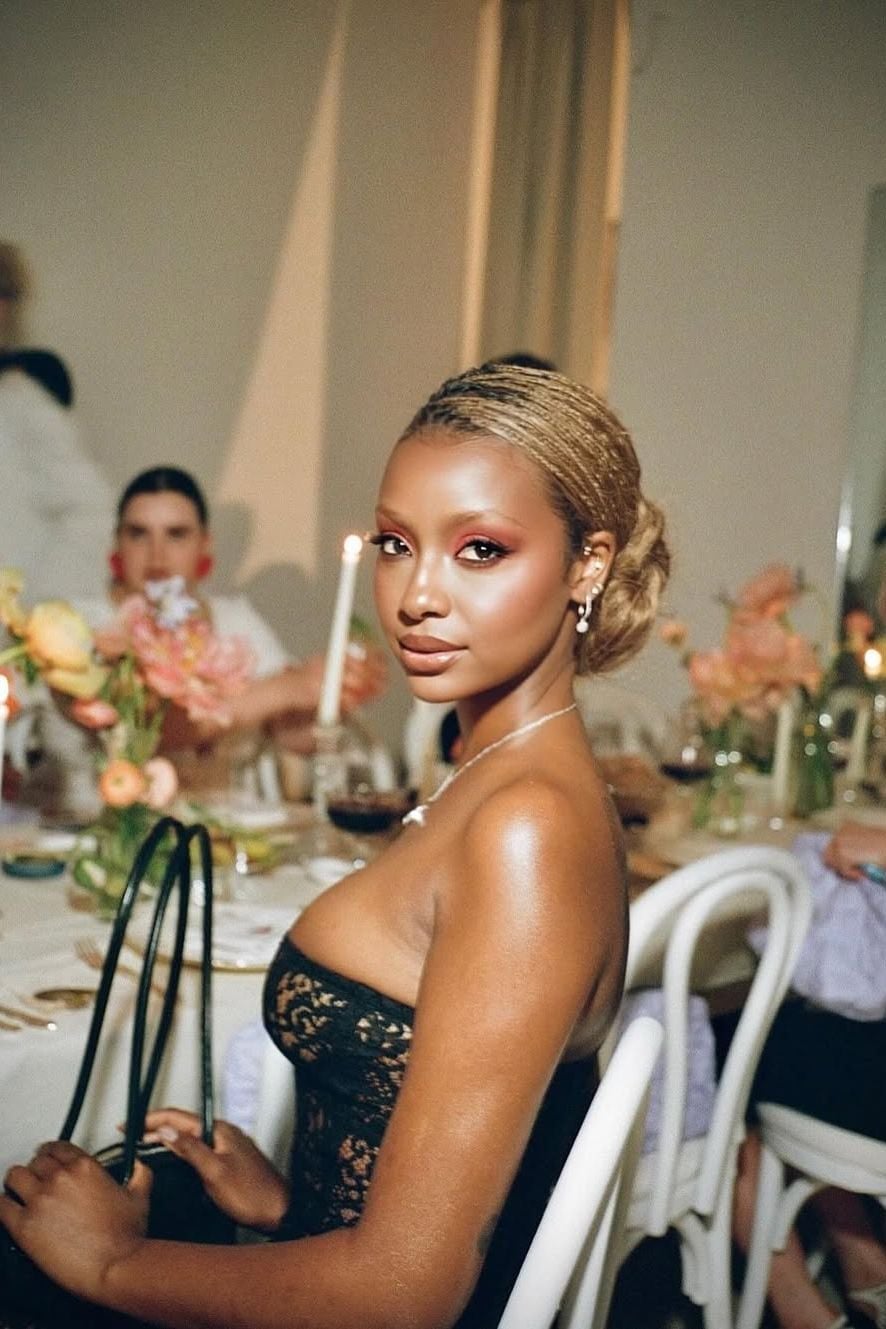
Who actually benefits from braided accents with curls? Anyone with thick, curly hair who wants structure without sacrificing volume. Intricate cornrows at the crown and temples frame the face, then release into long, voluminous curls that cascade to mid-back. The side part keeps the braided sections visible without overwhelming the loose hair. This is a two-texture style that needs both a curl-defining cream for the relaxed sections and a light gel for the cornrows. Ask your stylist for: Cornrows at the crown transitioning into long curls. It suits those who want a style that stays put at the top but moves freely at the bottom.
Box Braids with Wavy Ends and Highlights
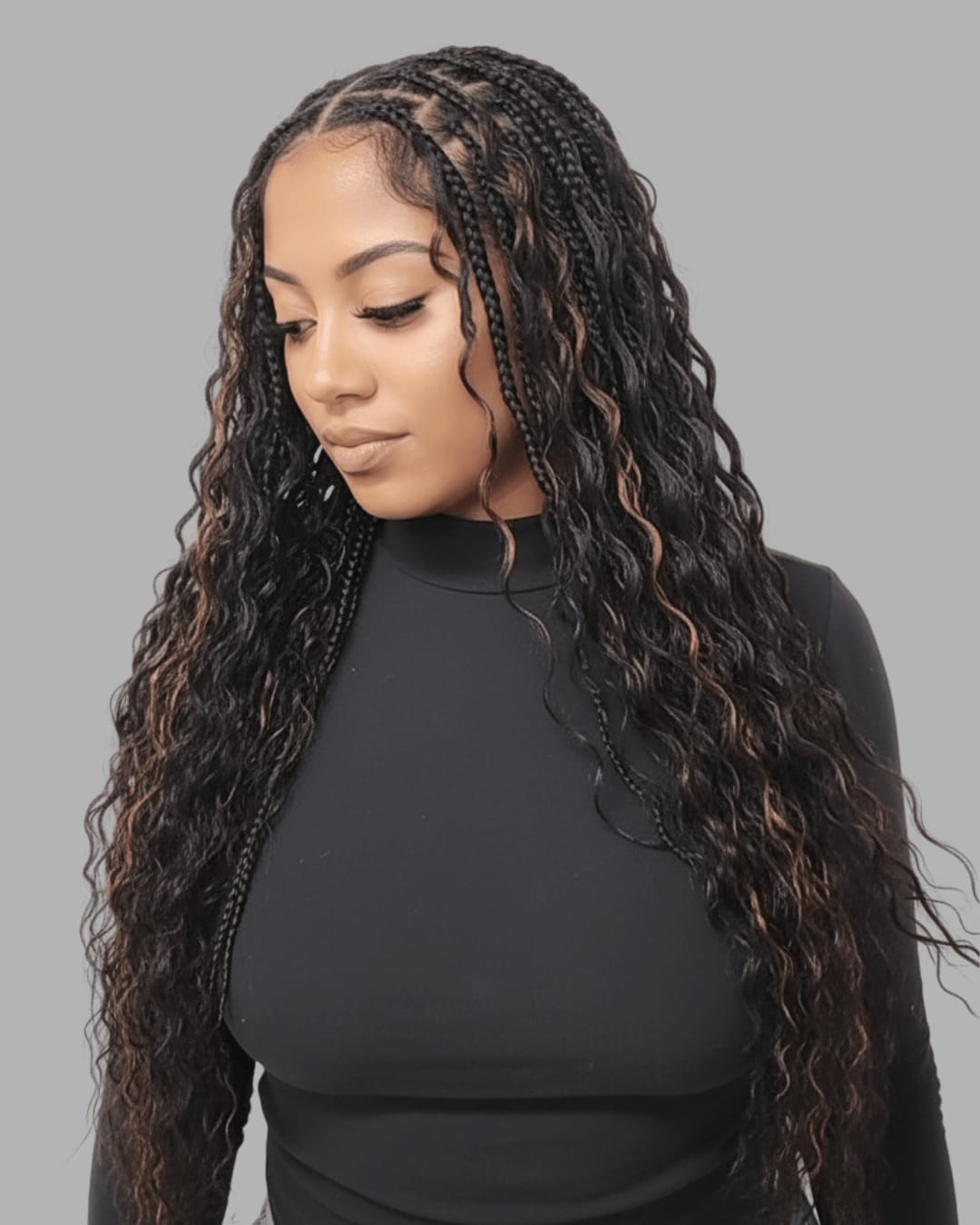
A dark brown box braid that gives up about halfway down and lets the lower lengths fall loose reads as deliberate, not unfinished. The blonde highlights threaded through the braided sections add dimension. This approach suits thick hair of mid-back length or longer. The braids need enough weight to stay neat, and the wavy ends need enough density to look polished and full. Ask your stylist for: box braids with wavy ends and subtle blonde highlights.
Compare this to all-braided styles, which can feel uniform from scalp to tip. Here the contrast between the structured braids and the loose wavy ends creates movement and visual interest. The wavy sections benefit from a leave-in conditioner to keep them from drying out, and a trim every eight weeks maintains the shape at the ends. This style takes about three hours to install.
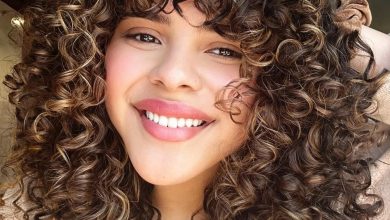
Curly Hair with Crown Cornrows
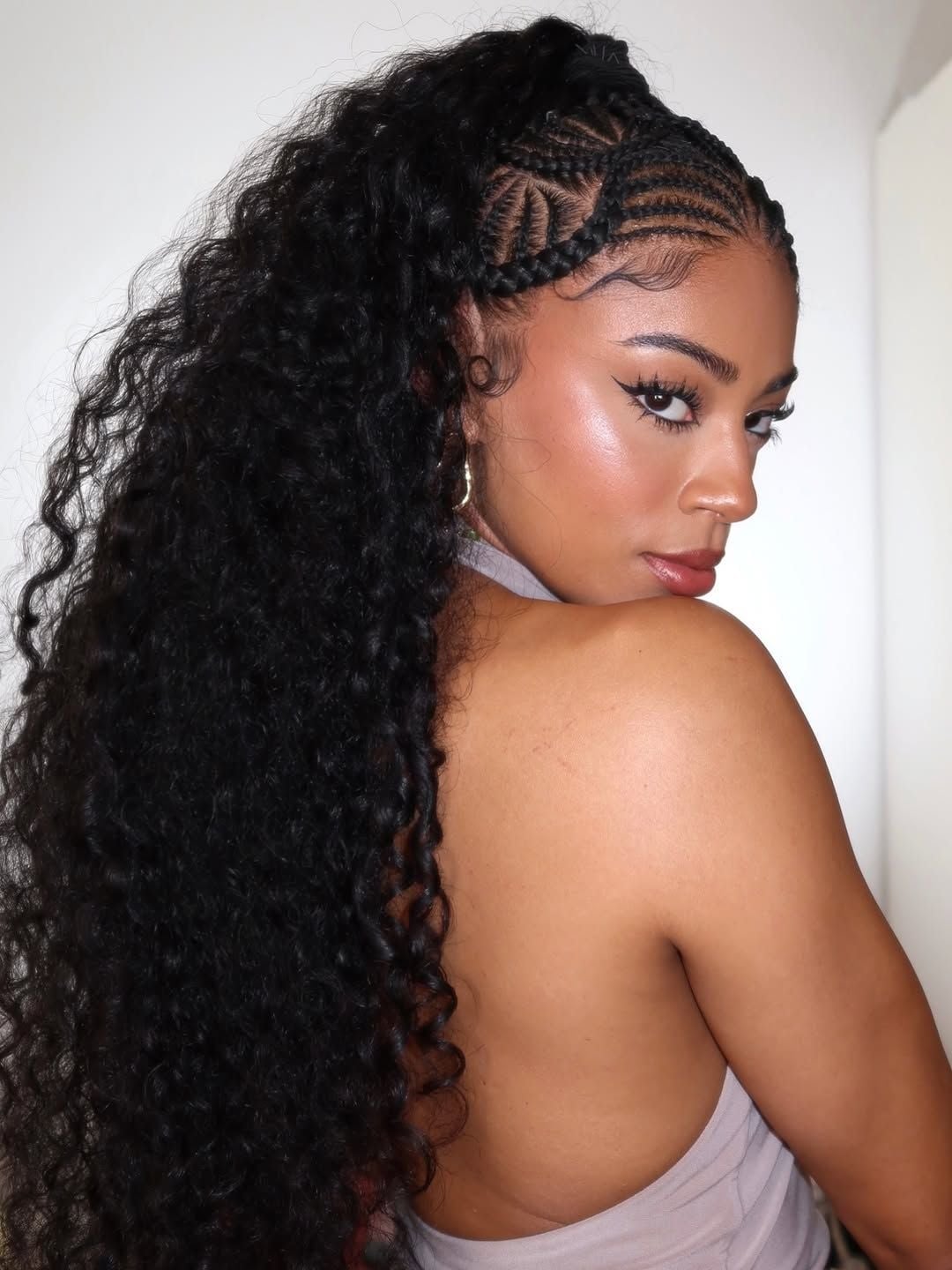
Cornrows at the crown paired with loose curls everywhere else is the braided equivalent of having your cake and eating it too. It is a practical choice for warmer months, when you want the scalp-cooling benefit of braids without sacrificing the volume your curls bring. Ask your stylist for: crown cornrows with long voluminous curls. The style works best on thick, curly hair of mid-back length or longer. A moisturizing curl cream keeps the loose sections defined, and a smoothing balm on the braids prevents frizz along the part.
Loose Braid with Subtle Highlights
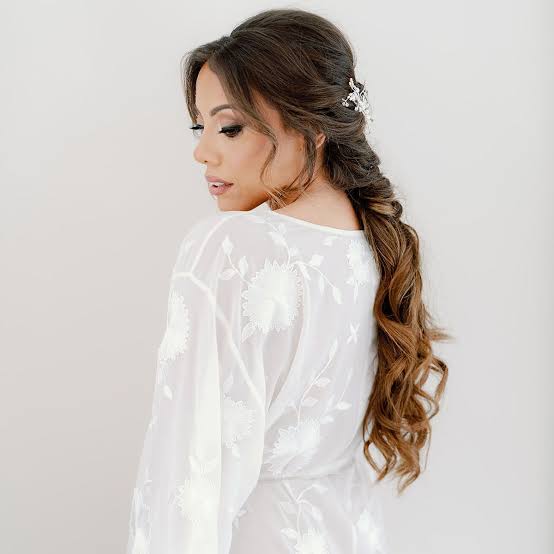
A loose braid only looks good if the tension is consistent from top to bottom. The subtle lighter highlights in this dark brown base keep the braid from reading as one solid block of color. This style suits thick, wavy hair of mid-back length; the texture helps the braid hold its shape without constant pinning. Ask your stylist for: loose intricate braid with subtle highlights.
Upkeep is straightforward but specific. Gently pull sections of the braid apart after it is finished to create a fuller, more relaxed silhouette. A texturizing spray applied before braiding gives the hair enough grip to stay in place without looking stiff. The highlights demand a toning appointment every ten to twelve weeks to keep them from oxidizing warm against the dark brown base. A trim every eight weeks keeps the ends from fraying.
Half-Up Half-Down Braided Crown
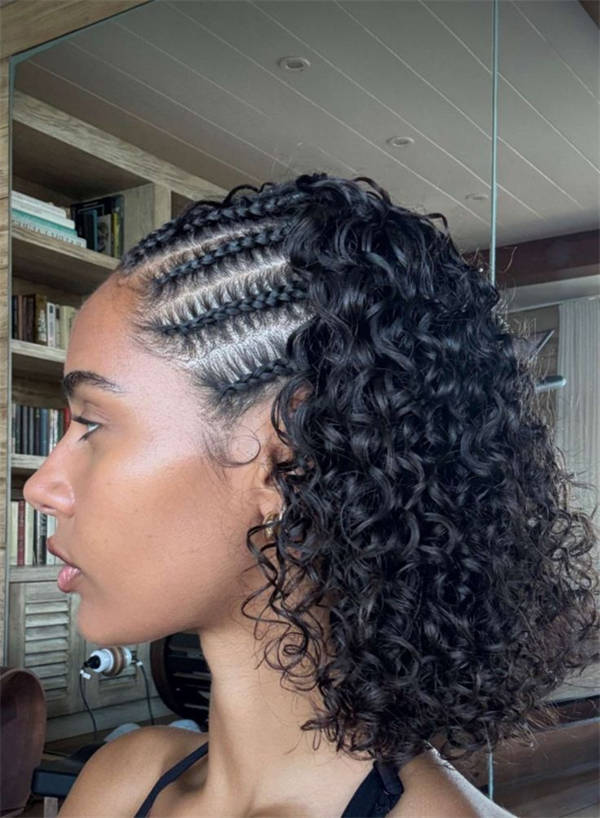
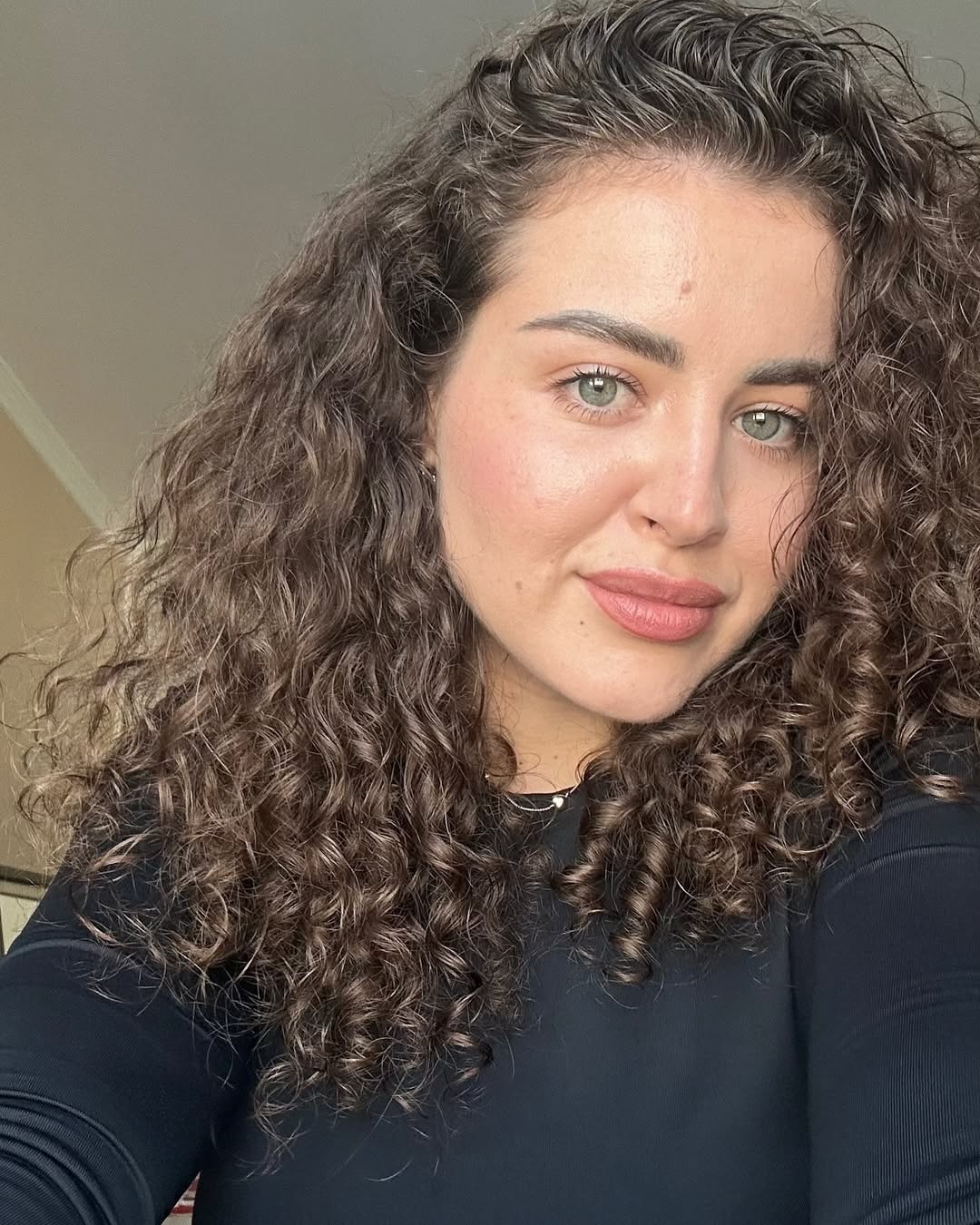
A braided crown that looks like a crown, not a headband, starts with the right request. Ask your stylist for: half-up half-down style with a braided crown. Use sections wide enough to appear substantial from the front. This style suits thick, curly hair of shoulder length or longer, since the braids need bulk and the loose curls need enough length to frame the face. The blonde highlights against the dark brown base add contrast that keeps the braided section from blending into the hair. A middle part keeps the crown symmetrical.
Classic French Braid
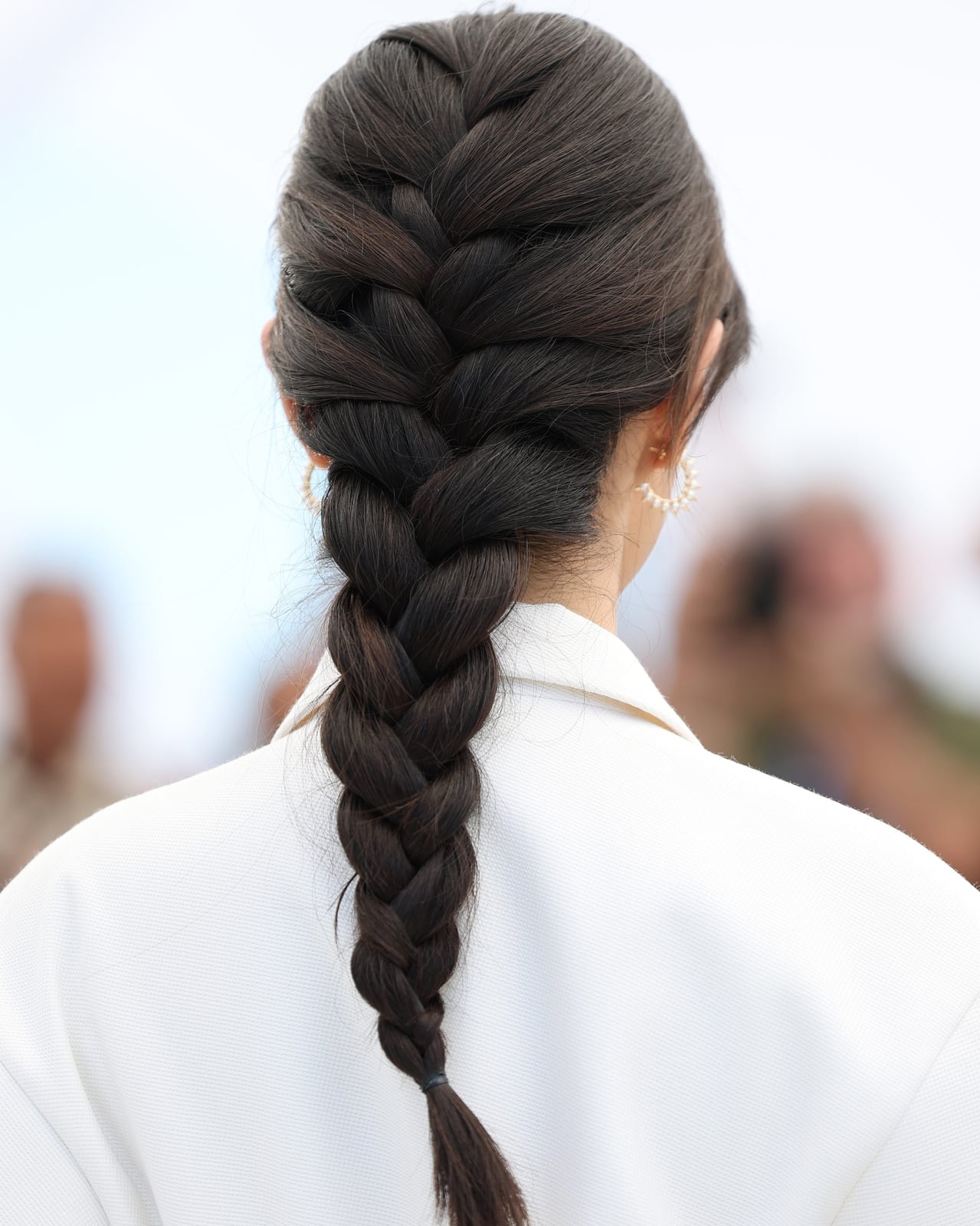
A classic French braid is the kind of style that looks simple but punishes uneven tension. The neat, defined pattern from crown to mid-back requires a steady hand and hair that cooperates. This style suits thick, straight hair of mid-back length or longer; fine hair tends to slip out of the weave by midday. Ask your stylist for: classic French braid to mid-back.
Doing this at home is possible with practice, but the salon version will be tighter, smoother and last a full two days without loosening. The DIY version takes about fifteen minutes once you have the motion down, but expect a few uneven sections the first handful of tries. A salon version takes about twenty minutes and holds its shape through a workout. A fine-tooth comb for the part and a finishing spray for the flyaways make the difference between a braid that looks polished and one that looks like a practice run.
Braided Updo with Auburn Highlights
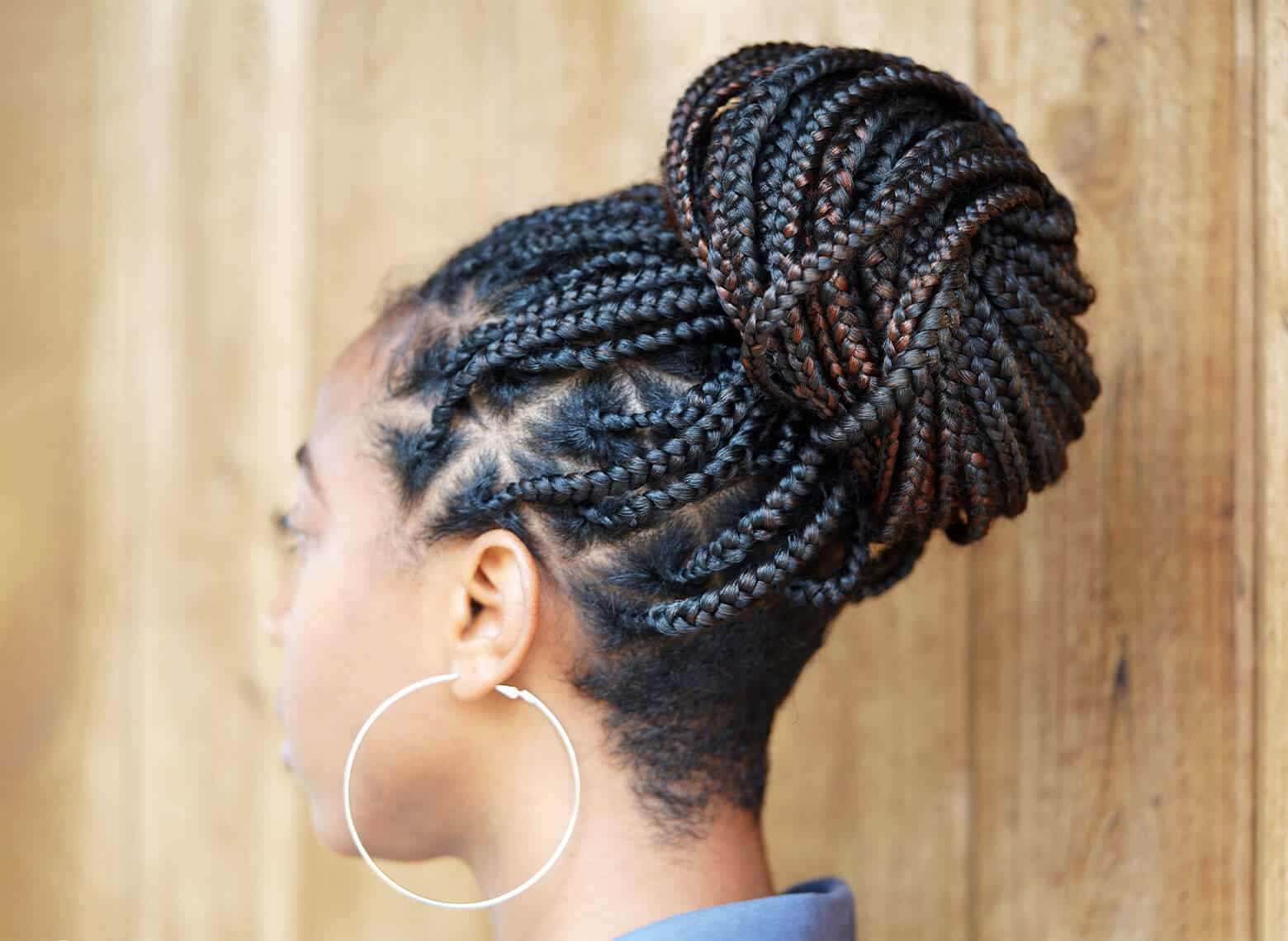
A high braided bun in dark brown with subtle auburn highlights delivers dimension that flat color cannot touch. The intricate braiding near the hairline pulls the eye inward. This look requires thick hair of mid-back length or longer. Fine strands will struggle to fill the pattern, and the bun can feel heavy after a few hours.
Ask your stylist for: a high braided bun with subtle auburn highlights. A shine serum brings out the auburn tones and smooths the braids, but the real work happens in the chair. Professional styling is the only route here. The geometry demands a second pair of hands. This is not a quick in-and-out style, and the weight means your scalp will know it is there.
Complex Braids into Fishtail
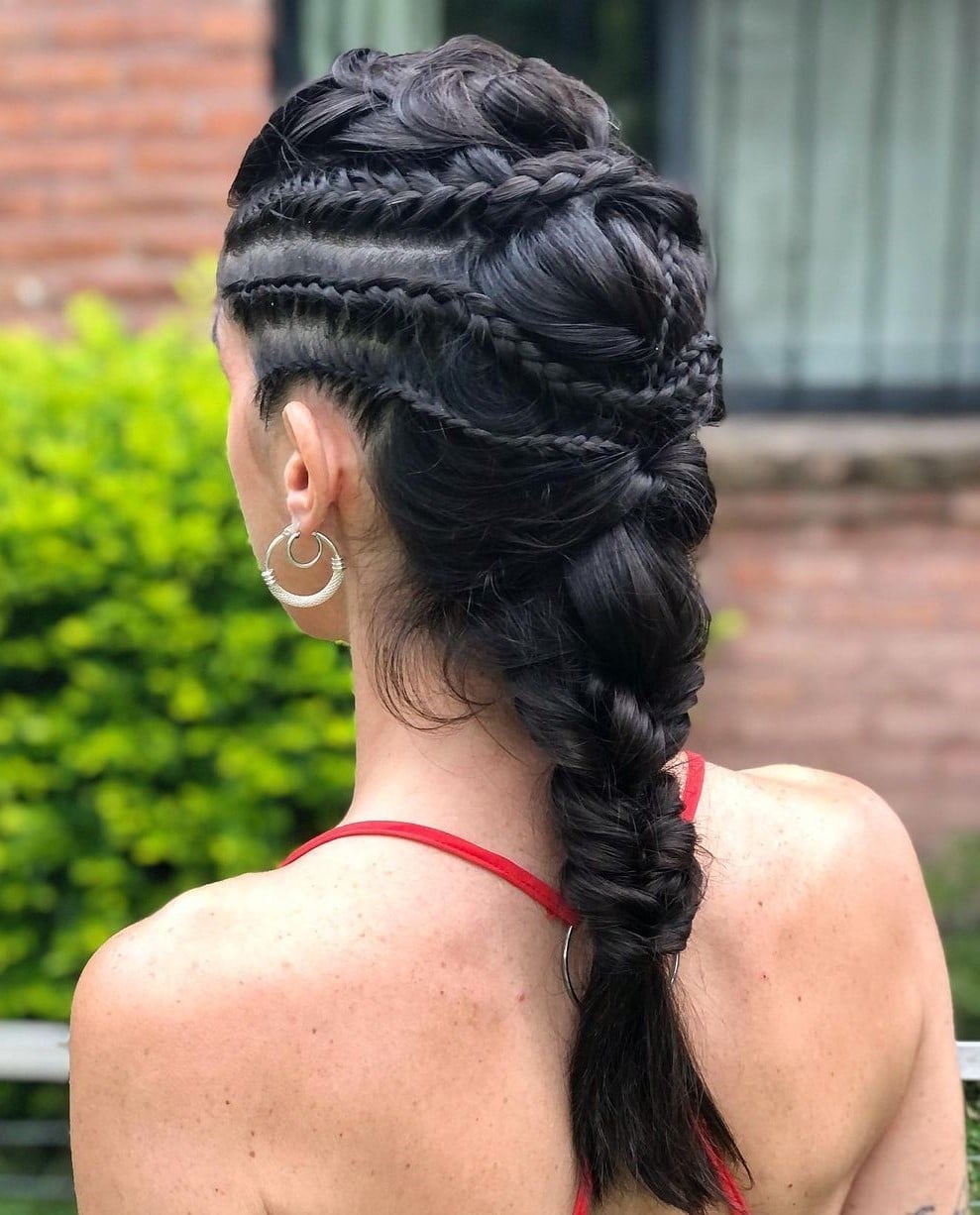
Multiple intricate braids feed into a single large fishtail that reaches the mid-back, turning the back of your head into a conversation piece. The natural wavy texture of black hair gives the braids grip without product, so the pattern holds its shape through a full evening. This is a technical build: each section must be tensioned evenly or the fishtail will twist off-center.
Ask your stylist for: complex braids culminating in a fishtail braid. A texturizing spray after styling adds definition without stiffness. The upkeep is minimal, sleep on a silk pillowcase and the braids stay intact for two to three days. Skilled execution is non-negotiable; this is not a style for a beginner with a YouTube tutorial.
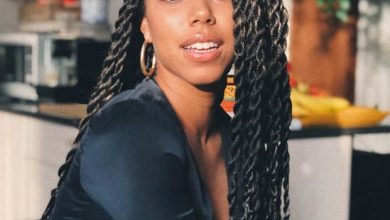
Swirl Pattern Braids with Curly Extensions
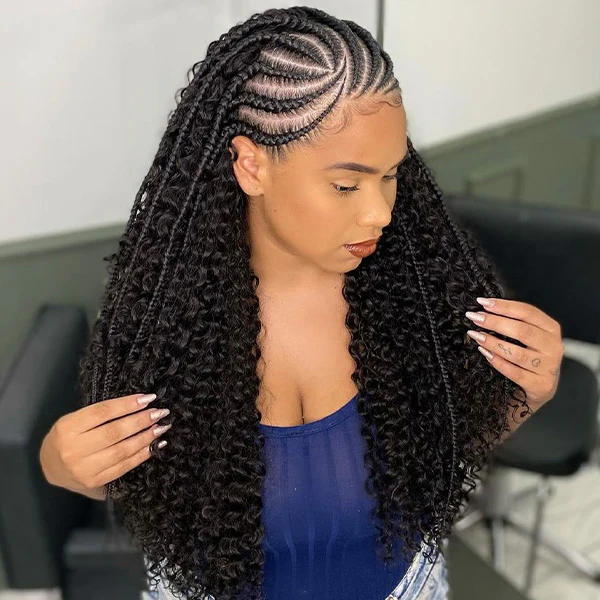
How do you add serious length and volume without waiting two years? Swirl pattern braids that transition into long curly extensions give you both in one appointment. The black hair is thick enough to anchor the braids, and the middle parting keeps the swirls symmetrical from root to crown. This approach works best on hair that can handle tension, fine or fragile textures should pass. Ask your stylist for: swirl pattern braids with long curly extensions. The payoff is dramatic length and a texture contrast that flat braiding cannot match.
Chunky Side Braid with Dimension
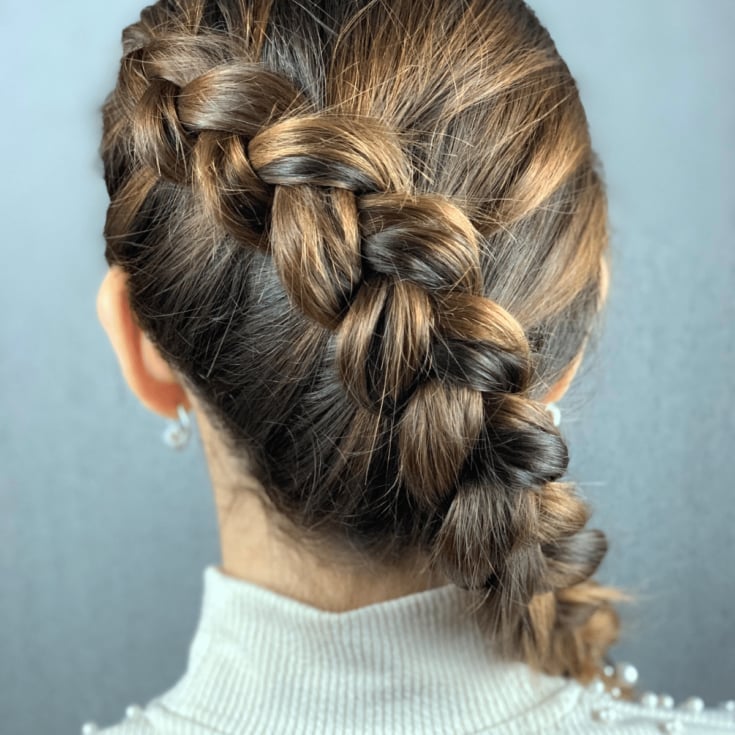
A chunky side braid that ends around the shoulder needs a solid rule: pull it slightly loose before you leave the house, because it will settle tighter as the day goes on. The brown and blonde highlights create dimension that a single-tone braid lacks, and the wavy texture gives the braid natural grip. Side partings suit this style best. They let the braid fall cleanly without fighting the part. Ask your stylist for: a chunky side braid with dimension. A texturizing spray adds hold and prevents the sections from sliding apart. For a casual daytime event, this is the braid that looks deliberate without trying to be fancy.
Stitch Braids with Curly Extensions
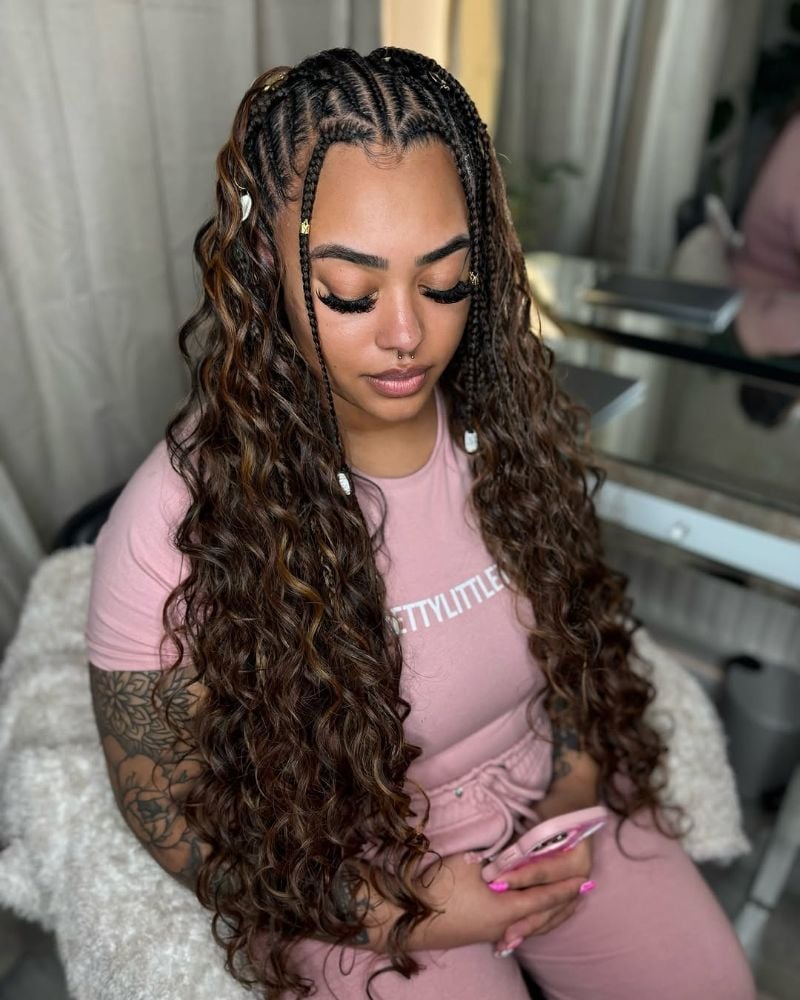
Stitch braids that run from root to scalp and then release into long curly extensions require precision that home braiding cannot replicate. The dark brown hair with blonde highlights creates a subtle color shift that looks natural, not applied. This is a two-skill style: the stitch pattern needs even tension, and the extensions need to match the curl pattern of your natural hair. Ask your stylist for: stitch braids with long curly extensions. A hydrating serum on the extensions keeps them soft, but the braids themselves need professional touch-ups every few weeks. DIY is not a realistic option here, the stitch technique demands a clear view of the part lines.
Final Thoughts
For a low-maintenance yet polished result, pick a style with fewer intricate parts or one that can be secured into a bun or ponytail between washes. Add beads or subtle highlights for visual interest without adding styling time.
- Maintain intricate braids with touch-ups every 2-3 weeks to keep the hairline neat.
- Condition braided styles weekly to prevent dryness and breakage, especially at the ends.
- Use a silk or satin scarf or bonnet at night to protect braids from frizz and tangling.
- Avoid excessive heat styling on extensions to preserve their texture and integrity.
Braids offer endless possibilities for elegant and practical styling.