Natural twists are a protective style that starts with two strands of hair wound around each other, creating a rope-like texture that holds without heat. The current shift favors a glossier, more defined finish, with curtain bangs adding softness around the face.
This collection of 20 simple natural twists covers everything from quick shoulder-length sets to intricate updos that last a week. Fine hair that loses definition by midday or a grow-out line that shows too fast are both solved here. The focus is on texture and hold, not on a single look.
Collarbone Length Twists With Curtain Bangs
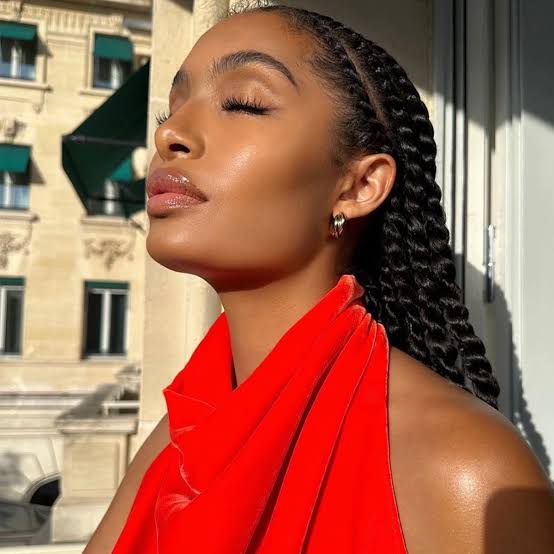
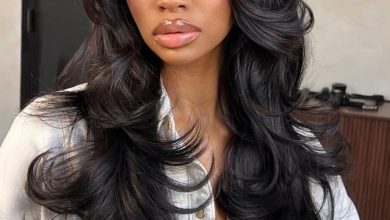
Loose twists that stop at the collarbone get a soft, face-framing finish from curtain bangs, and the glossy sheen on wavy, thick texture makes the whole style look deliberately undone. This design suits round and oval faces because the middle part and the length below the chin work to elongate. It needs hair that starts at shoulder length or longer, so the layers have room to move. Ask your stylist for collarbone length twists with soft curtain bangs. A light serum on the ends keeps the gloss going, and a trim every eight weeks keeps the baseline from turning ragged.
Shoulder Length Two-Strand Twists
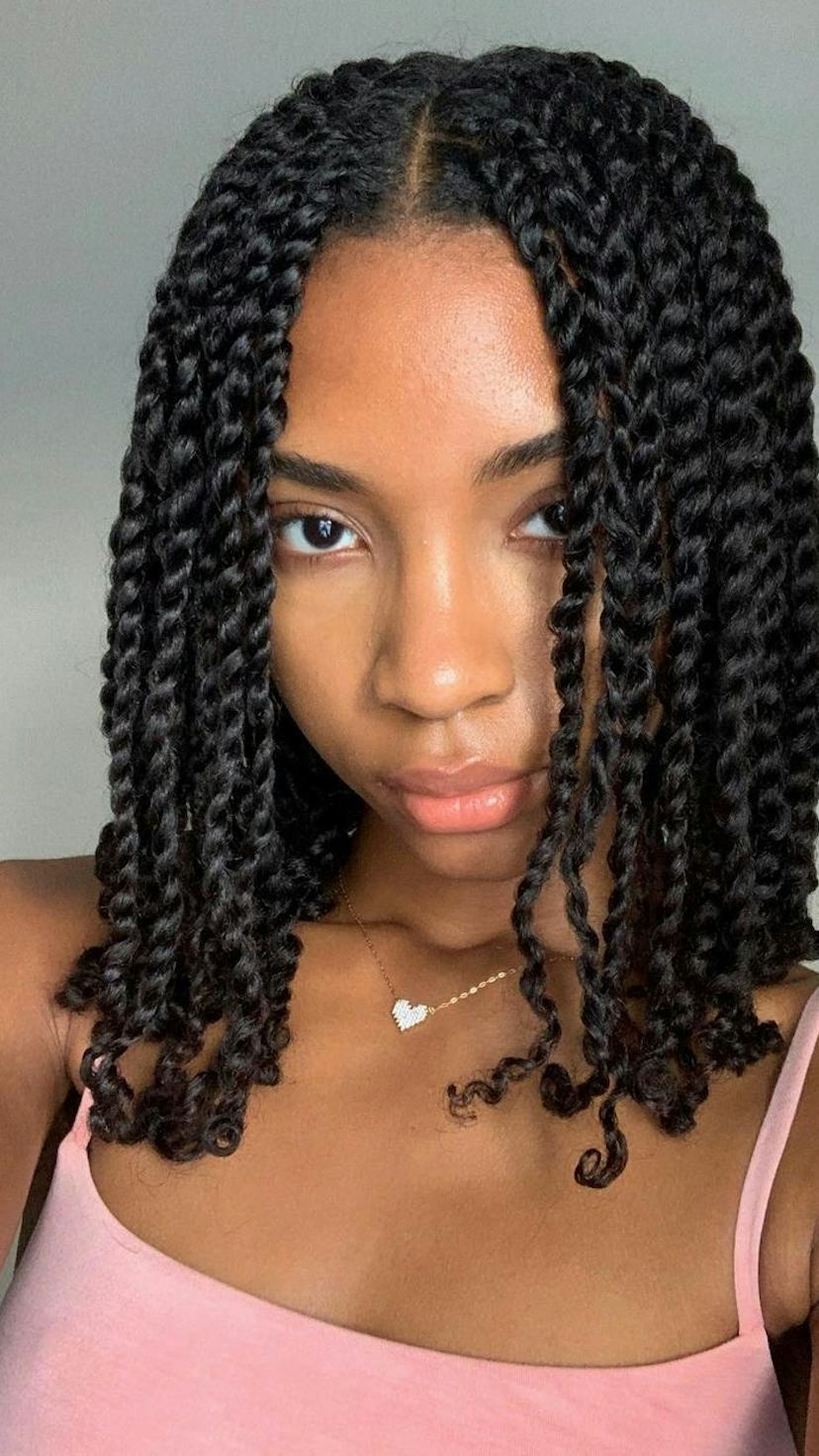
Two-strand twists are built by dividing coily, thick hair into sections and twisting each pair around itself, which gives the ends a natural curl pattern that reads as healthy. The style lands at the collarbone with a middle part, and the defined ends are the payoff for the extra sectioning time. It suits most face shapes because the length sits neutral and the volume stays balanced. Ask your stylist for shoulder length two-strand twists with defined ends. Keep the ends moisturized with a curl cream to hold that definition, and re-twist the roots every six weeks to keep the lines sharp.
Chin Length Half-Up Half-Down Twists
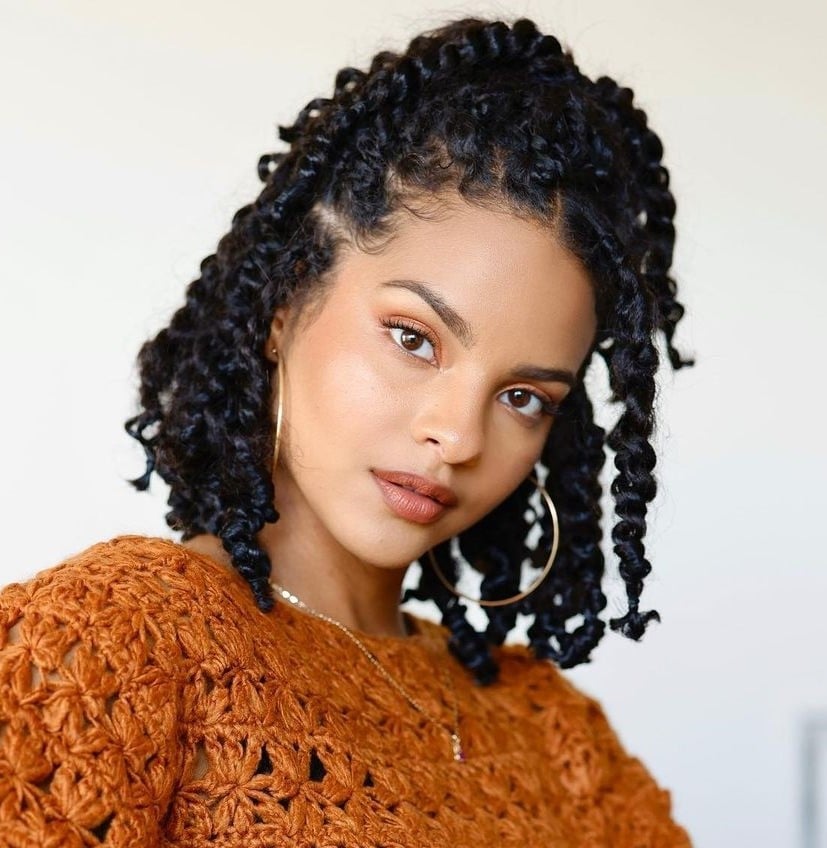
Ever wonder how to keep short twists out of your face without losing the style? The half-up, half-down approach works on chin length twists, pulling the top section back while the rest falls loose around the jaw. The side parting and wavy, thick texture keep it from looking like a rushed ponytail. It suits square and heart faces because the length softens the jawline. Ask your stylist for chin length twists, half-up half-down style. Secure the top with a snag-free elastic and smooth stray hairs with a light hold gel.
Collarbone Mini Twists With Geometric Parting
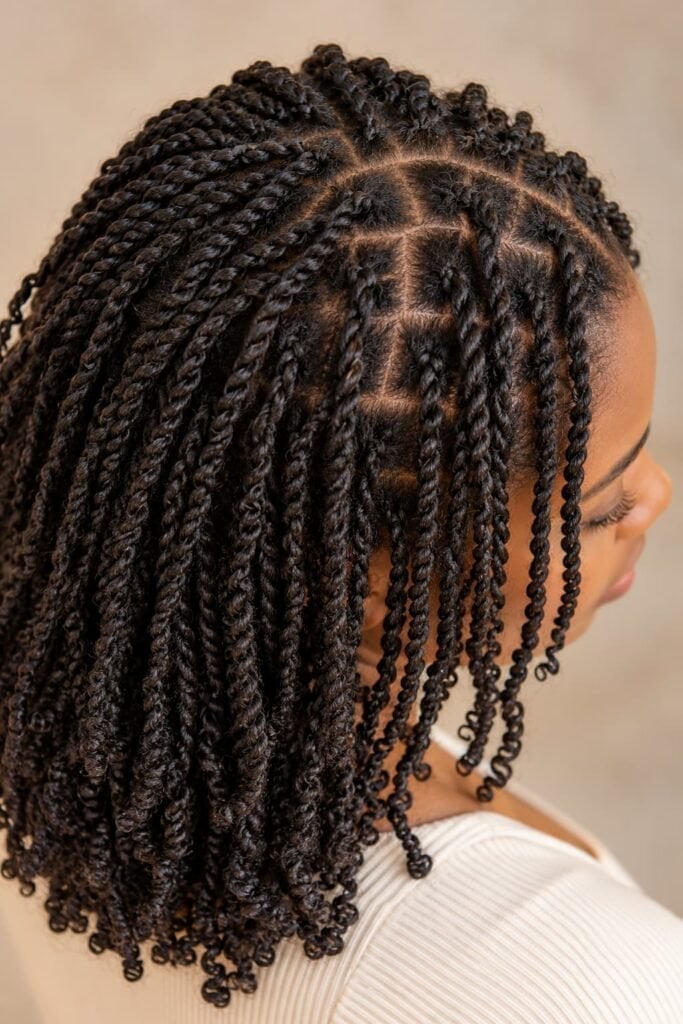
Mini twists usually read as uniform, but a geometric parting on the crown changes the whole character. The precise lines break up the density and give the collarbone length style a graphic edge, especially from the side. This one suits thick, coily hair of collarbone length or longer, and the structured parting works with any face shape. Ask your stylist for collarbone mini twists with geometric parting. Upkeep is the trade-off: the parting needs a fine-tooth comb to stay crisp, and smaller sections need re-twisting every two to three weeks.
Mid-Back Twists With Voluminous Curly Ends
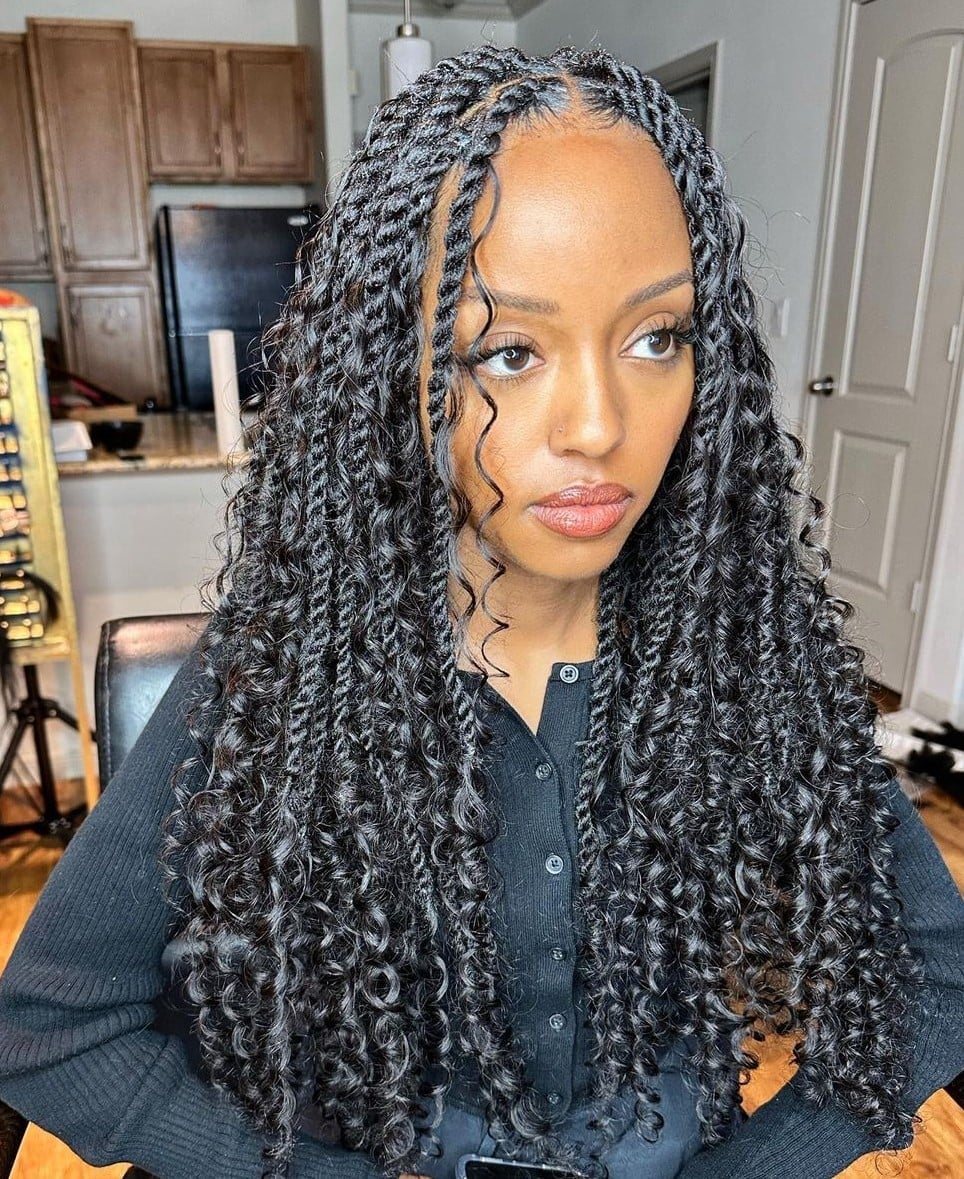
Long twists to mid-back can weigh down the look, but voluminous curly ends flip that logic. The loose two-strand twists keep the body moving, while the curled ends add bounce and stop the length from falling flat. A middle part and face-framing pieces tie it together. This style suits long and oval faces, where the vertical line and the added volume at the ends work in proportion. Ask your stylist for mid-back two-strand twists with curly ends. To keep those ends defined, use a diffuser on low heat and re-twist the roots monthly.
Collarbone Twists With Curled Ends Contrast
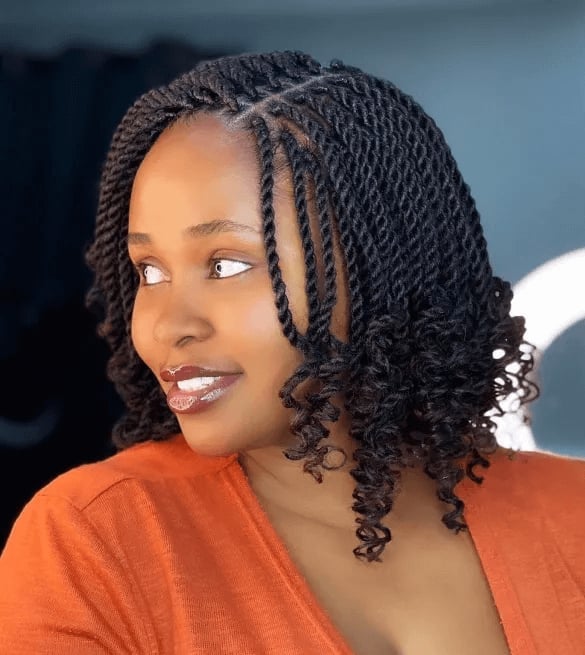
The two-strand twists stop at the collarbone, but the ends do the talking: they unravel into loose waves and curls against the neat, defined top and middle part. For wavy hair with some thickness, this contrast looks deliberate rather than a style that gave up halfway. Ask your stylist for: collarbone twists with a contrast of curled ends. It suits all face shapes, though the collarbone length works best if your hair starts there or longer. The black base keeps the texture the focus. Apply a curl-defining cream to the ends before twisting so the waves hold their shape. A trim every six to eight weeks keeps the baseline clean and the curl transition crisp. This style works for workdays, then carries into an evening without a second thought.
Chic Collarbone Twists With Subtle Highlights
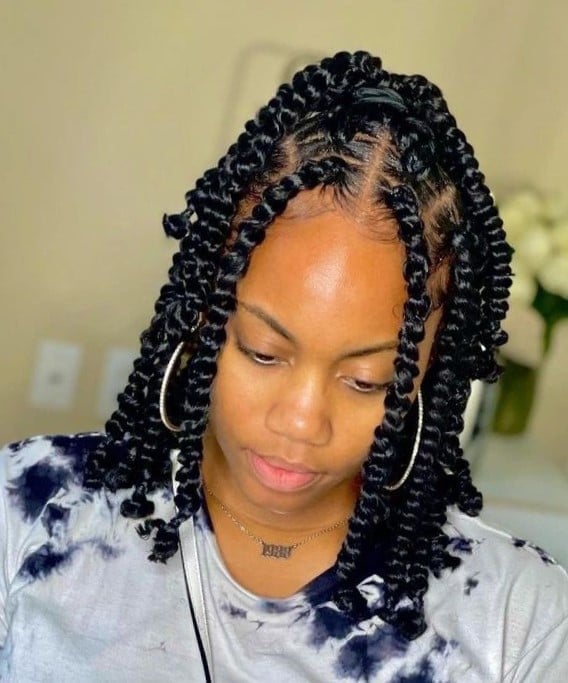
Here, subtle highlights weave through a black base, adding dimension that looks natural rather than streaky. Thick, wavy hair starting at shoulder length carries this best, with face-framing layers that suit oval and heart faces. Ask your colorist for: collarbone length loose twists with subtle highlights. This is a salon-leaning style, mostly because the highlights need a professional hand to stay subtle. The trade-off is that highlights on loose twists can fade faster, since the twists expose more surface area to washing. To keep the twists looking loose and lived-in, plan a trim every six weeks to keep the ends healthy.
Mid-Back Twisted Braids With Intricate Parting
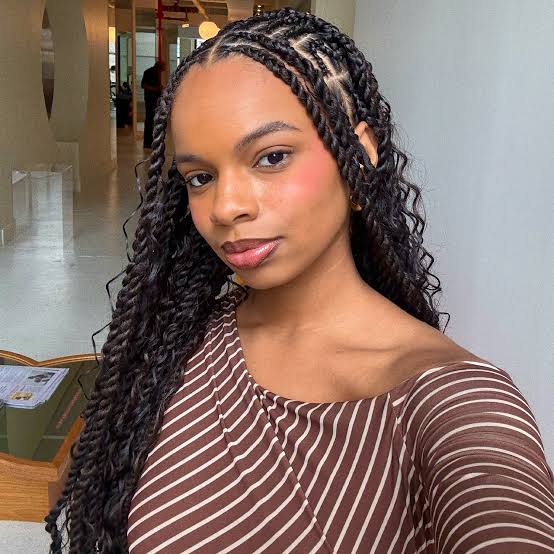
The geometric parting at the crown is the detail that separates this from a standard set of twists. It creates a defined pattern that draws the eye upward, making the most of thick, coily hair that reaches mid-back or longer. The dark brown color and even lighting let the twist texture stand out, and the middle part balances the whole look. Ask your stylist for: mid-back defined twisted braids with intricate parting. This style suits all face shapes, but it genuinely flatters those with thick, coily hair who want a low-maintenance protective style with visual interest. To keep the parting lines sharp, apply a light oil to the scalp along them to prevent dryness. Re-twist the roots every four to six weeks to maintain the definition and keep the geometric pattern crisp.
Collarbone Mini Twists With Side Part
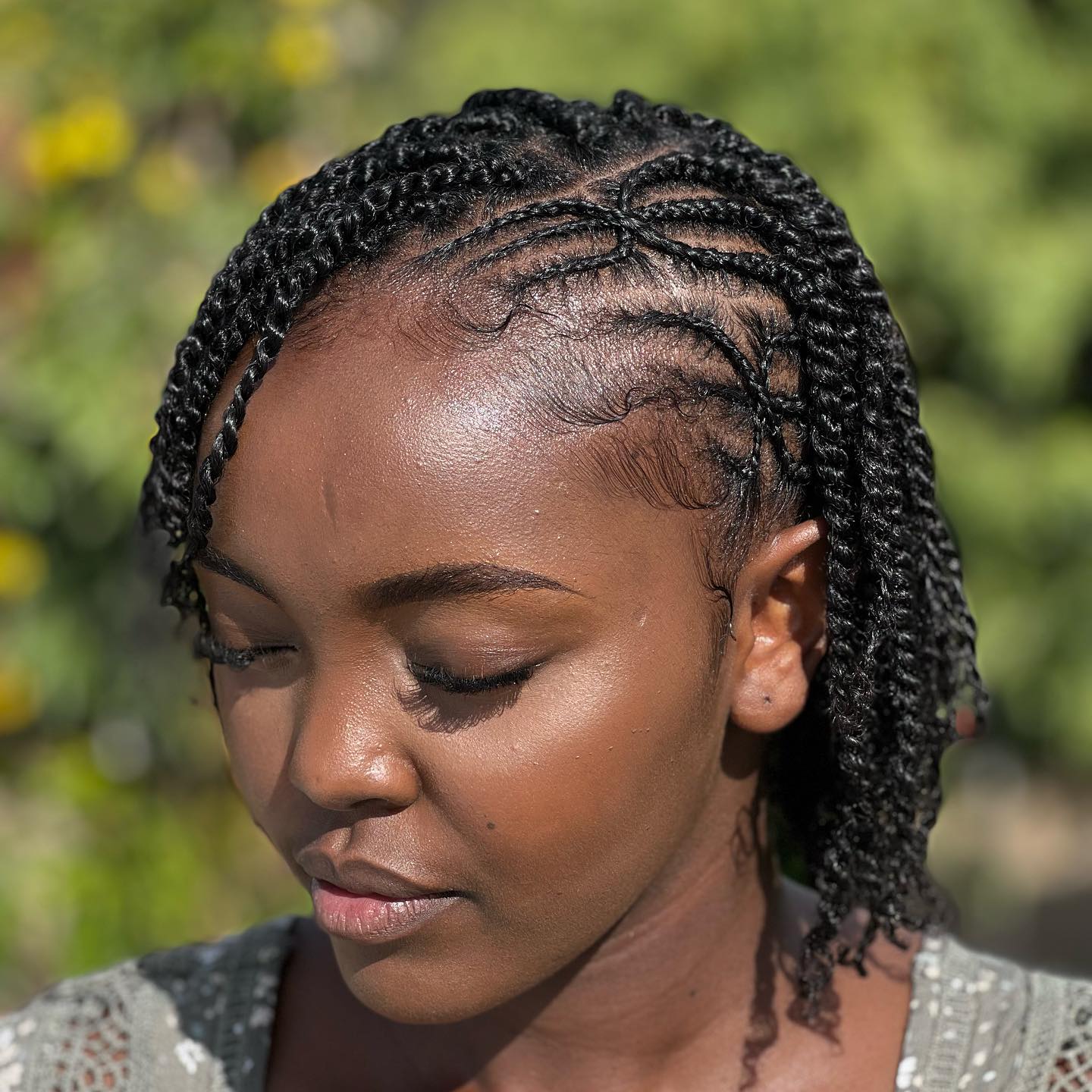
Can you get neat mini twists without a salon visit? Yes, if you start with the right prep. Section the hair with a rattail comb to create a defined side part, then twist small sections from root to tip, keeping each twist the same size for consistency. On thick, wavy hair at collarbone length, the black mini twists fall loosely around the shoulders, and the side parting adds a soft asymmetry that suits oval and heart faces. Ask your stylist for: collarbone length mini twists with a side part. Use a small amount of edge control to smooth the hairline so the part stays clean. Re-twist sections every two weeks to keep them looking fresh between full resets.
Short Flat Twists Elegant Updo With Side Bangs
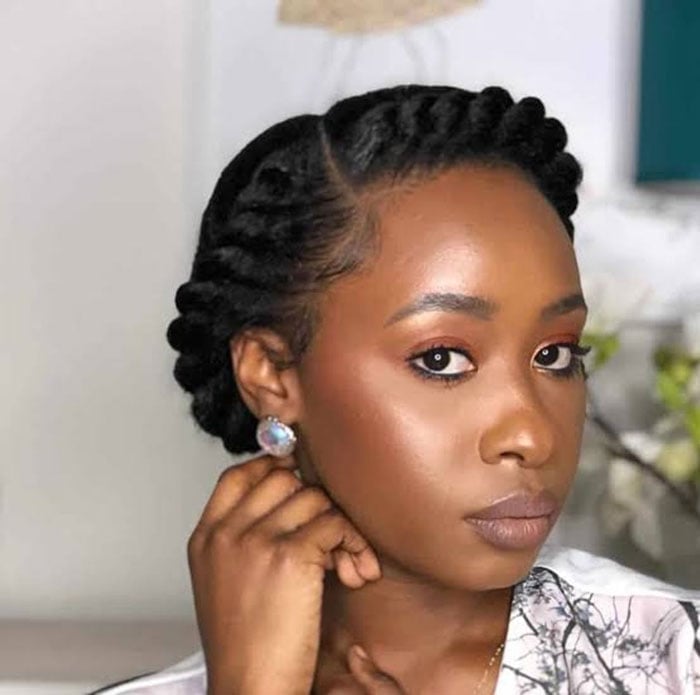
The flat twists start at the root and lie close to the scalp, swept to the side before gathering into an updo, with side-swept bangs breaking the line. For thick, coily hair at short length, this is a technique that holds well and looks intentional. Ask your stylist for: short flat twists styled into an elegant updo with side-swept bangs. It suits round and square faces, as the side sweep and height at the crown add length. Secure the updo with bobby pins at the base, and finish with a light hairspray so the flat twists stay smooth. The black color keeps the silhouette clean, and the whole style holds through a formal occasion without constant adjustment.
Shoulder Length Mini Twists With Gray Roots
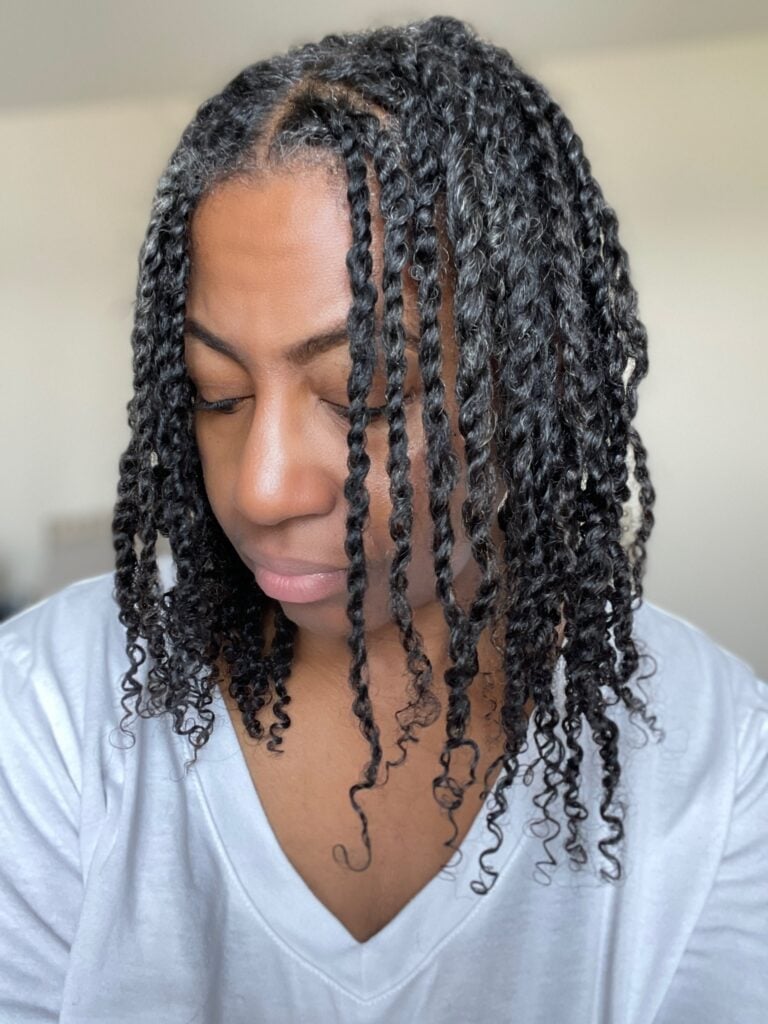
Gray roots against defined mini twists look like a planned style choice, not neglect, especially on thick, curly hair where the contrast lands softly. The shoulder length keeps the style wearable, while the middle part lets the natural color transition show evenly on both sides. Ask your stylist for: shoulder length mini two-strand twists. Thick, curly hair of shoulder length or longer suits this best, and it works across face shapes because the length and parting balance your features.
A violet-toned shampoo keeps the gray bright instead of brassy, and it is worth the extra rinse. Re-twist sections every 2-3 weeks to keep the roots neat, though a looser root is part of the charm here. The mini twists hold their shape for weeks with minimal fuss, making this a genuinely low-maintenance option.
Neck Length Flat Twists High Bun
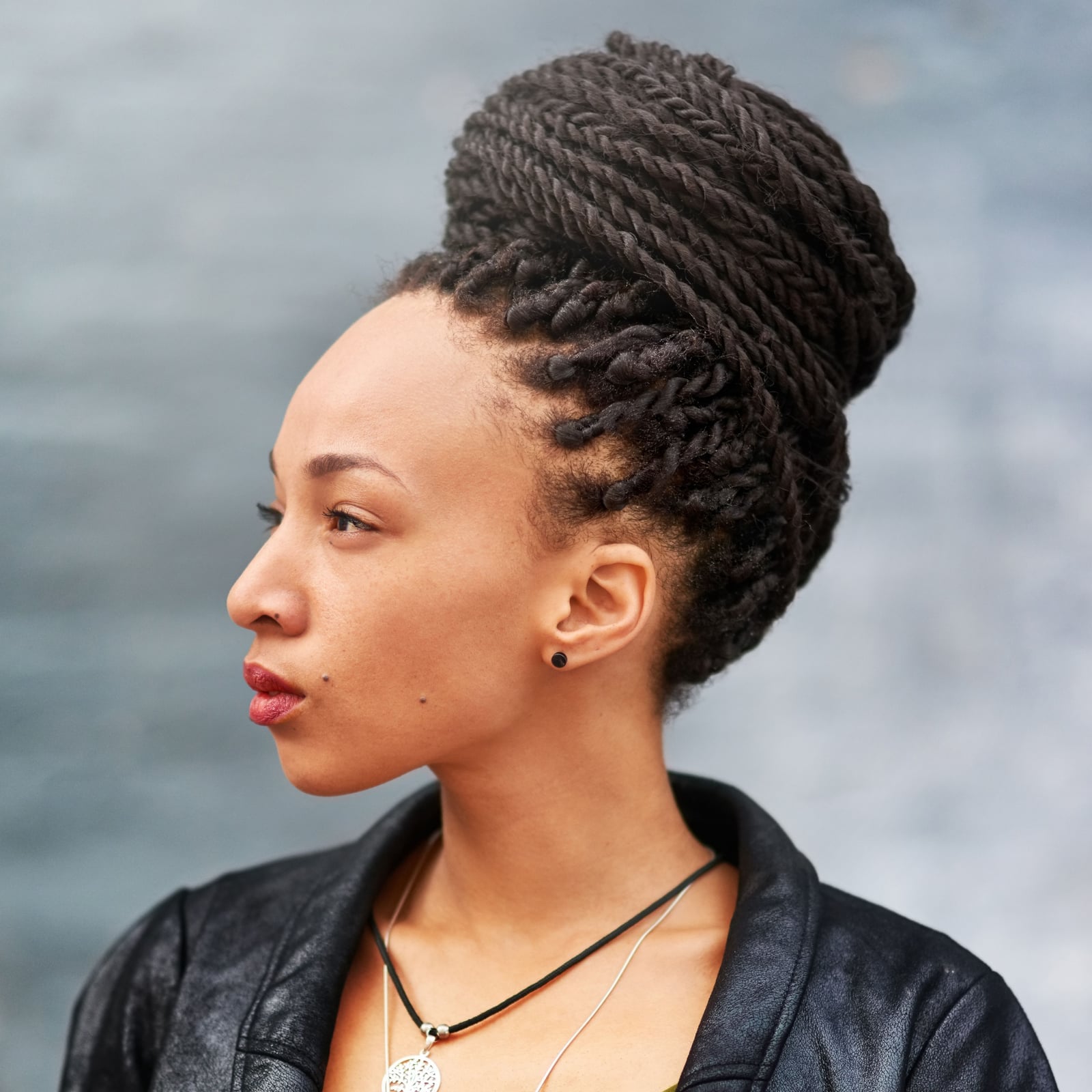
How do you get a sleek, sculpted bun without spending an hour at the mirror? Start with neck length flat twists on thick, coily hair, gather them at the crown, and pin the ends under so the silhouette stays smooth. Ask your stylist for: neck length flat twists into a high bun. This one is a salon job, since the flat twists need even tension to lie flat, and the bun benefits from a practiced hand. The middle part adds symmetry, and the coily texture gives the twists enough grip to hold the shape without constant adjustment. For a polished finish, ask for strong pins and a bit of smoothing serum before twisting. Oval and heart faces carry the height especially well, but the clean line suits most proportions.
Chin Length Mini Twists With Blonde Highlights
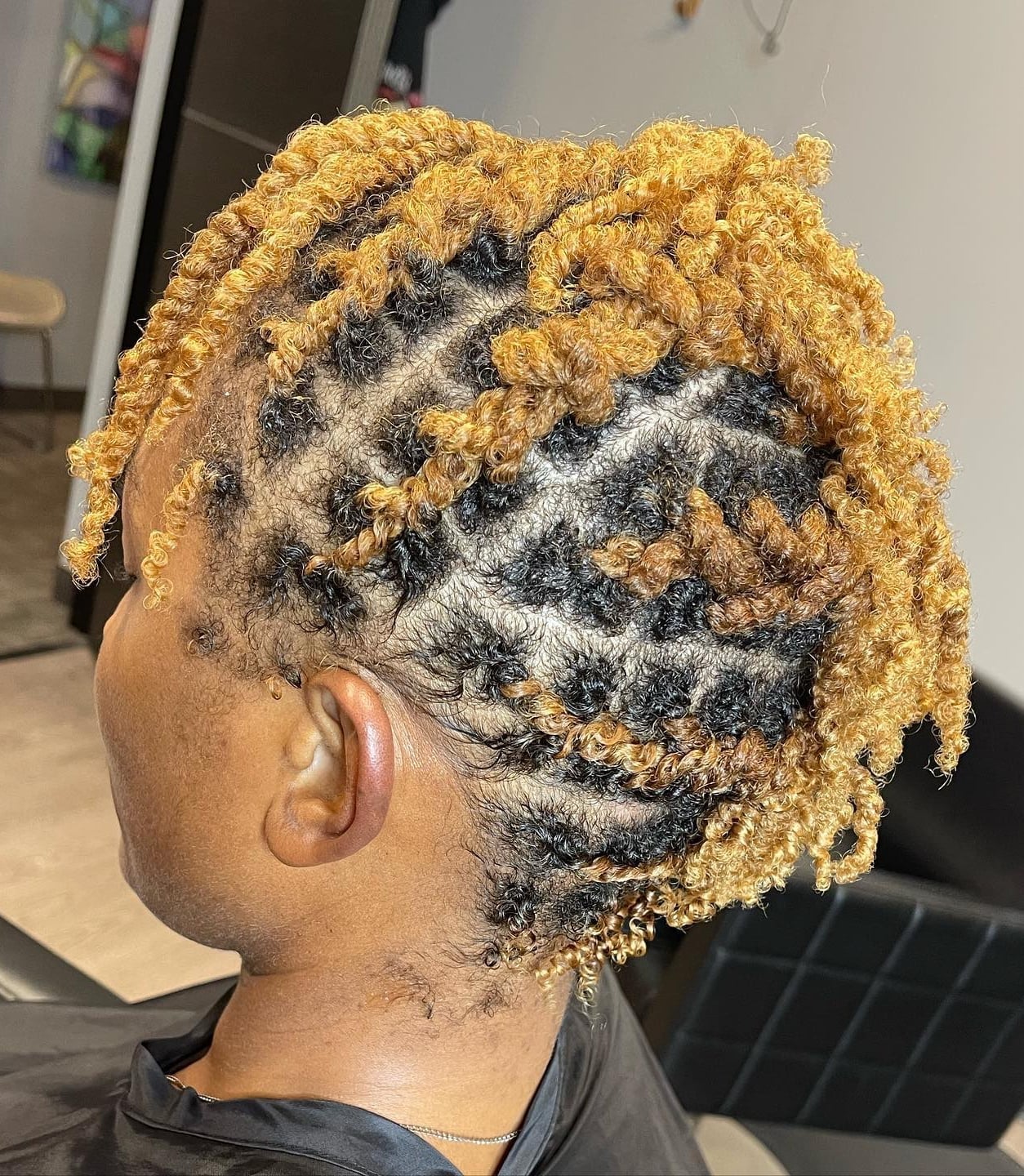
Chin length mini twists with blonde highlights have more dimension than a solid black base, but that dimension comes with upkeep. The blonde pieces on thick, coily hair stand out at the ends, which is exactly where they show wear first. Ask your colorist for: chin length mini twists with blonde highlights. This suits thick, coily hair of chin length or longer, and the middle part keeps the color balanced. The trade-off is that highlights need a color-safe shampoo and conditioner to stay bright, and you will re-twist sections every 2 weeks to keep the style crisp. If you prefer a lower-maintenance routine, solid black twists skip the toning and touch-ups entirely.
Mid-Back Passion Twists With Defined Texture
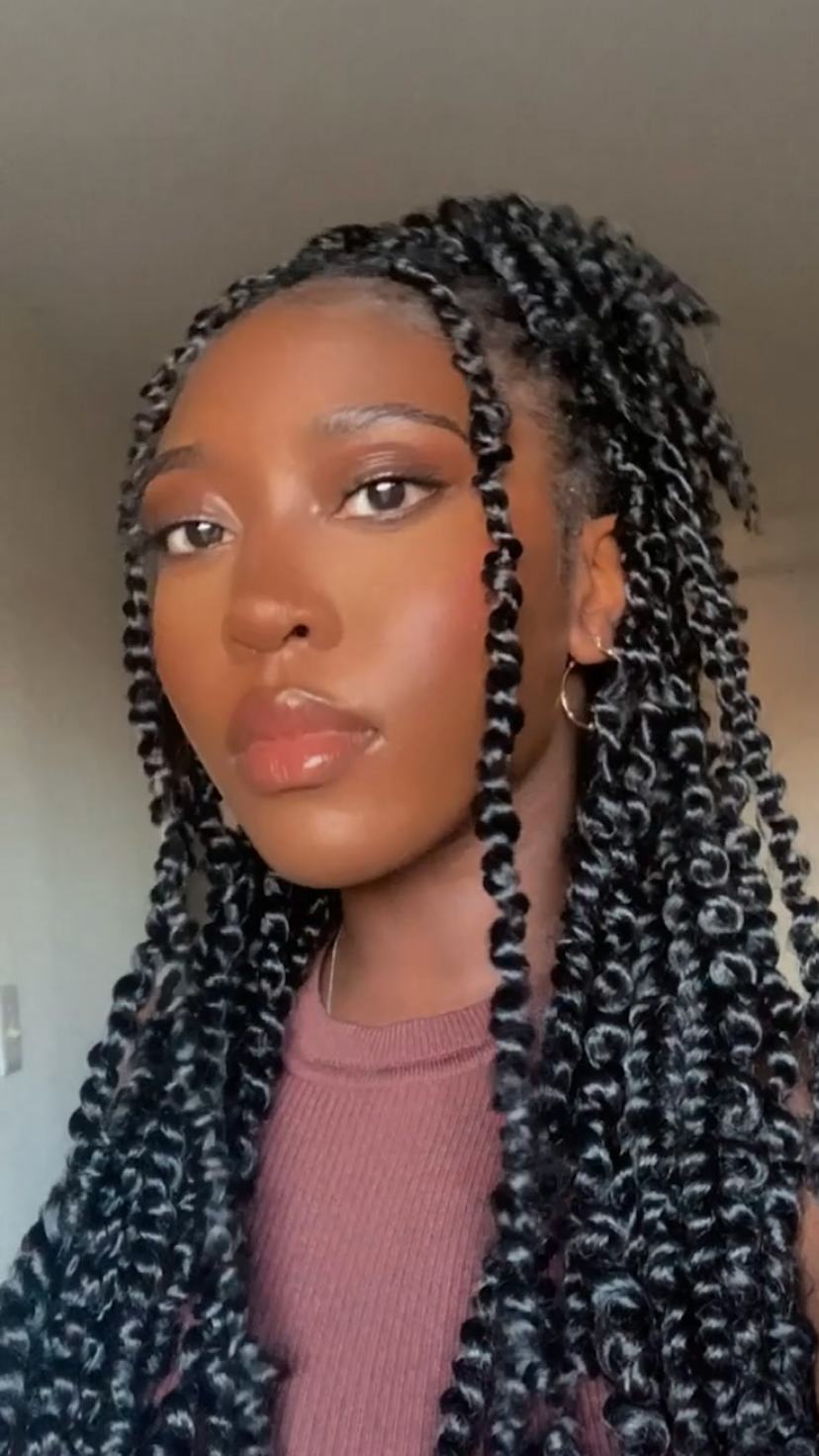
Passion twists are built by wrapping a wavy, textured hair extension around your natural hair, which is why they look fuller and more defined than standard two-strand twists. The mid-back length lets the wave pattern show its rhythm, and the middle part keeps the weight balanced on thick hair. Ask your stylist for: mid-back defined passion twists. Thick, wavy hair of mid-back length or longer carries the style best, though shorter hair can use added length from the extension. The technique takes time, usually a few hours in the chair, because each twist needs even tension to hold its definition. A light oil on the ends keeps them moisturized and prevents frizz, and re-twisting the roots every 4-6 weeks maintains the shape without starting over.
Shoulder Length Flat Twists With Wooden Beads
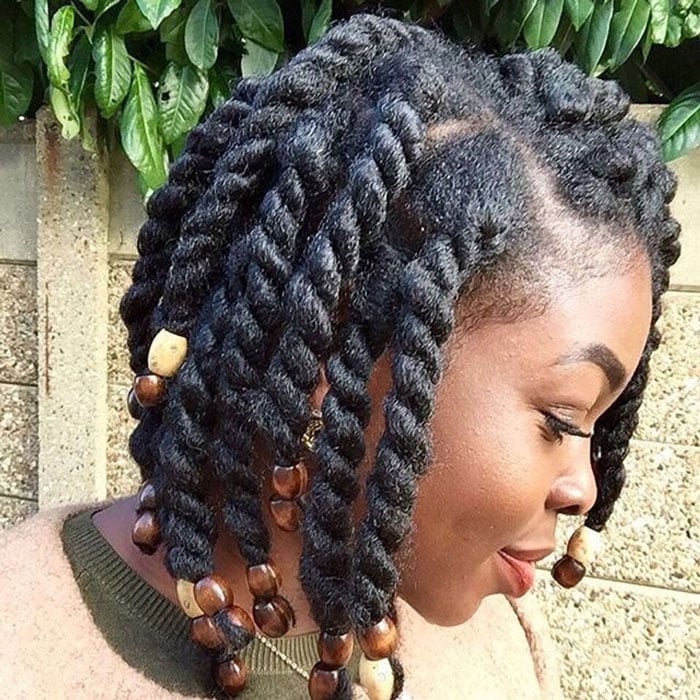
Flat twists with wooden beads at the ends give a natural, grounded finish that suits thick, coily hair of shoulder length or longer. The beads add a tactile detail, but they also weigh the ends slightly, which helps the twists hang straight. Ask your stylist for: shoulder length flat twists with wooden beads. This works across face shapes, since the middle part and even length create a balanced frame. The styling steps are straightforward: section the hair, twist flat against the scalp, then slide the beads on and secure them. Make sure the beads are fixed tightly so they do not slip off during the day. This is a salon style to get the tension right, though re-twisting sections every 2-3 weeks keeps it fresh.
Collarbone Two-Strand Twists
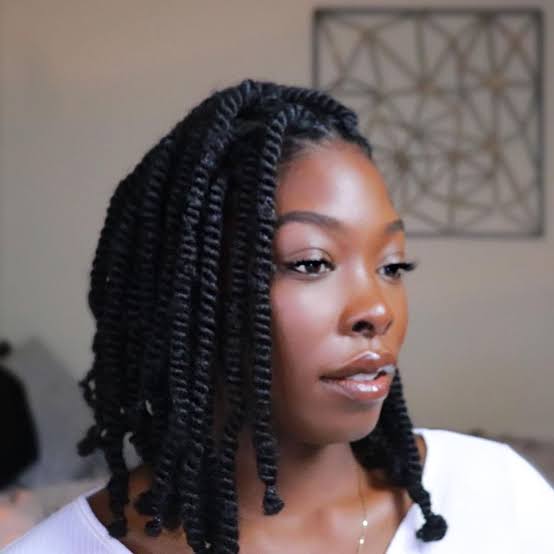
A reliable rule for two-strand twists: the coarser the hair, the better the hold. Thick, coily texture at collarbone length is ideal here. The twists stay defined without constant re-rolling, and the solid black color keeps the part lines sharp. Ask your stylist for: collarbone length two-strand twists. The middle parting is a practical choice; it makes sectioning easier when you re-twist at home.
Daily wear is straightforward. Apply a leave-in conditioner to keep moisture in, especially at the ends where coily hair tends to dry out. Re-twist the roots every four to six weeks to maintain the shape. Matting is the one thing to watch for, separate the twists gently with your fingers before washing to keep them from fusing together.
Mid-Back Flat Twists Voluminous Updo
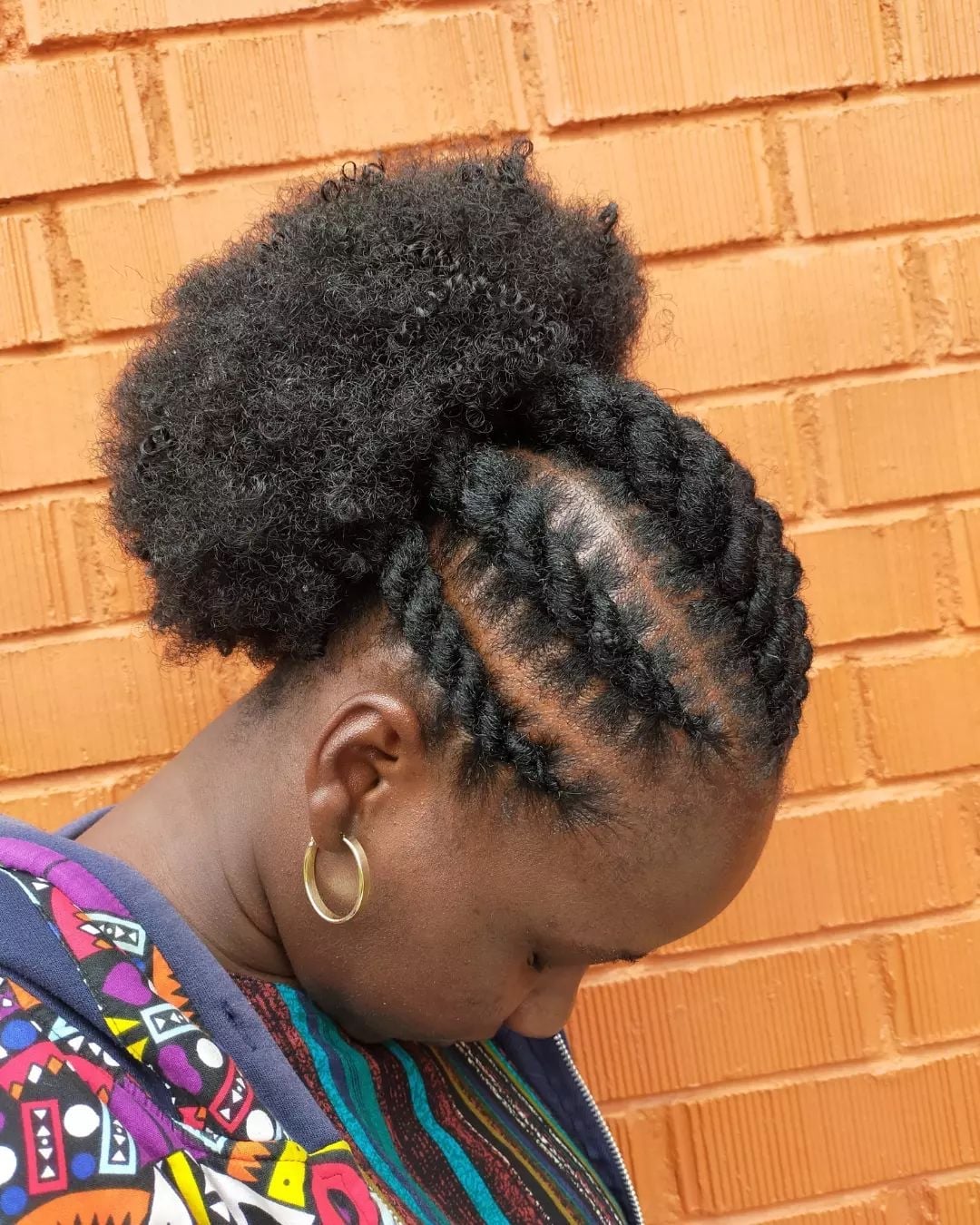
Can an updo be substantial without being heavy? This one is the proof. Mid-back flat twists are smoothed into a large top knot at the crown, and the middle parting keeps the scalp pattern even. The volume comes from the dense, coily texture, no teasing required. Ask your stylist for: mid-back flat twists styled into a large updo. The side view shows how the bun sits high enough to clear the nape completely.
This is a cold-weather or formal-event style. It holds through a full workday or a wedding reception because the twists are flat against the scalp and the bun is pinned securely. Oval and heart-shaped faces benefit from the height at the crown. A strong-hold hairspray and multiple bobby pins are essential; the weight of thick coily hair needs real anchorage.
Shoulder Dark Brown Passion Twists With Curled Ends
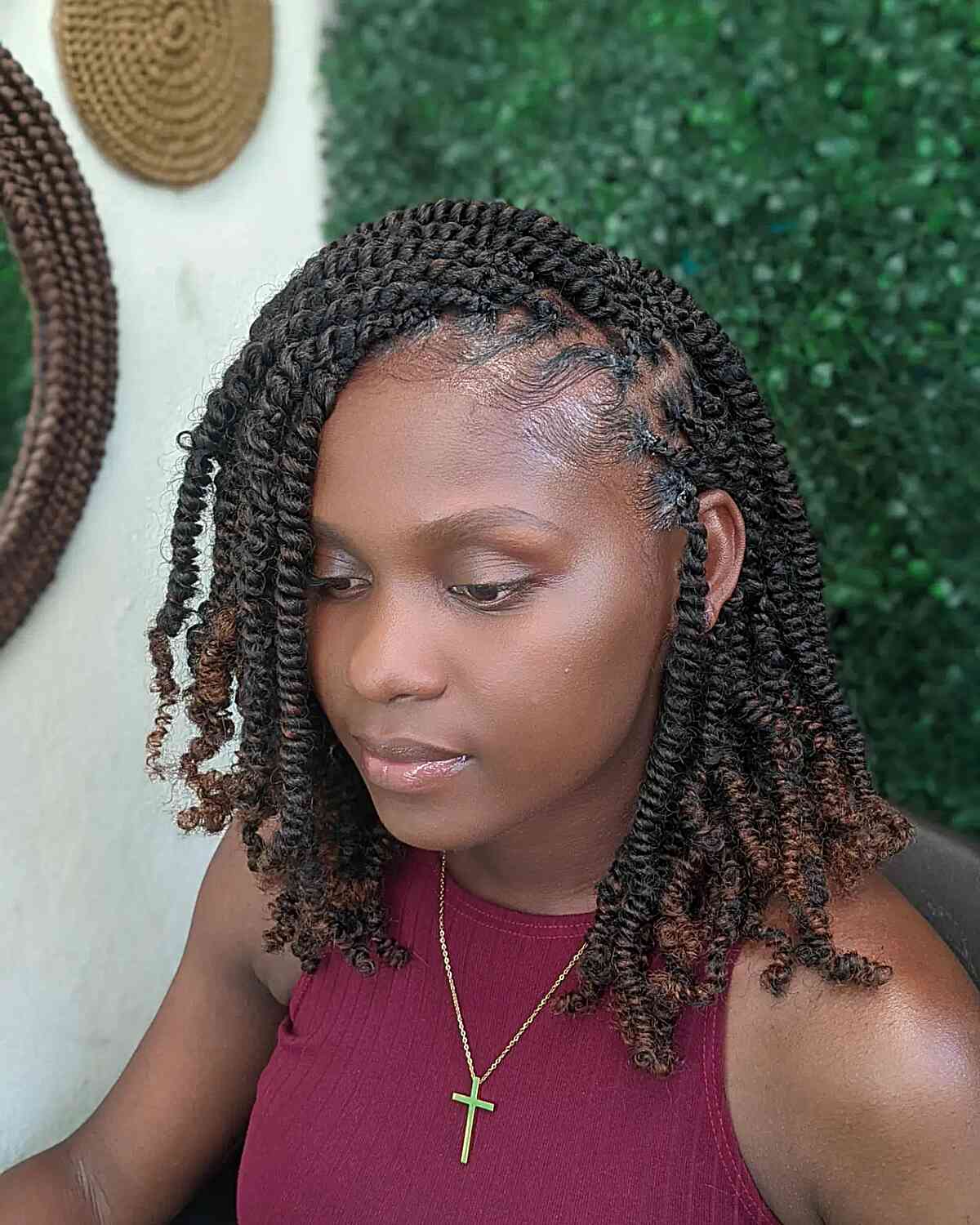
The design detail here is the contrast: dark brown passion twists that stop at shoulder length, finished with lighter brown curled ends. The middle parting lets the two-tone effect read clearly, the lighter ends catch the eye against the deeper base. Ask your colorist for: shoulder length dark brown passion twists with lighter curled ends. The wavy, thick texture holds the curl shape well.
This is a salon-first style; the curled ends require a professional hand to get the tension right. Maintenance is a consideration. Those curled ends need re-rolling every few washes to stay defined, and the lighter color can show fading faster than the dark base. A curl cream on the ends helps, but expect a touch-up every six to eight weeks to keep the two-tone look defined.
Shoulder Twists With Natural Salt and Pepper Color
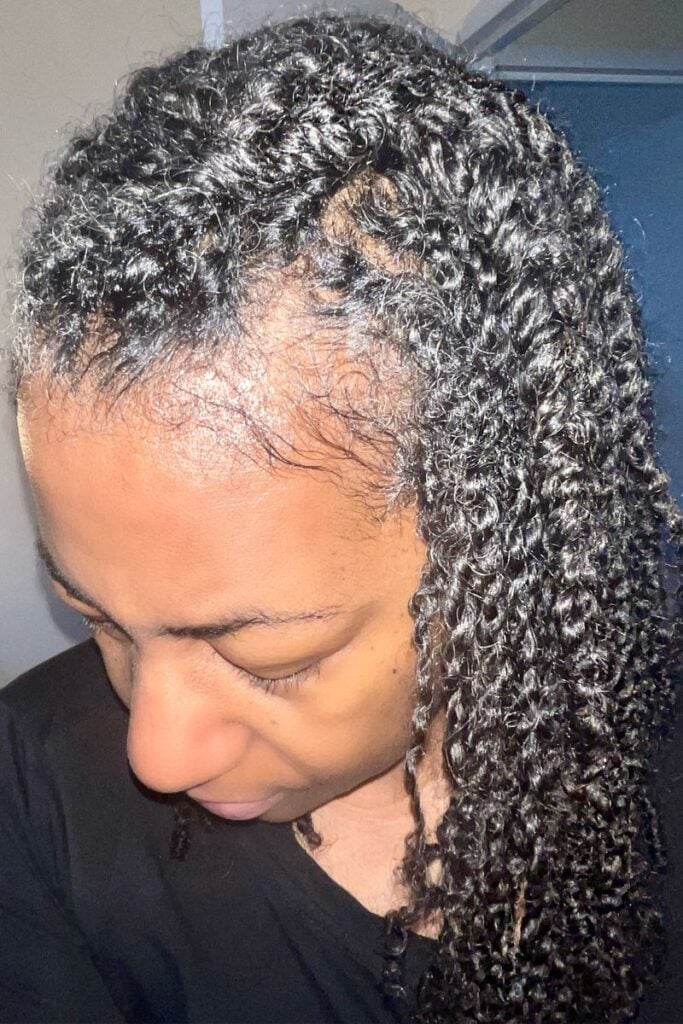
A concrete fact about natural gray: it shows every part line and every twist separation clearly, which makes neat sectioning worth the effort. Shoulder-length loose two-strand twists in a salt-and-pepper color work because the gray strands are woven through the wavy, thick texture. Ask your stylist for: shoulder length loose two-strand twists with natural salt and pepper color. The middle parting is the simplest way to display the color evenly. A color-depositing conditioner in a silver or lavender tone keeps the gray from pulling yellow. Re-twist sections every two to three weeks. The loose structure means less tension on the hairline, which is a real advantage for maintaining density around the edges.
Intricate Updo With Boxed Sectioned Twists
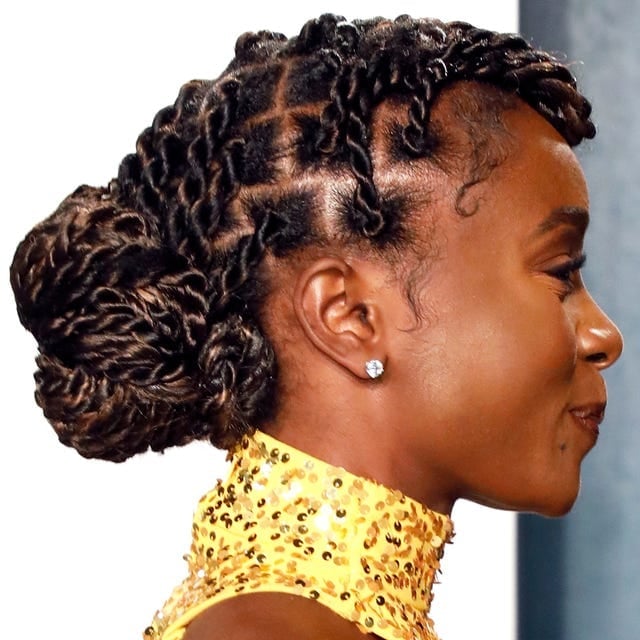
An updo built from boxed sections requires precision in the grid. Each square of two-strand twists is mapped from the hairline to the crown, and the side view shows how the sections stack into a structured dome. The black base with subtle brown highlights adds dimension without competing with the pattern. Ask your stylist for: intricate updo with boxed sectioned twists and face-framing tendrils. The loose tendrils at the hairline soften the geometry, without them, the updo would read as purely architectural.
The technique here is about tension consistency. Each box needs the same twist tightness so the sections sit flat against the scalp and the updo holds its shape. Wavy, thick texture is the best candidate; it grips the twists better than straight hair. The updo works for any face shape because the height is adjustable. A lower placement suits longer faces, while a higher crown balances rounder ones. A satin scarf overnight protects the twists from friction.
Final Thoughts
For a quick style, opt for loose, shoulder-length twists that require minimal manipulation. For longevity, consider mini twists or flat twists that can be styled into updos.
- Refresh twists daily with a light leave-in conditioner or oil, focusing on the ends.
- Sleep in a satin bonnet or on a satin pillowcase to maintain moisture and reduce frizz.
- Avoid over-manipulating twists to prevent breakage and maintain definition.
- Trim split ends every 8-12 weeks to keep the hair healthy and neat.
- Re-twist roots as needed, typically every 4-8 weeks, depending on hair growth.
Embrace the beauty of your natural texture with simple, elegant twists.