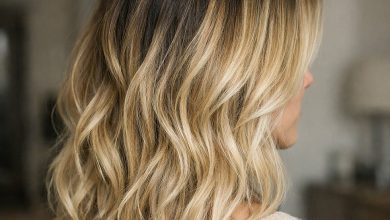
Side bangs are making a quiet comeback, and this time they are soft, face-framing, and built to move with your layers instead of fighting them. The heavy, flat-ironed fringe of past seasons is out; what is in is a lived-in sweep that blends into the rest of your cut.
Here are 20 ways to wear Simple Side Bangs, from a blunt collarbone lob to long, layered lengths. Whether your hair is fine, thick, wavy, or straight, there is a version that works with your texture and your morning routine. If your fringe tends to fall flat or you are tired of a grow-out line that shows, these ideas keep the shape soft and the upkeep low.
Collarbone Blunt Cut With Side Bangs
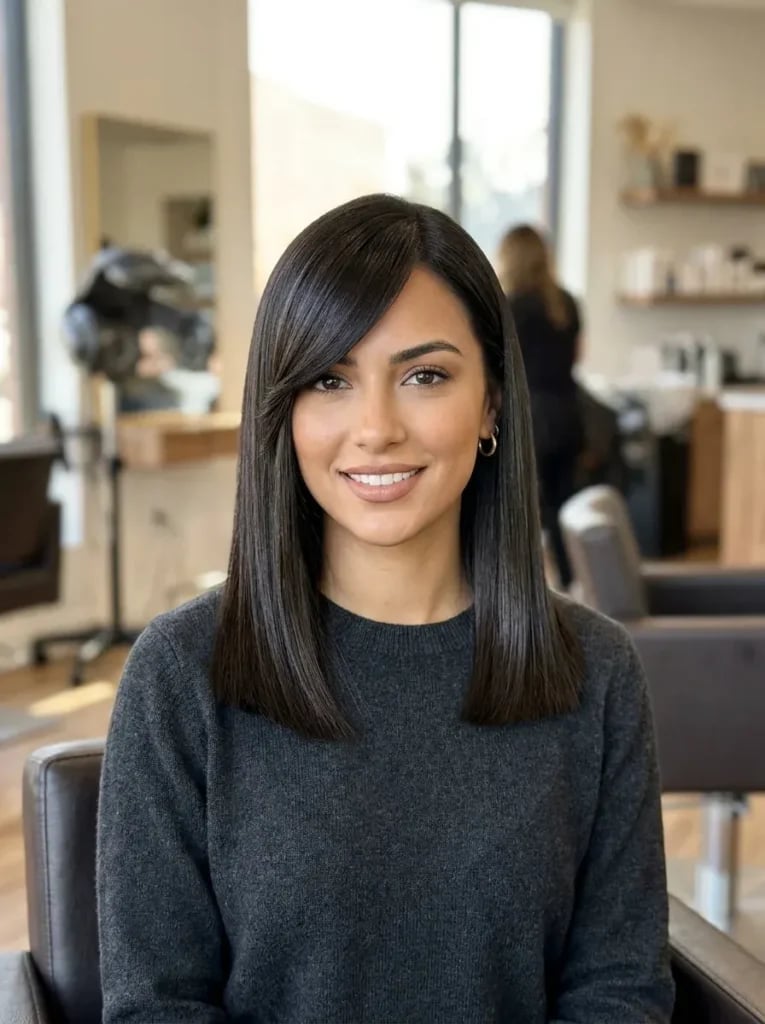
A blunt edge is a confident choice, especially at collarbone length where the straight, thick texture has room to announce itself. The long side-swept bangs break the severity without adding layers, which means the weight stays put. This cut favors medium to thick hair; thin strands can look sparse against that unbroken line. The side parting and the bangs themselves do the work of softening a square or round jaw, so you get the drama without the commitment of a full fringe. Ask your stylist for a collarbone length blunt cut with long side-swept bangs. A round brush and a blow-dryer are the only tools needed to keep the bangs lying flat and the ends sharp.
Collarbone Long Layers With Side Bangs
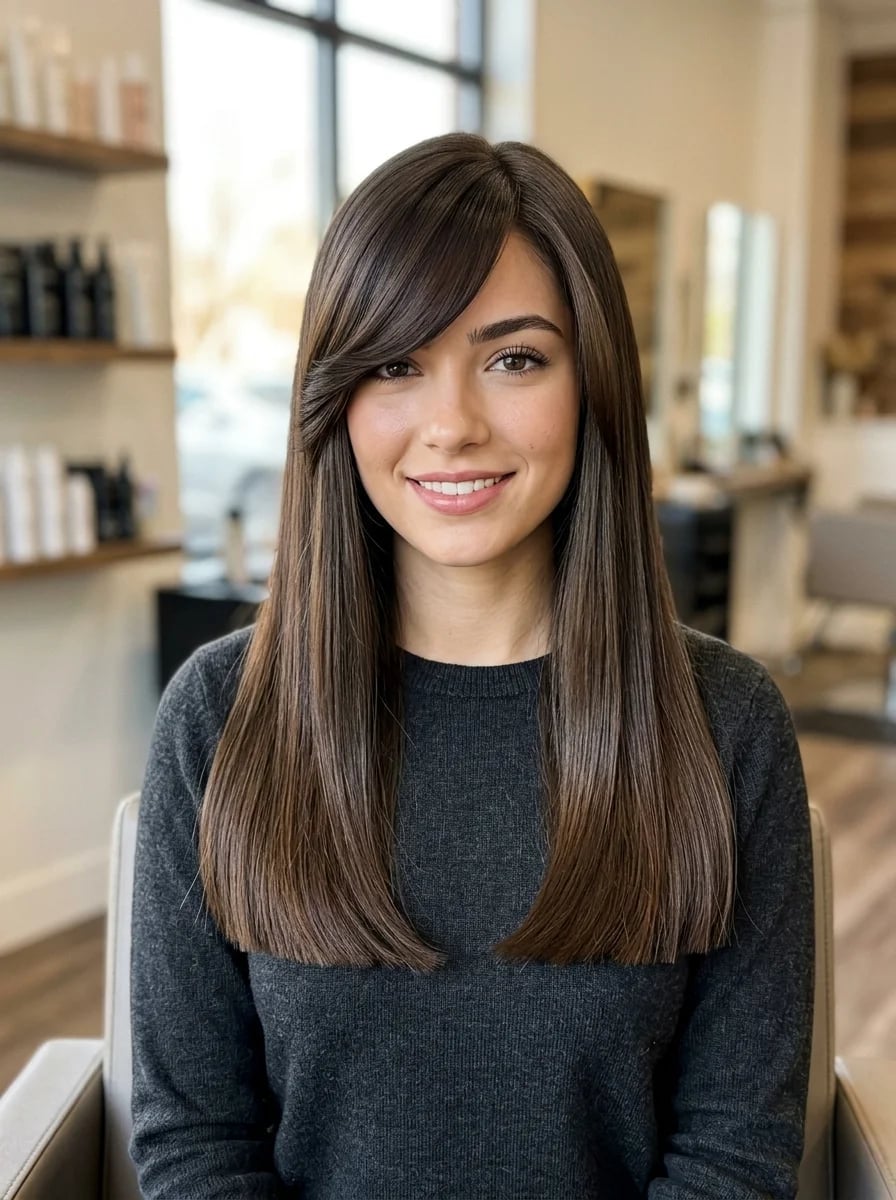
How do you ask for movement without losing length? You hand your stylist a photo of this exact cut. The long layers start below the collarbone, so the overall shape stays intact while the interior texture softens. The side bangs sweep across the forehead, blending into the layers rather than stopping abruptly. Ask your stylist for a collarbone length with long layers and side-swept bangs that are long enough to tuck behind an ear. A smooth blowout with a round brush is the move here, directing the bangs away from the face and smoothing the rest straight. This is salon-only work: the layers need a precise hand to avoid looking like a grown-out shag.
Collarbone Layers With Swept Side Bangs
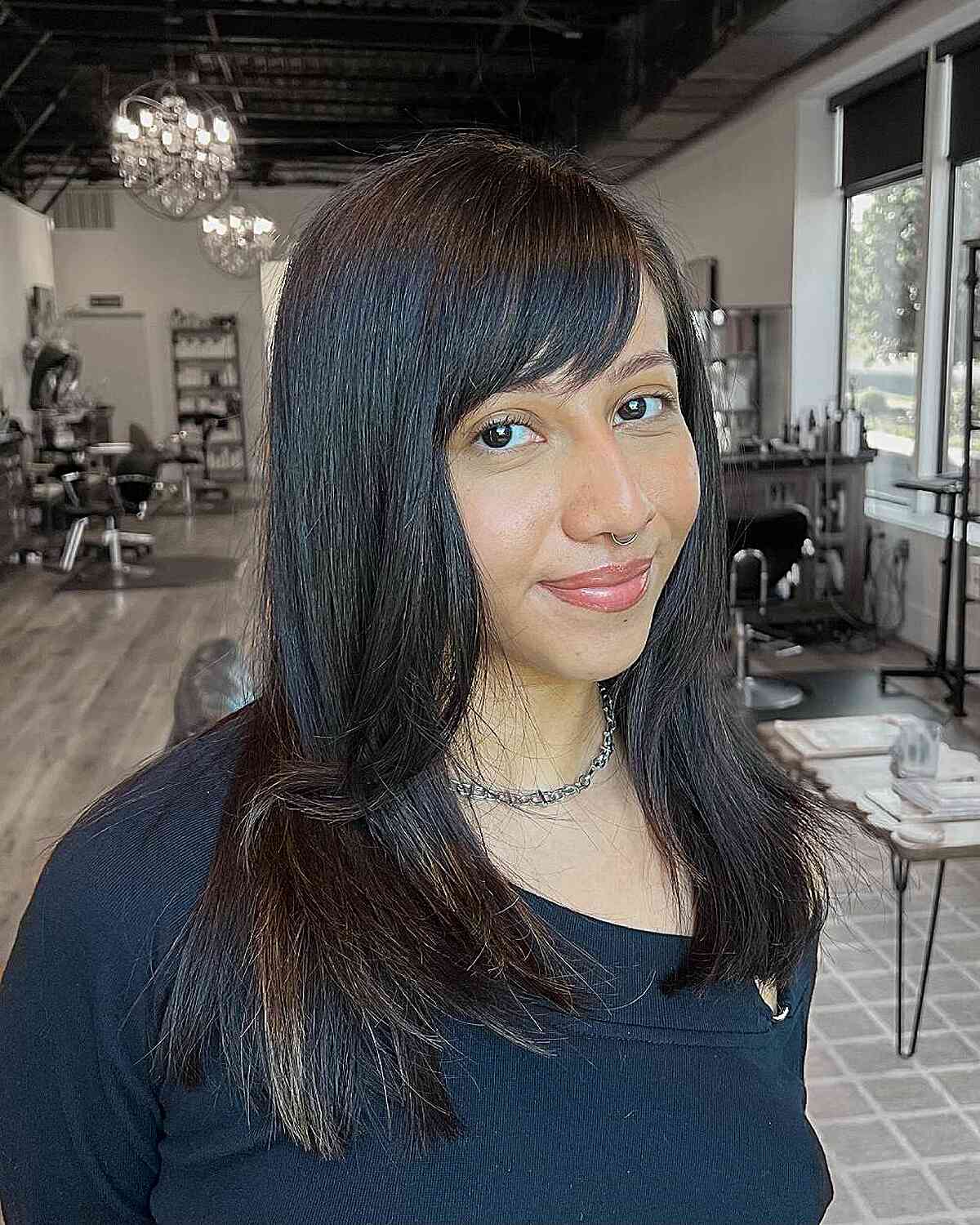
A smooth blowout is the engine of this style. The collarbone-length layers are cut to hold a straight, sleek line, and the swept side bangs are the one piece that moves independently. Without heat styling, the bangs will fall flat against the forehead and the layers will lose their polished curve. A light serum patted through the ends keeps the shine consistent and the texture on the right side of smooth. Ask your stylist for a collarbone length with long layers and swept side bangs. Expect to reach for the round brush every morning; this finish does not survive a pillow.
Collarbone Waves With Highlighted Root Shadow
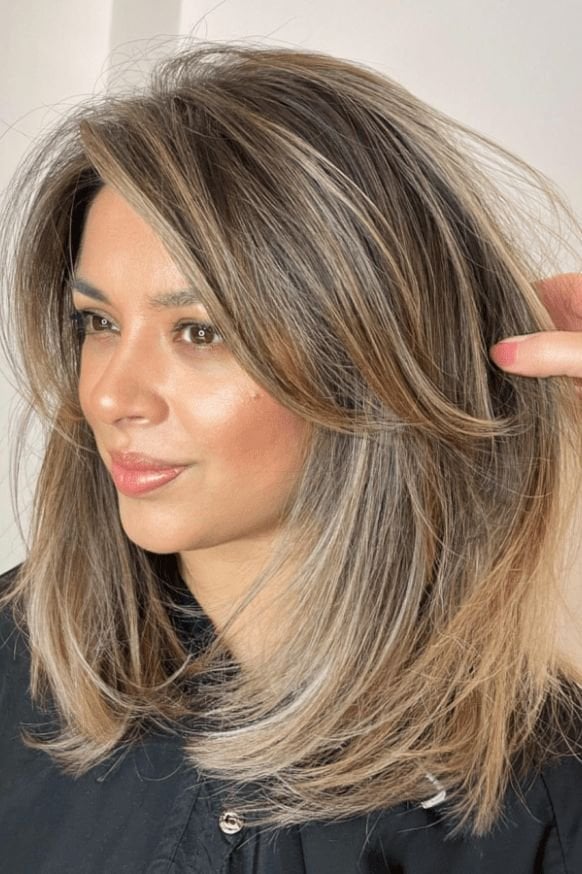
The root shadow is the quiet hero here. Blonde highlights weave through the mid-lengths and ends, while the darker base at the roots keeps the grow-out from announcing itself every four weeks. The wavy texture and side-swept bangs give the color something to catch on, creating depth that a flat, straight finish would swallow. Ask your stylist for a collarbone length wavy layers, side-swept bangs, and a root shadow. This is the kind of cut that works for a Sunday brunch or a Tuesday meeting, provided the season is warm enough to let the waves air-dry into softness.
Collarbone Air-Dried Waves With Subtle Highlights
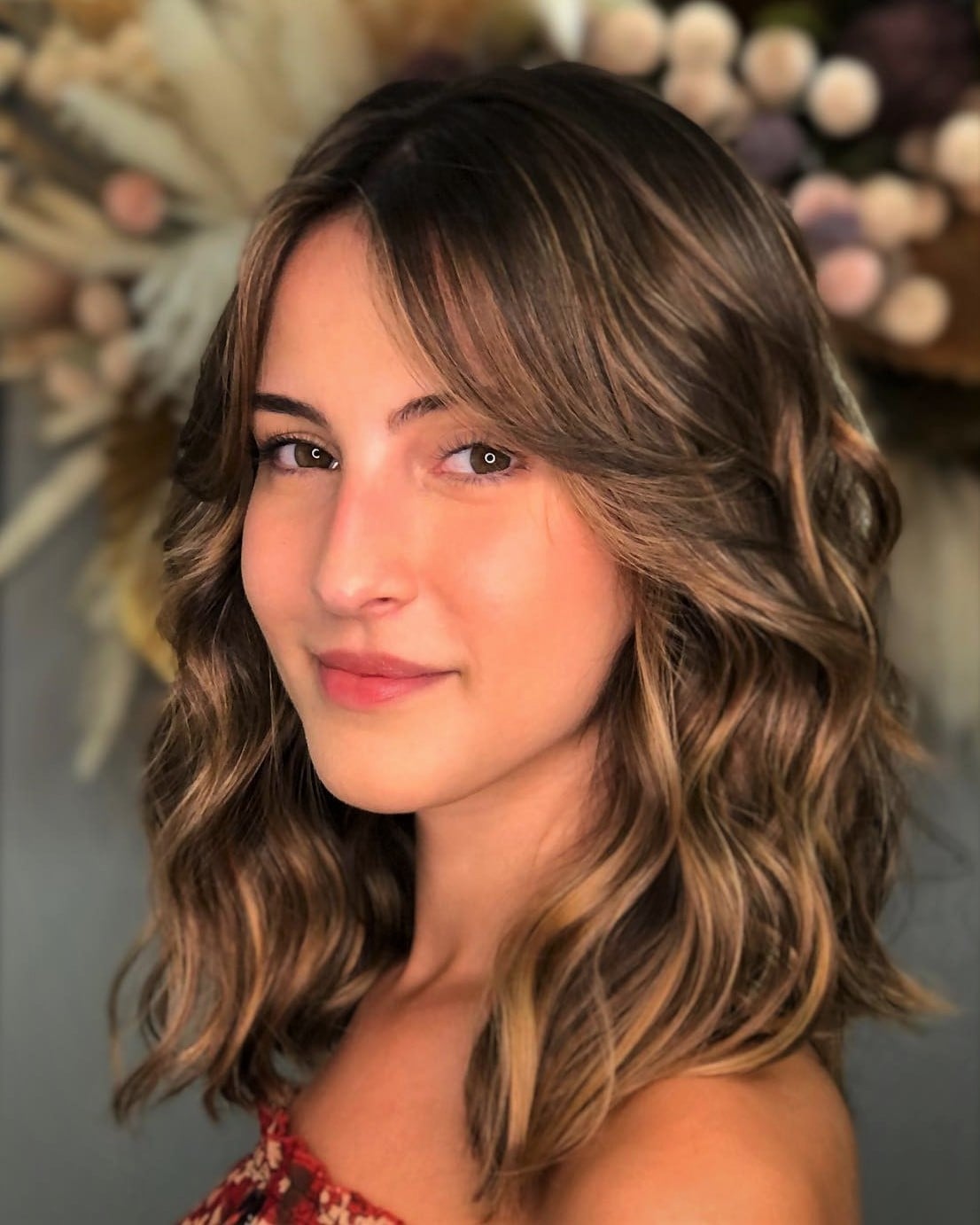
Not every cut needs a blow-dryer. This one is built for the days when you wash, shake, and walk out the door. The long layers are cut to encourage natural wave without requiring a diffuser or a curling iron, and the subtle highlights add dimension that keeps the texture from reading as flat. The side bangs are cut long enough to sweep to the side without training, which is the entire point. Ask your stylist for a collarbone length with long layers, an air-dried finish, and side bangs. A texturizing cream works better than a gel here, defining the wave without crunch.
Collarbone Textured Shag With Balayage
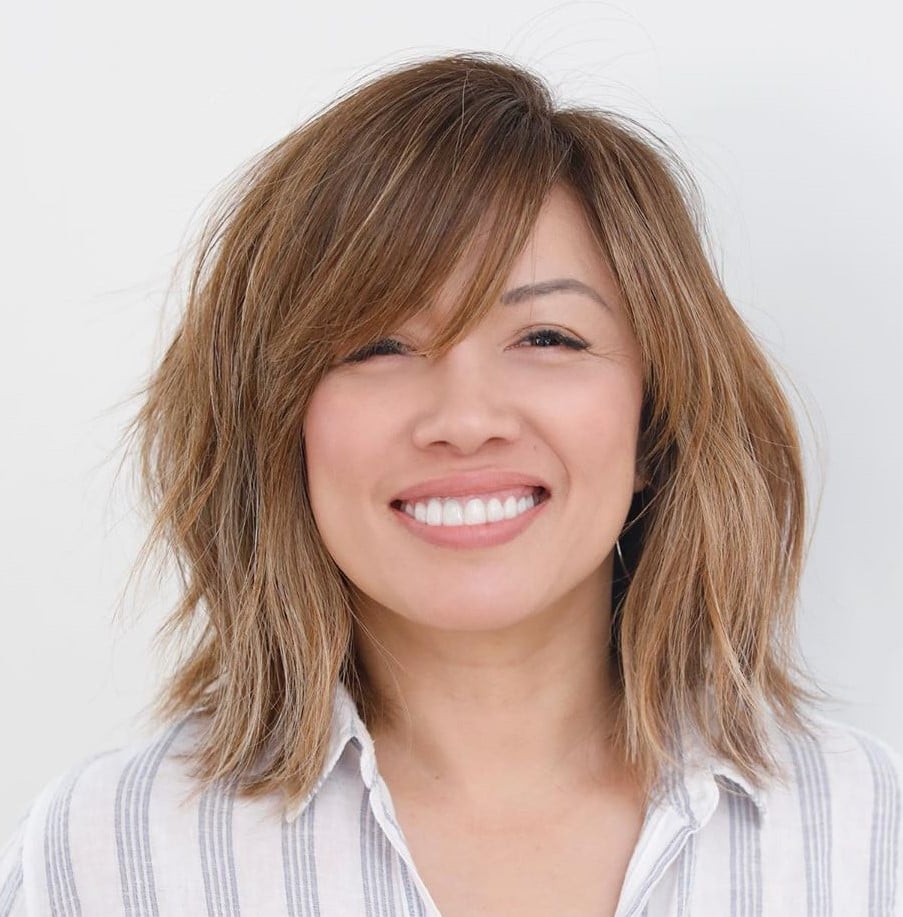
The textured shag is a haircut that looks like it happened by accident, but it takes a pro to make the layers land right. Thick, wavy hair at collarbone length is the ideal candidate, with the side-swept bangs and blonde balayage adding depth. The mistake is trying to carve the shag at home, which usually turns the layers into a choppy mess. Ask your stylist for: collarbone length textured shag, side-swept bangs, balayage. A root shadow hides the grow-out line for about six weeks, and a texturizing paste on air-dried waves saves you from the blow dryer.
Collarbone Layers With Ash Blonde Root Shadow

An ash blonde root shadow gives you the contrast of a heavy highlight without the constant salon visits, but it sits in a cooler lane than its warmer cousin. The collarbone length layers and side swept bangs soften the effect, making it work for medium density wavy hair that needs dimension. Ash blonde shifts yellow faster than a beige tone, so a purple shampoo every other wash is required. Ask your colorist for: collarbone length layered cut, ash blonde with root shadow, side swept bangs. A trim every eight weeks keeps the layers from growing out.
Collarbone Waves With Auburn Highlights

Auburn highlights on a dark brown base add warmth without turning red, and the collarbone-length waves keep them from looking heavy. The side-swept bangs pull the color forward, framing the face instead of hiding the dimension.
This is a trade-off look: the auburn fades faster than a neutral tone, and you will rely on a color-depositing conditioner to keep the copper alive between salon visits. Medium-density wavy hair carries the highlights best, because fine hair can look weighed down by the warmth. Ask your colorist for: collarbone length with loose waves, side-swept bangs, subtle auburn highlights. A gloss treatment every four weeks extends the fade-out window.
Collarbone Ponytail With Side Bangs
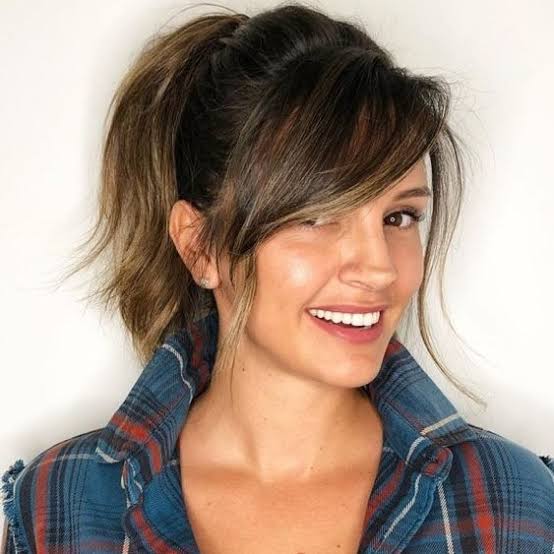
How do you get a ponytail that looks styled? Start with loose waves. The collarbone length hides the elastic, and the side-swept bangs stay out of the ponytail instead of vanishing into it. A large barrel curling iron on the lengths gives the waves hold, then a texturizing spray keeps them from dropping. Ask your stylist for: collarbone length ponytail, loose waves, side-swept bangs. This is a five-minute DIY after a blowout, and it works best on second-day hair.
Chin Length Blunt Bob With Soft Waves
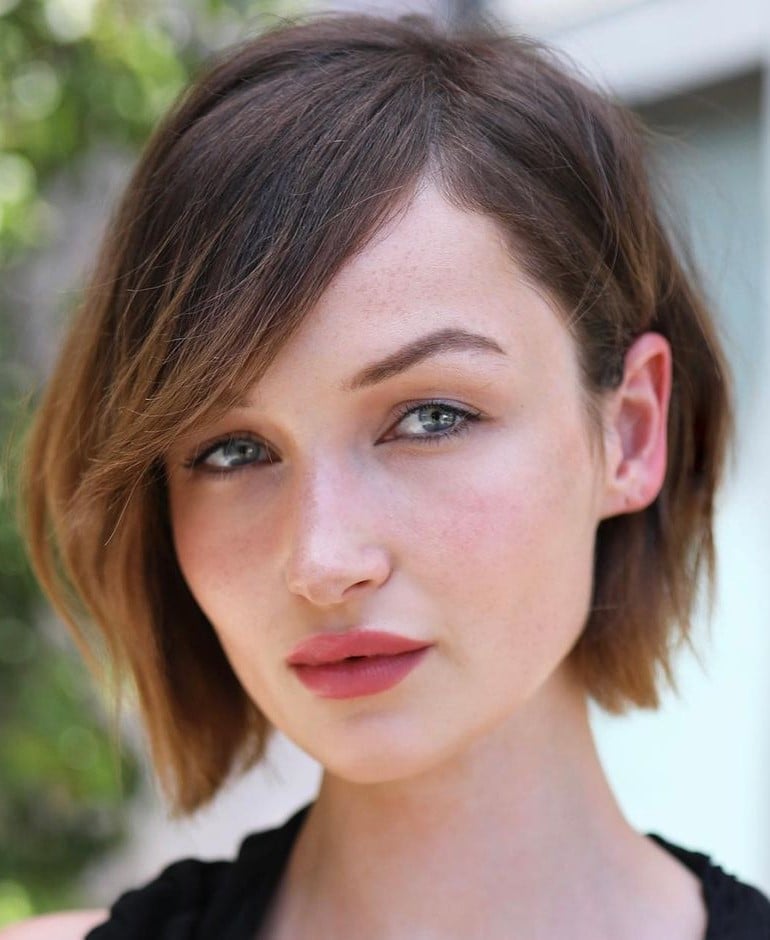
The chin-length blunt bob is a shape that makes fine hair look thicker than it is, thanks to the solid weight line at the ends. Soft waves and side-swept bangs keep the bluntness from reading severe, which matters for fine wavy hair that can look sparse with too much layering. This cut genuinely flatters oval and heart-shaped faces, while round faces may want a longer version to avoid adding width at the jaw. Ask your stylist for: chin length blunt bob, soft waves, side-swept bangs. A texturizing spray adds grip to the waves, and the blunt baseline needs a trim every six to eight weeks.
Chin Length Bob With Voluminous Side Bangs
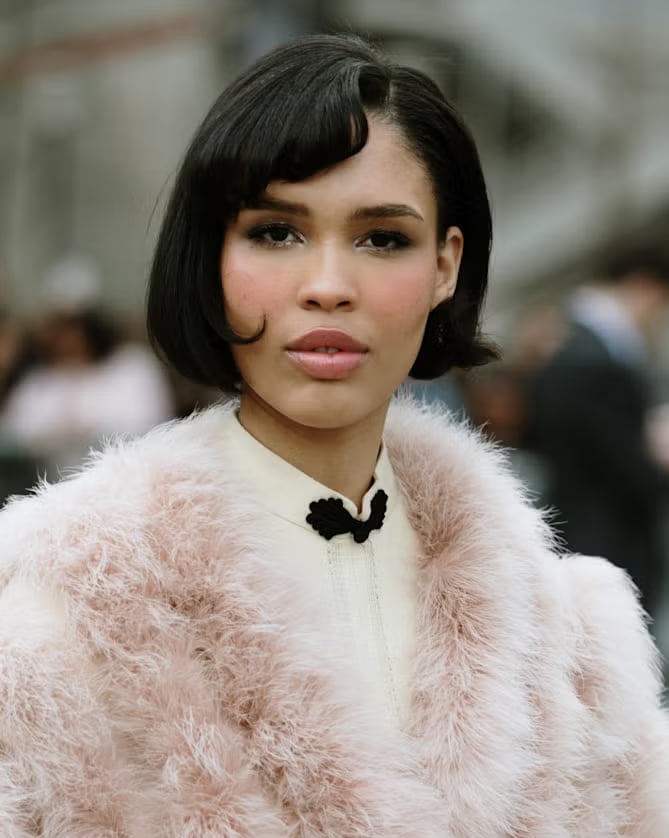
This bob stops at the chin, but its side-swept bangs carry the drama. The thick black waves are blown out with enough lift that the bangs sweep across the forehead like a curtain that means business.
The volume in the bangs balances a round face, and the chin length keeps the whole thing grounded. Ask your stylist for a chin length bob with voluminous side-swept bangs. Daily styling requires a volumizing mousse at the roots and a round brush under the bangs, then a blast of cool air to set the sweep. A trim every six weeks keeps the shape defined.
Chin Length Bob With Fine Wavy Blonde Hair
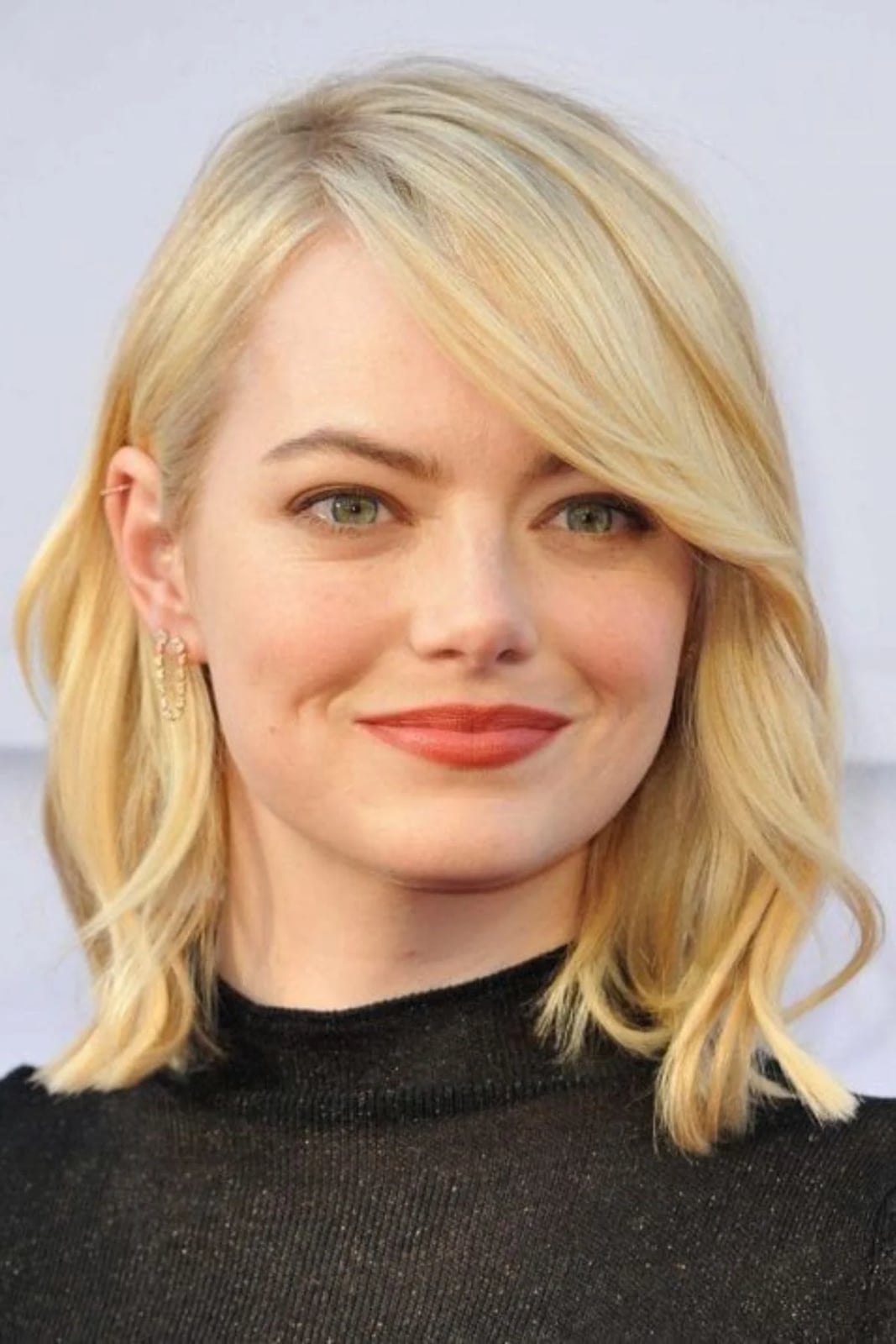
Fine hair usually lies flat, but this chin bob proves otherwise. The blonde waves are cut with side-swept bangs that blend into the layers, so the whole shape reads as one soft, airy movement, perfect for warm weather when heavy hair is the last thing you want.
Asymmetrical Ear Length Bob With Side Bangs
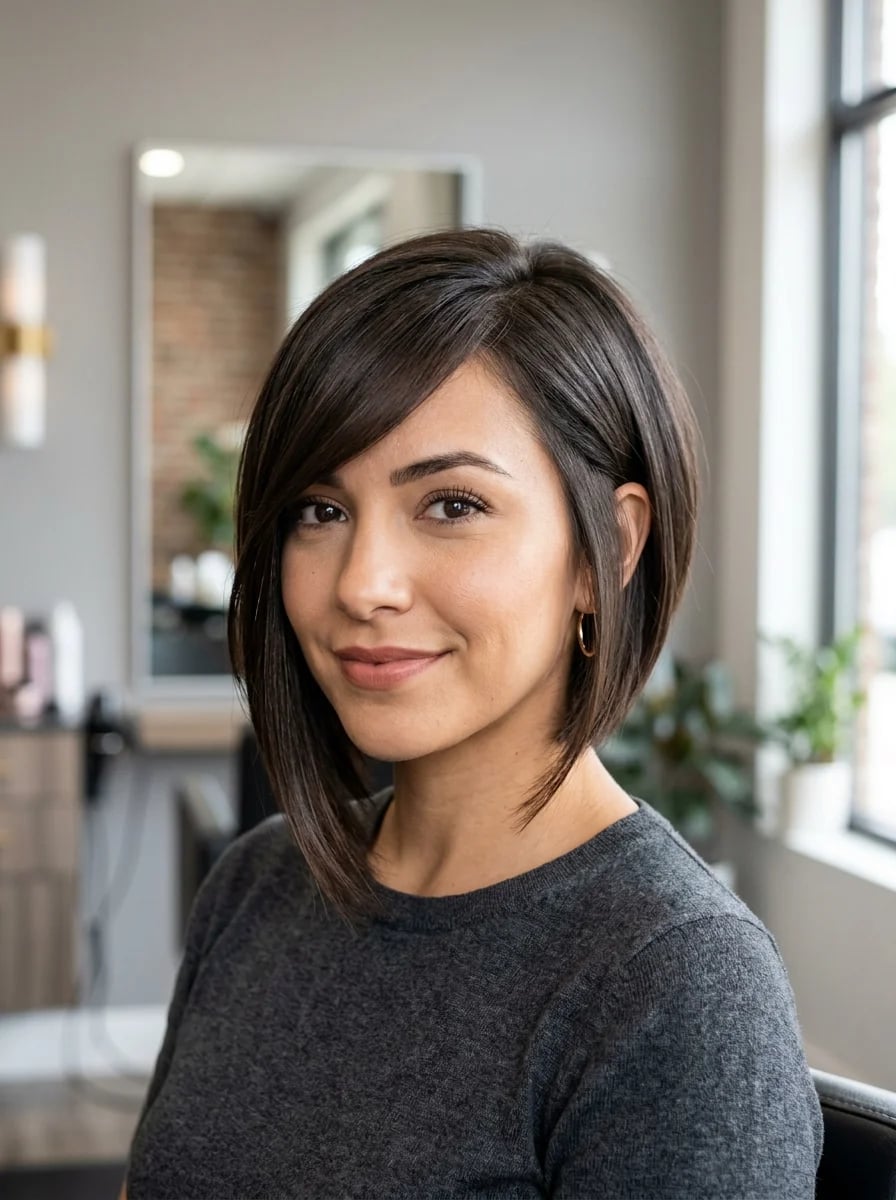
An asymmetrical ear length bob is a precise geometry problem. The dark brown base is cut so one side sits shorter, with a side-swept bang cutting across the forehead to sharpen the line. This is not a DIY job: the uneven perimeter needs scissor work that only a stylist can measure. Ask your stylist for an ear length asymmetrical bob with a side-swept bang. Fine straight hair takes the cut best, and a smoothing serum plus a flat iron keeps the edges clinical clean. Expect a trim every four weeks to hold the asymmetry, since any growth blunts the angle.
Shoulder Length Shag With Textured Waves
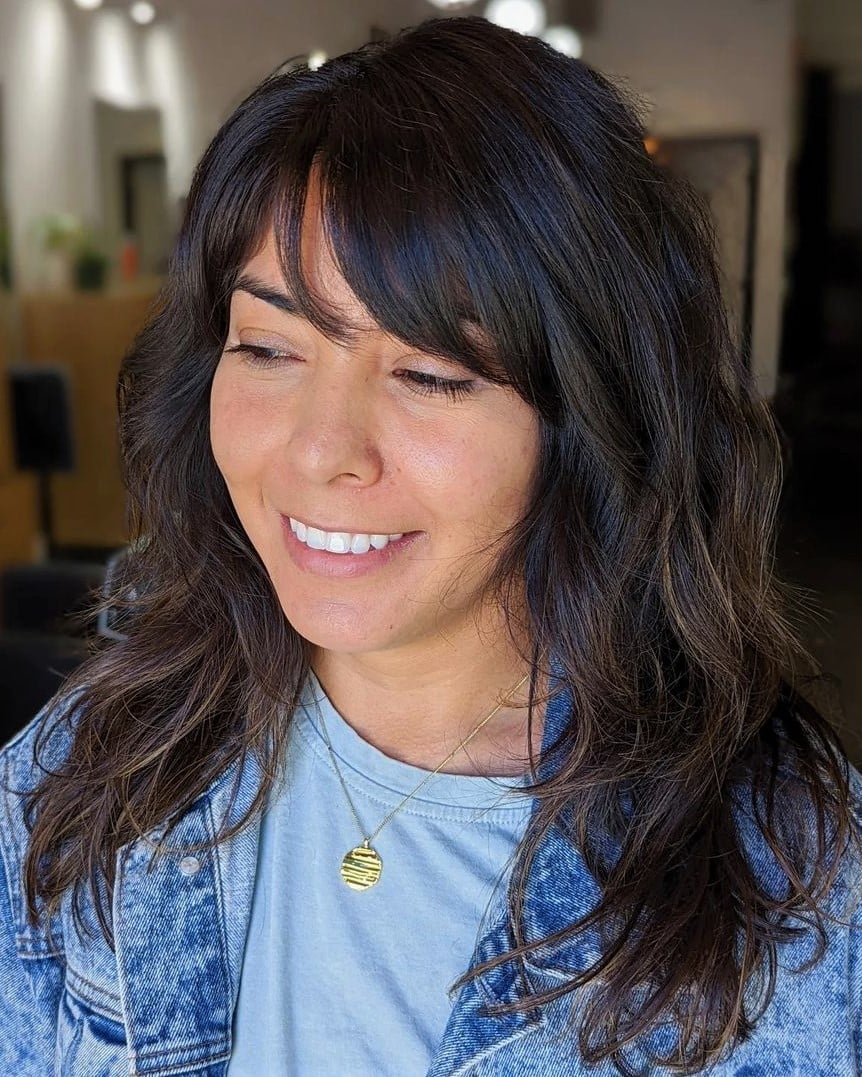
A shoulder length shag with side-swept bangs is the haircut equivalent of a good shrug: it looks unbothered but works hard. The face-framing layers and subtle highlights give medium density wavy hair movement without effort. It suits round and square face shapes by adding definition at the jaw, and the side part does the rest. Ask your stylist for a shoulder length textured shag with side-swept bangs. To keep the tousled effect, work a texturizing paste through damp hair and let it air dry, then scrunch. A trim every eight weeks keeps the layers from growing out into a shapeless blob.
Shoulder Length Layers With Wavy Blowout

What do you ask for when you want a blowout that actually lasts past lunch? Start with the layers. This shoulder length cut is built on movement, with side-swept bangs that blend into the shape, then styled with soft waves that give the brown hair a bouncy finish. Ask your stylist for a shoulder length layered cut with a wavy blowout and side-swept bangs. To recreate it at home, use a blow-dryer with a nozzle and a round brush to bend the ends under, then tousle with your fingers. The layers hold the shape for a full day.
Mid-Back Long Layers With Side Bangs
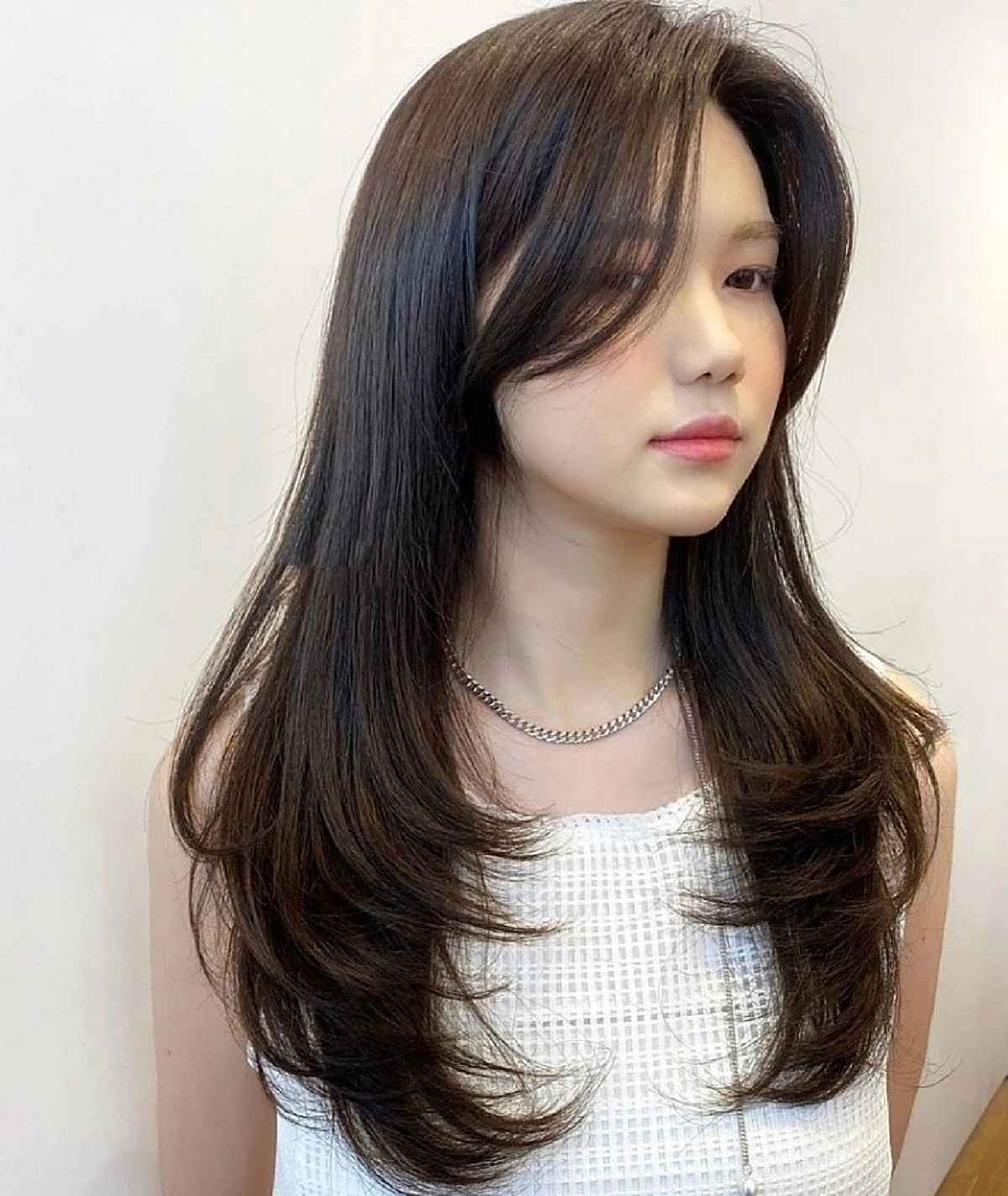
Long layers through the back prevent mid-back length dark brown hair from hanging like a solid curtain, which is the risk when you skip them. Thick straight textures benefit from this approach, since the soft face-framing layers and side bangs add movement without sacrificing the glossy finish of a blowout. Ask your stylist for: mid-back length with long face-framing layers and side bangs.
A shine serum applied to the ends enhances the glossy finish, but the real work is the trim rhythm. These layers will lose their shape after about ten weeks, so schedule a visit every two to three months to keep the side bangs from growing into the cut.
Mid-Back Layers With Highlighted Side Bangs, Wavy
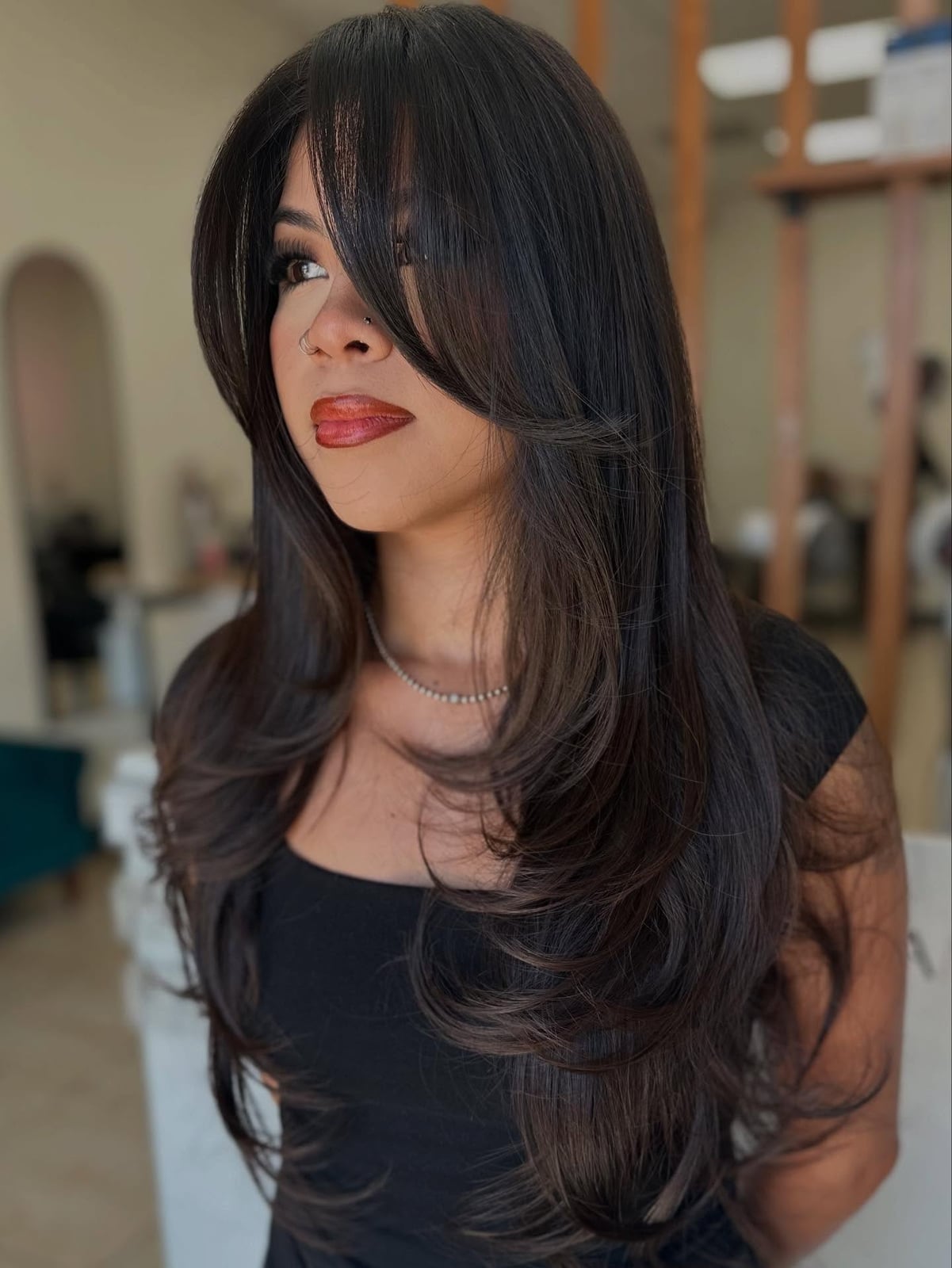
It is tempting to reach for a box at the drugstore when all you want is a few sunny pieces around your face. The problem is that side bangs sit right in the front line of sight, so uneven color or a brassy stripe becomes the first thing anyone notices. Medium wavy hair at mid-back length looks best when the blonde highlights are painted by someone who knows where to place them. Ask your stylist for: mid-back length with long layers, subtle blonde highlights, side bangs.
A salon visit for this approach takes about two hours, versus the forty minutes a DIY kit demands. The difference is placement, not effort: a professional will weave the highlights through the side bangs so they blend into the brown base instead of landing as a separate block.
Mid-Back Wavy Layers With Blonde Balayage
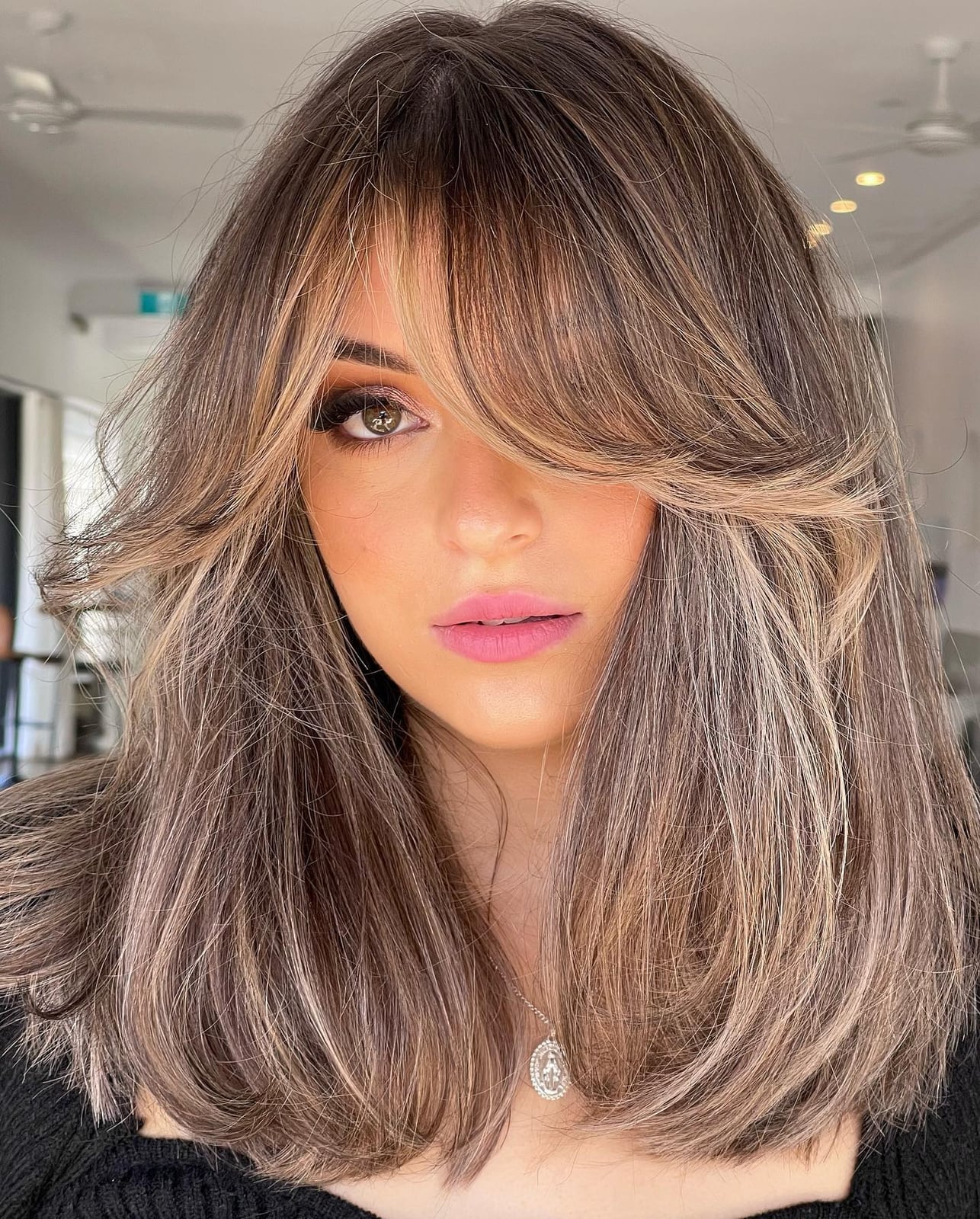
Balayage is often sold as the set-and-forget color option, but a blonde version on wavy medium hair still needs a purple shampoo used about once a week to stop the lighter pieces from turning yellow. The benefit over traditional foil highlights is the softer grow-out line, which means you can stretch the next appointment to twelve weeks instead of eight. Ask your stylist for: mid-back length wavy layers, blonde balayage, side bangs. The cool tones can look ashy on some natural bases, so ask your colorist for a warm-toned gloss if you want the blonde to look sunnier.
Mid-Back Loose Waves With Ash Blonde Balayage
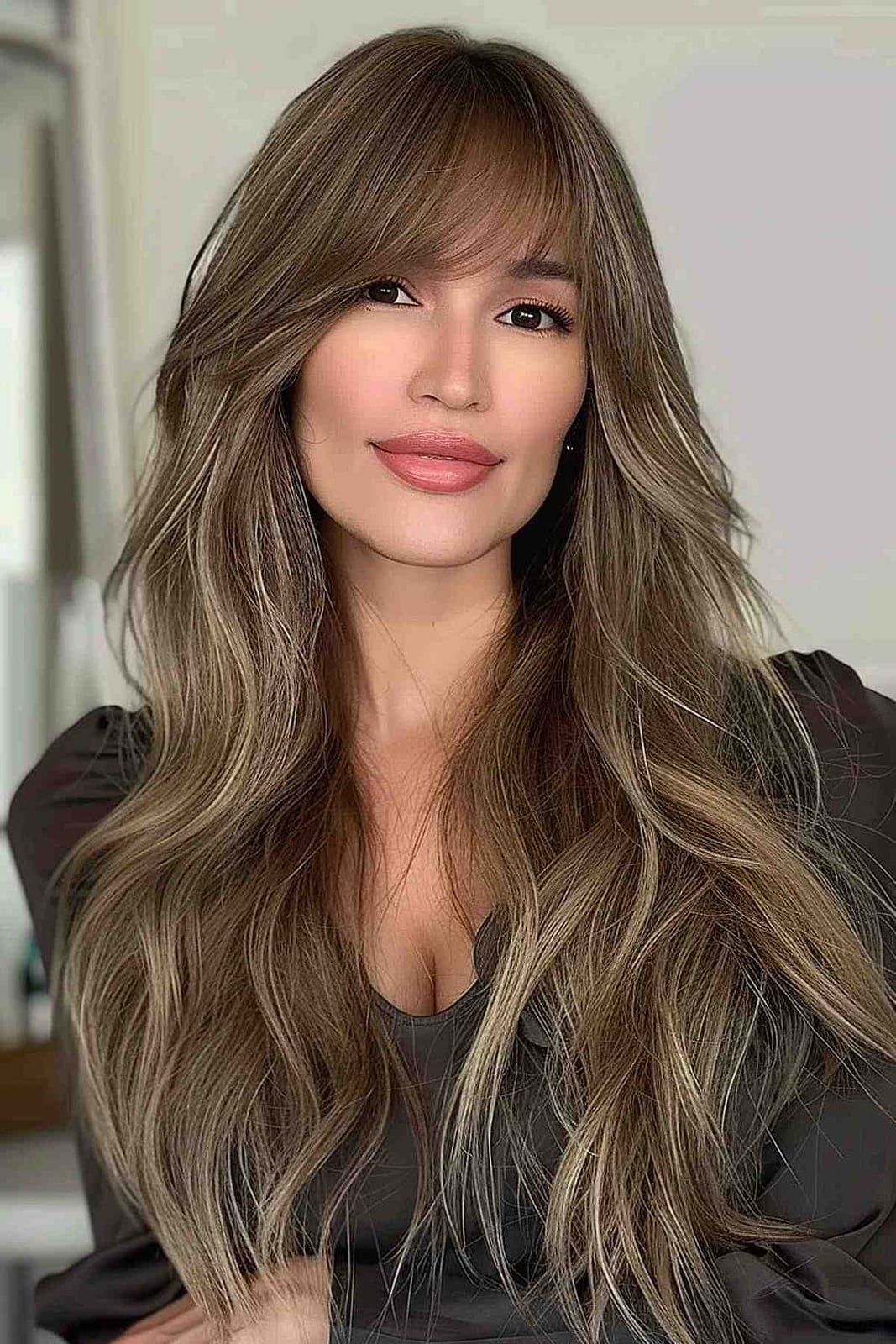
Loose waves on mid-back length hair are a popular choice because they have a relaxed, natural appearance. Ash blonde balayage at this length can look muddy if the base is not lifted enough first. Medium wavy hair needs the side-swept bangs cut with a soft diagonal, not a straight line, so they tuck behind the ear or blend into the face-framing layers without a visible seam. Ask your stylist for: mid-back length with loose waves, ash blonde balayage, side-swept bangs.
This look skips the blow-dry if you want it to. Apply a wave cream to damp hair, twist sections loosely, and let it air-dry; the balayage will show dimension even without heat. Be honest about your morning tolerance, though: achieving those same consistent waves with a curling iron on thick hair can add twenty minutes to your routine.
Mid-Back Wavy Hair With Highlighted Layers, Close-Up Take
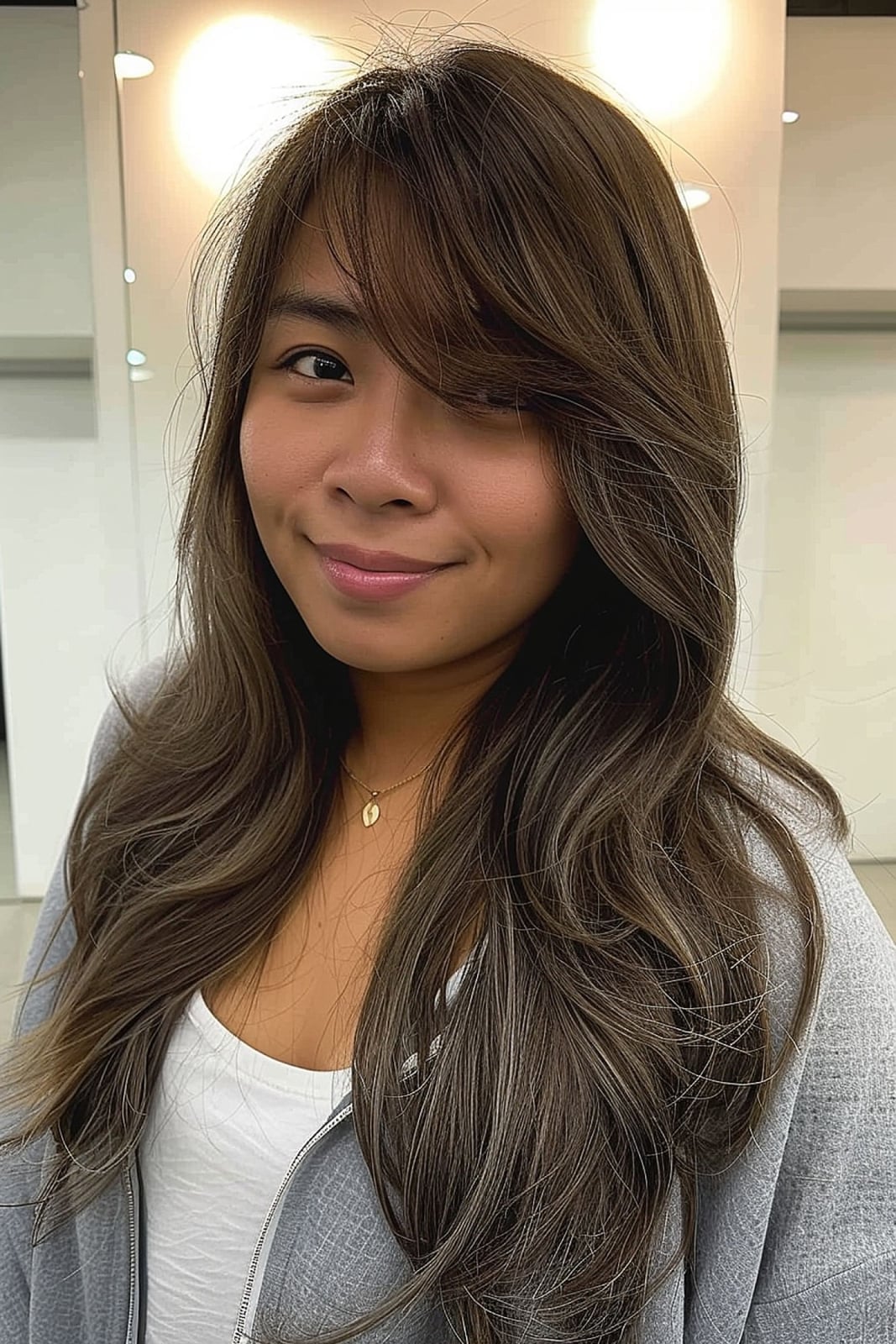
Can you get close to this at home without a salon appointment? Yes, if you start with the right cut. Thick wavy hair at mid-back length needs face-framing layers cut into the front sections, not just the ends, so the side-swept bangs have somewhere to land. Ask your stylist for: mid-back length wavy hair, side-swept bangs, face-framing layers.
For styling, apply a texturizing spray to damp hair and scrunch upward, then use a flat iron on the side-swept bangs only, sliding it down in a gentle C-shape so they curve away from the face. The waves stay natural. The DIY version takes about fifteen minutes and avoids the blunt bangs regret that comes from cutting them yourself.
Final Thoughts
When in doubt, let the length of your side bangs follow the shape of your cut. Fine hair holds up best with a blunt baseline and soft, blended layers; thicker textures can carry more movement. Keep the sweep subtle, and it will frame without demanding constant attention.
- Trim bangs every 3-4 weeks to maintain their shape and prevent them from falling into your eyes.
- Use a texturizing spray or dry shampoo on the roots of the bangs to add volume and absorb oil between washes.
- When styling, use a small round brush to direct the bangs away from the face while blow-drying for a smooth, blended finish.
- Consider a light conditioning treatment once a week to keep ends healthy, especially if your hair is colored.
Master the art of the side sweep for an instant style upgrade.