A Viking braid isn’t one look. It’s a spectrum that runs from a single accent plait tucked behind the ear to a full head of Dutch braids that meet in a ponytail. The 2027 version leans into thicker, more textured strands and a deliberately imperfect finish that holds better than a pristine braid ever did.
These 20 Simple Viking Braids cover that range, from a five-minute accent braid to a salon-built braided mohawk. The collection works for fine hair that needs volume, thick hair that needs control, and every texture in between. If your braids have ever unraveled by lunch or pulled at your scalp, these styles solve both problems.
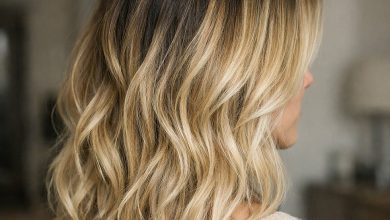
Blonde Balayage With Small Accent Braids
The braids stay small and neat along the hairline while the length falls into loose waves, so the eye moves from the details to the texture without landing on a single heavy element. That middle part and the mid-back length work best on thick, wavy hair, where the waves give the braids something to contrast against, and the vertical lines soften a round face. Ask your stylist for small braids along hairline, loose wavy mid-back hair. The waves hold definition longer with texture spray, and the braids read as deliberate against the balayage. The blonde balayage with braids needs a trim every four to six weeks to keep the ends from fraying.
Platinum Blonde Fishtail Braid With Face-Framing Braids
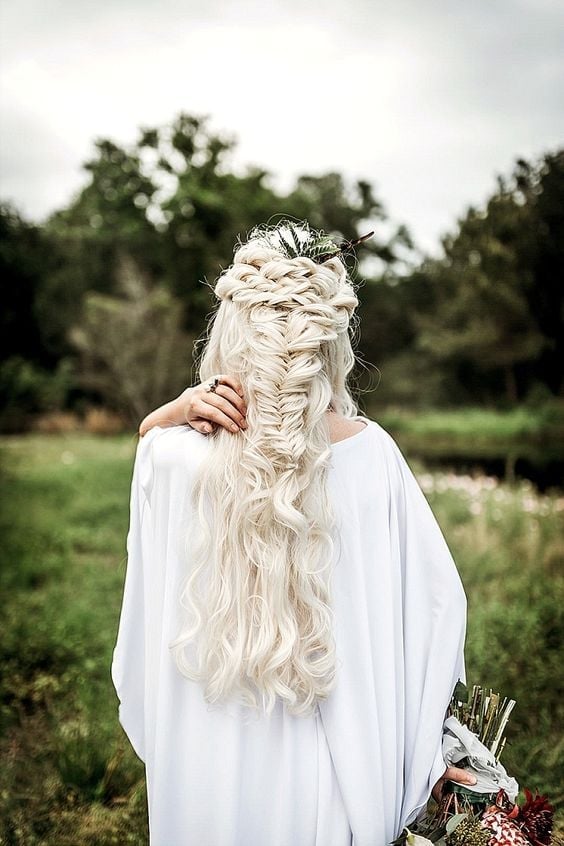
Can a braid do the work of a haircut? This one nearly does. The large fishtail down the back carries the visual weight, but the smaller face-framing braids that merge into it are what make it flattering on most face shapes, since they soften the line around the jaw without adding bulk. It wants thick, wavy hair at mid-back length; fine or thin hair will let the fishtail read as skimpy rather than substantial. Ask your stylist for large fishtail braid with face-framing accent braids. Gently pull the fishtail apart after it is pinned to double the volume, and expect the whole structure to hold for a full day as long as the base is secure. The platinum stays icy with a toning appointment every four to six weeks.
Platinum Blonde Mohawk With Fishtail Braid
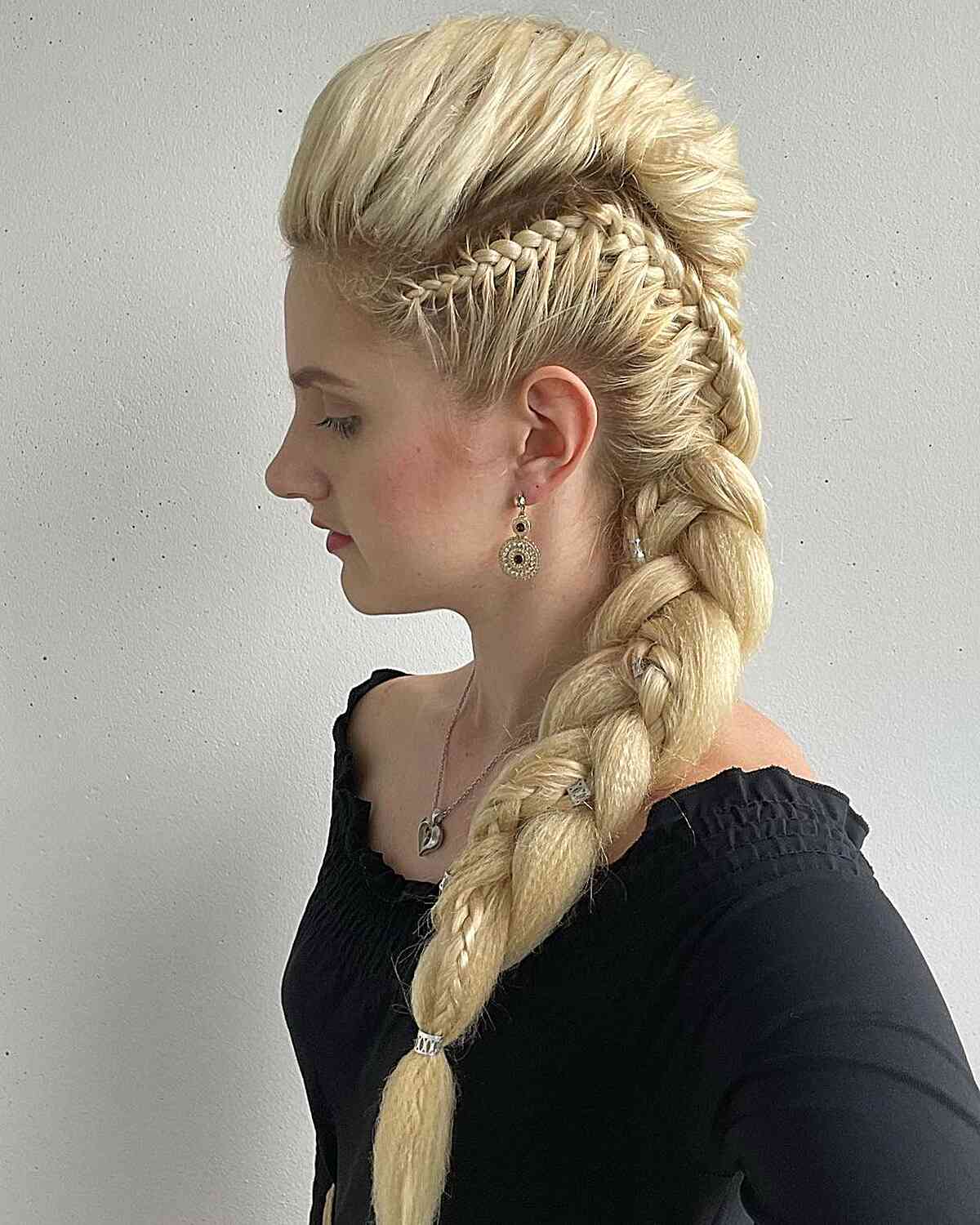
Where the previous style reads as soft, this one is all angles. The mohawk silhouette with tightly braided sides and a central fishtail is a different creature from a simple braid, and it suits straight, thick hair that can hold the shape without frizzing. The raised center line adds height, which balances a long face. Ask your stylist for mohawk with tightly braided sides and a central fishtail braid. It is not a two-minute style, so set aside a solid block of time, and a strong hold gel on the side braids keeps them from sliding out of place. This one is a statement, so it pairs best with an outfit that does not need to compete.
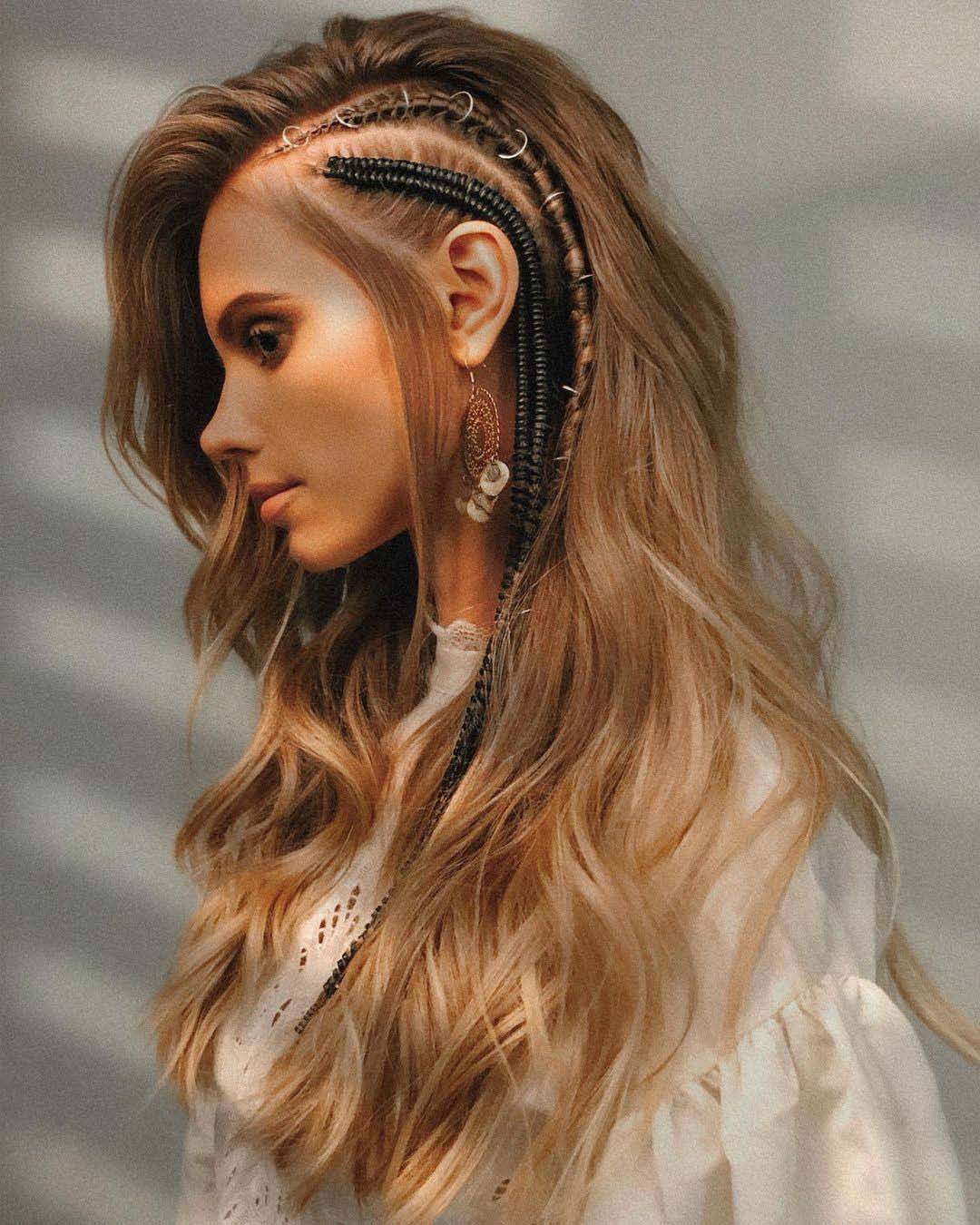
Strawberry Blonde Twisted Braids
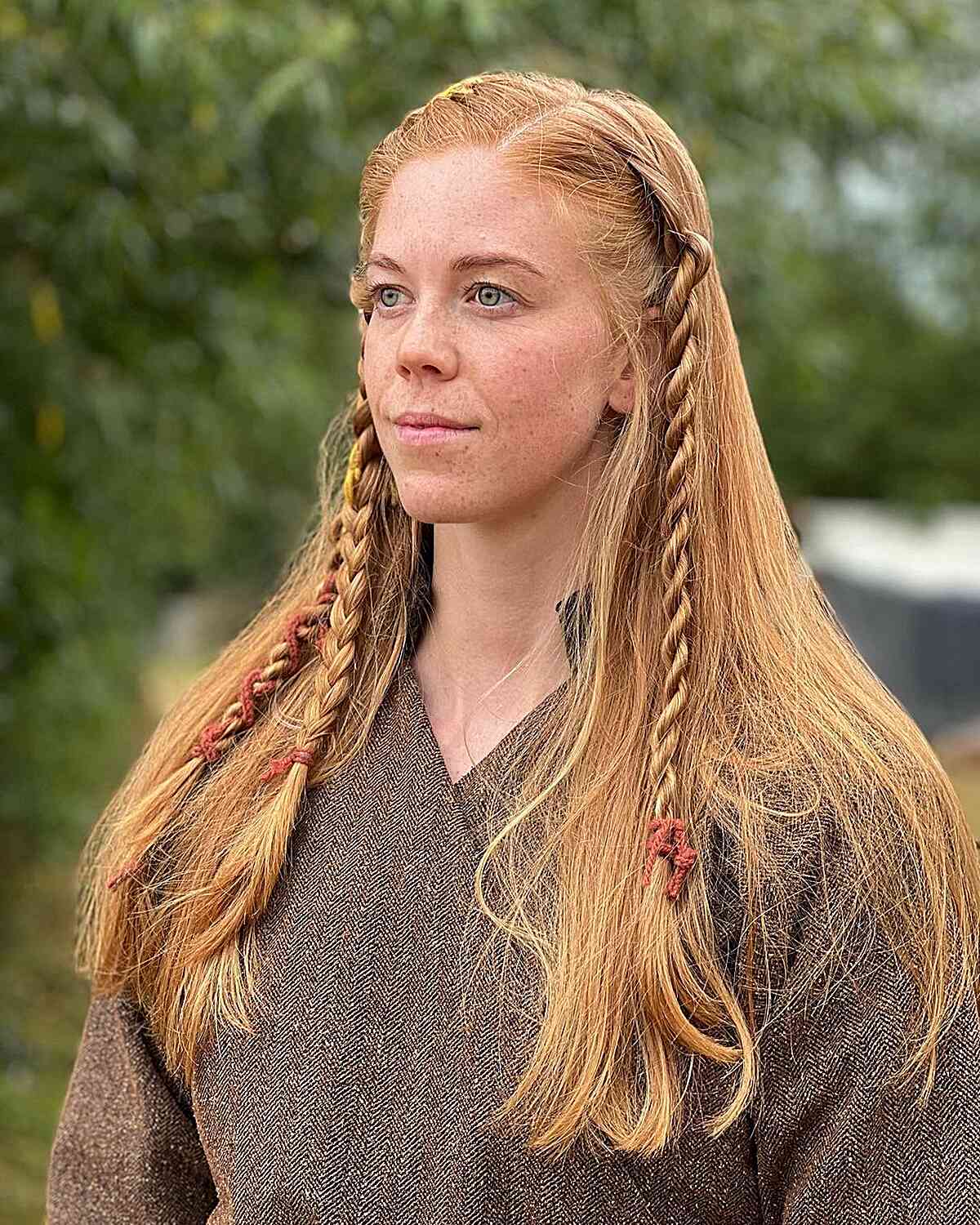
The two twisted braids start right at the temples and travel down through the waves, which gives the whole style a natural, earthy feel that a tighter weave would ruin. The middle parting and the downward lines of the braids can elongate a round face, while the wavy, thick texture keeps it from looking severe. Ask your stylist for two twisted braids from temples, loose wavy mid-back hair. Secure the ends with small red ties that match the strawberry blonde tone, and you have a style that survives a full workday and a gym session without complaint. A trim every four to six weeks keeps the braids from getting ragged at the ends, though the waves can hide a little extra growth if you push it.
Dark Brown With Blonde Highlights Braided Pattern
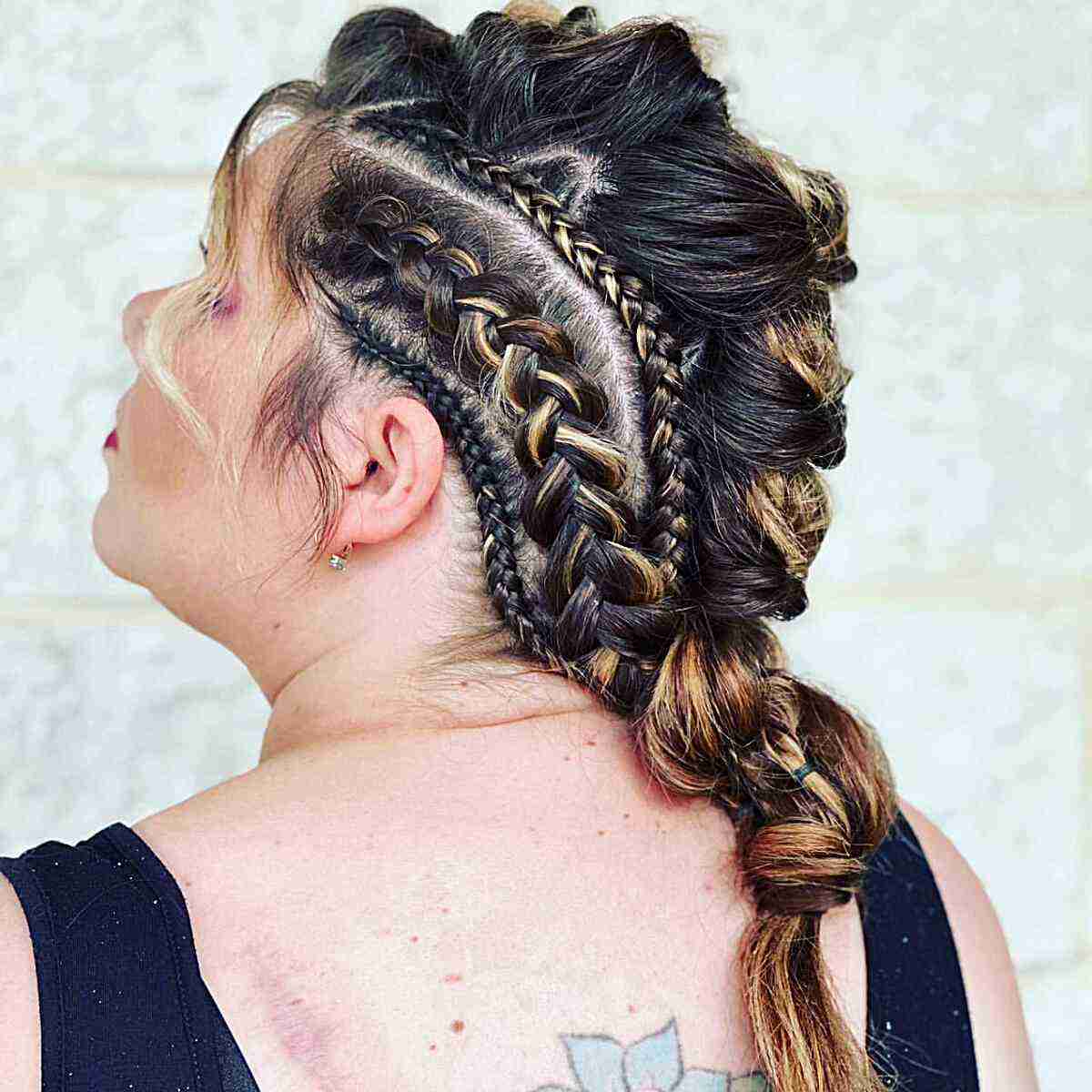
The back view tells the whole story: a large central braid with smaller accent braids along the sides, all woven into a pattern that shows off the blonde highlights against the dark brown base. It is a salon-heavy design, so the appointment is not quick, but the style looks intentional from every angle. The middle parting and the vertical braids suit most face shapes, and the thick, wavy texture keeps the pattern from looking flat. Ask your stylist for combination of intricate braids with a central and accent styles. A shine serum on the braids makes the highlights pop, and a toning appointment every six weeks keeps the blonde from going brassy against the dark base.
Brown With Blue Streaks Braided Mohawk
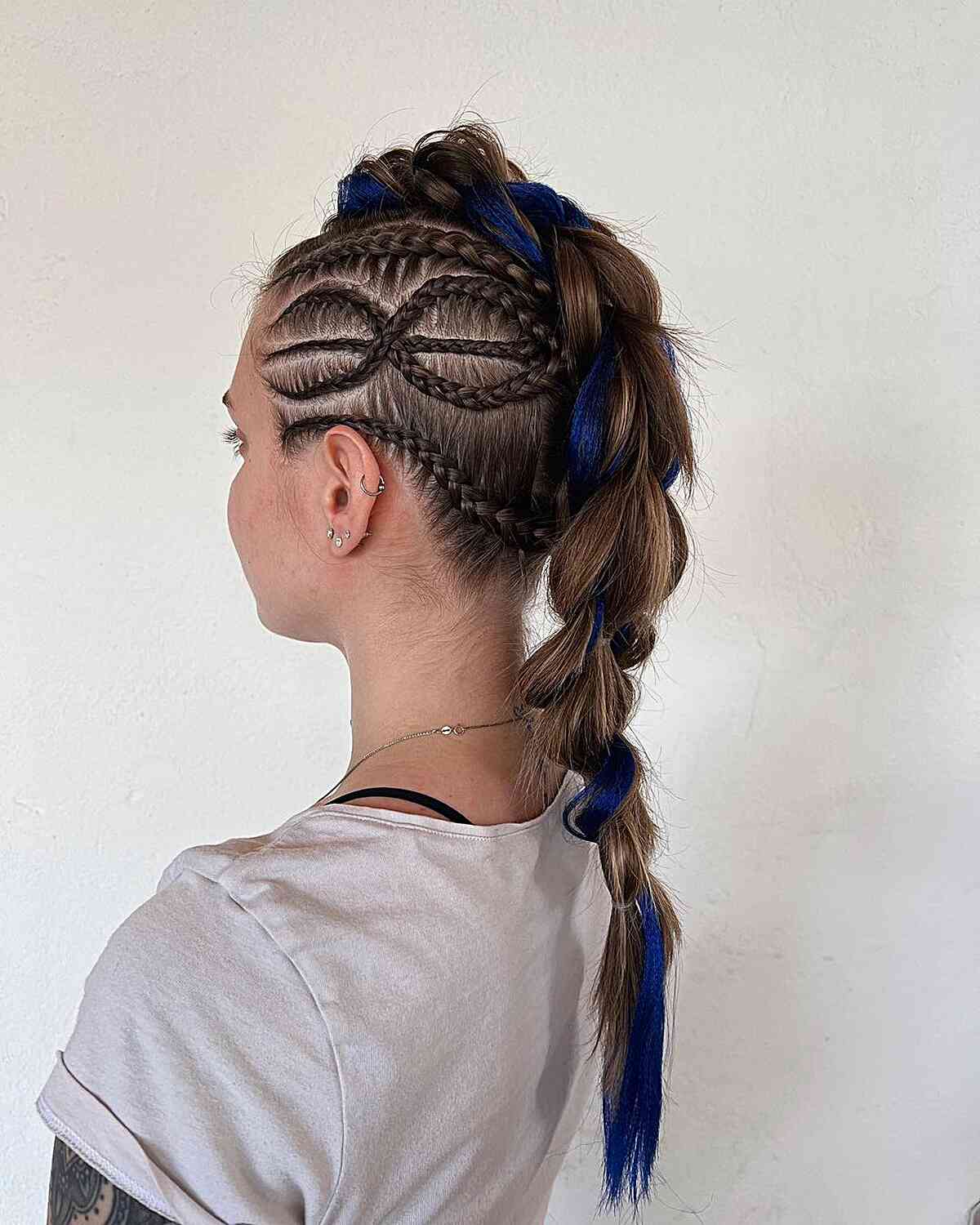
Can a braid be both warrior and watercolor? This brown braided mohawk weaves vivid blue streaks through the central braid that runs to mid-back, with the sides left wavy and thick. It suits a long face, since the volume sits at the crown rather than the jaw. Ask your stylist for: braided mohawk with blue streaks. The blue needs a color-depositing conditioner to stay bright, and the intricate pattern means a solid chunk of chair time, so save it for a festival or a bold night out.
Blonde Double Dutch Braids Into Ponytail
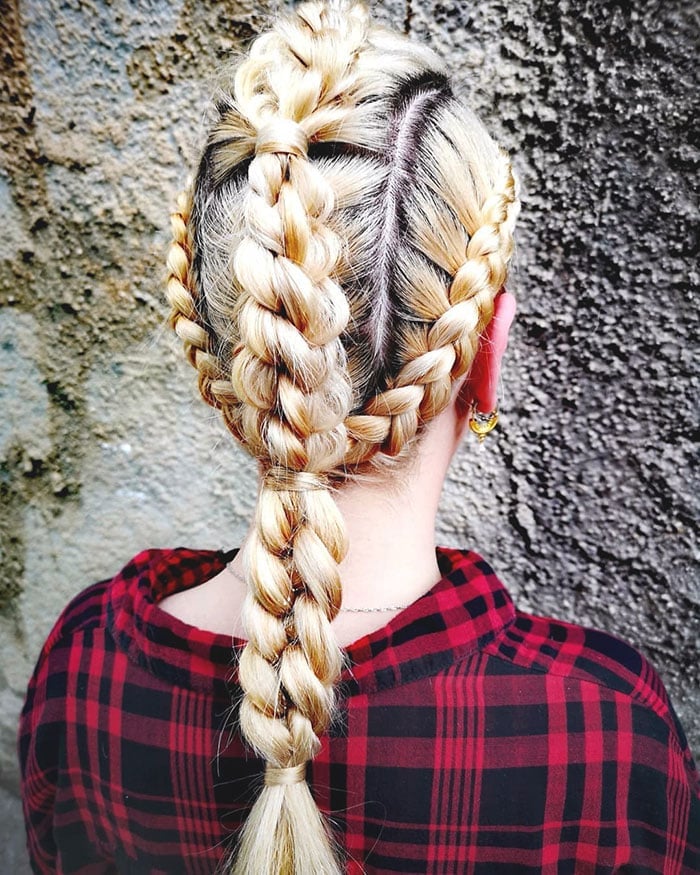
Two Dutch braids start at the front hairline, meet at the nape, and merge into a single braided ponytail that falls to mid-back. The blonde color with darker roots adds depth, while the wavy, thick texture keeps the braids from looking skinny. Ask your stylist for: double Dutch braids into a single braided ponytail. The process is straightforward: part down the middle, braid each side inward, then combine. Keep the tension firm for a polished finish, or pull a few strands loose for a softer one. This one holds all day, which makes it a practical pick for active days.
Ash Blonde Braids Converging Into High Ponytail
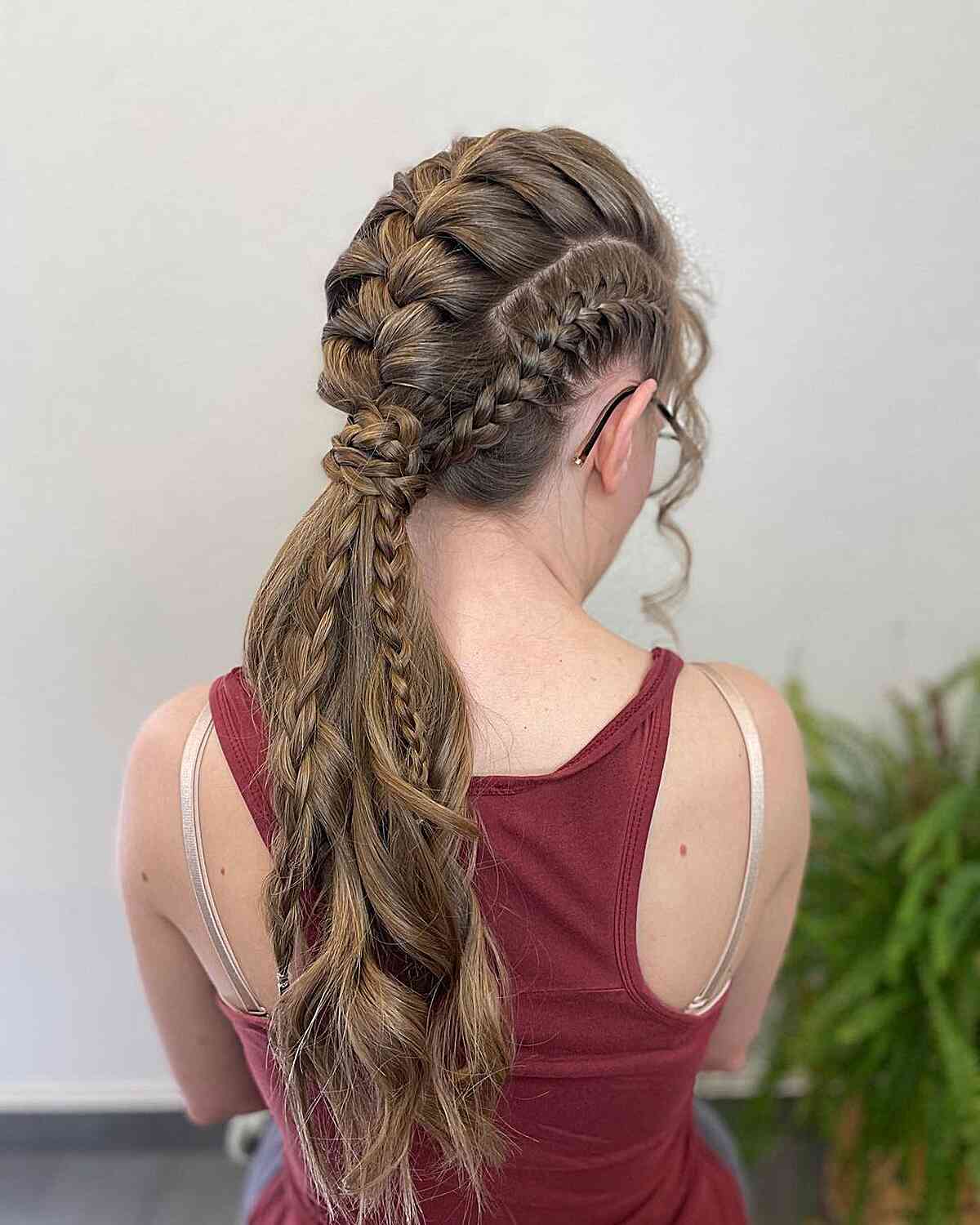
A network of side braids feeds into a high ponytail, with the ash blonde color and darker roots giving it a lived-in feel. This style suits thick, wavy hair at mid-back length, and the high placement can balance a round face. Ask your stylist for: multiple intricate braids into a high ponytail. This is a salon job, not a weekend experiment, since getting all the braids to converge evenly takes patience. A texturizing spray before braiding adds grip, and the ponytail can go sleek or waved. The time in the chair is significant, but the result holds strong for an event.
Dark Brown With Orange Highlights Dutch Braids
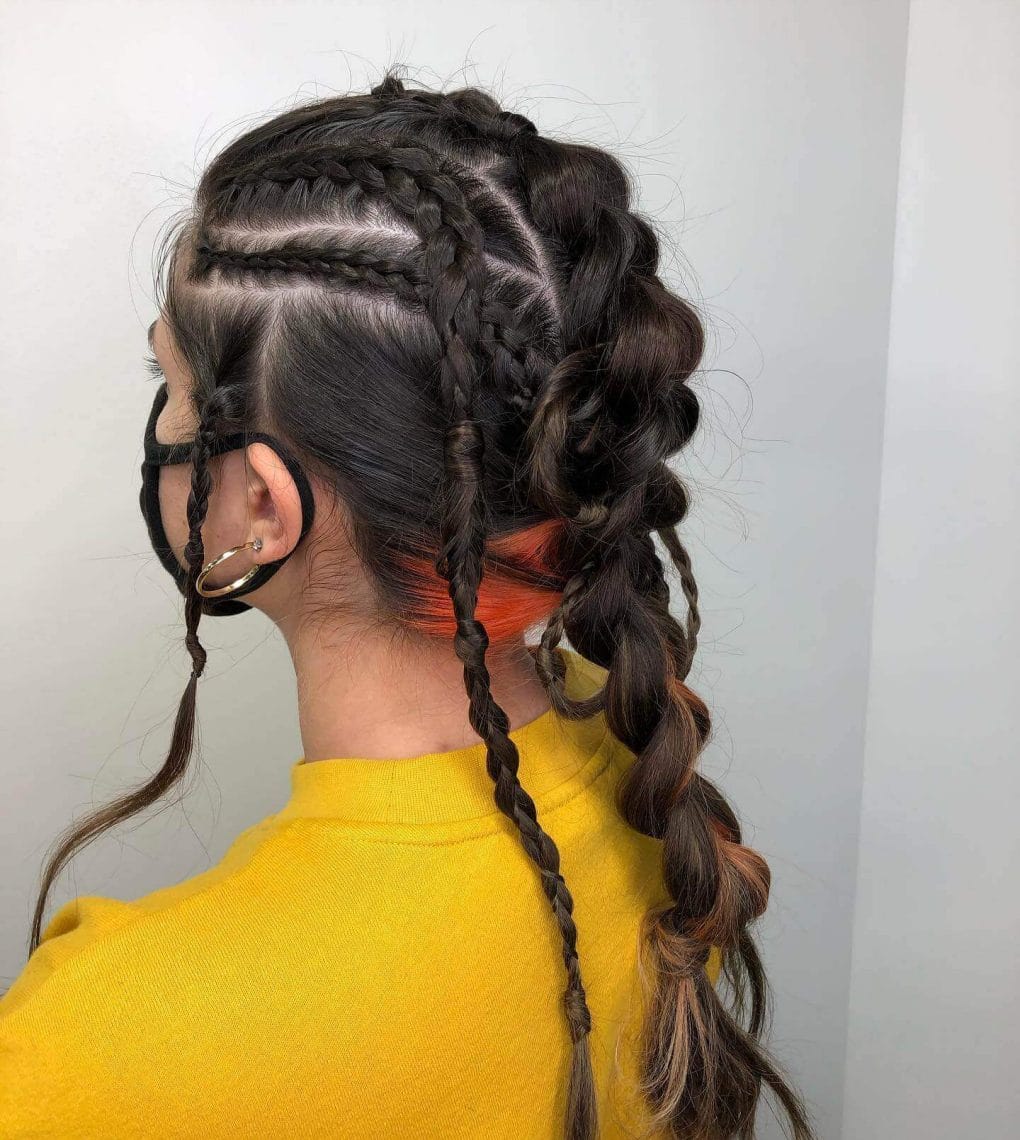
Why do orange highlights look so good against dark brown? Multiple Dutch braids run down the back, with loose curls framing the face and a wavy, thick texture throughout. The loose strands soften a square jawline, and the orange adds a playful pop without harshness. Ask your stylist for: multiple Dutch braids with loose curls framing the face. The catch is that this is hard to replicate at home, since the braids need to transition smoothly into thicker sections. Orange highlights also fade fast, so plan on a color-depositing shampoo to keep them vivid.
Reddish Blonde Undercut With Intricate Braids
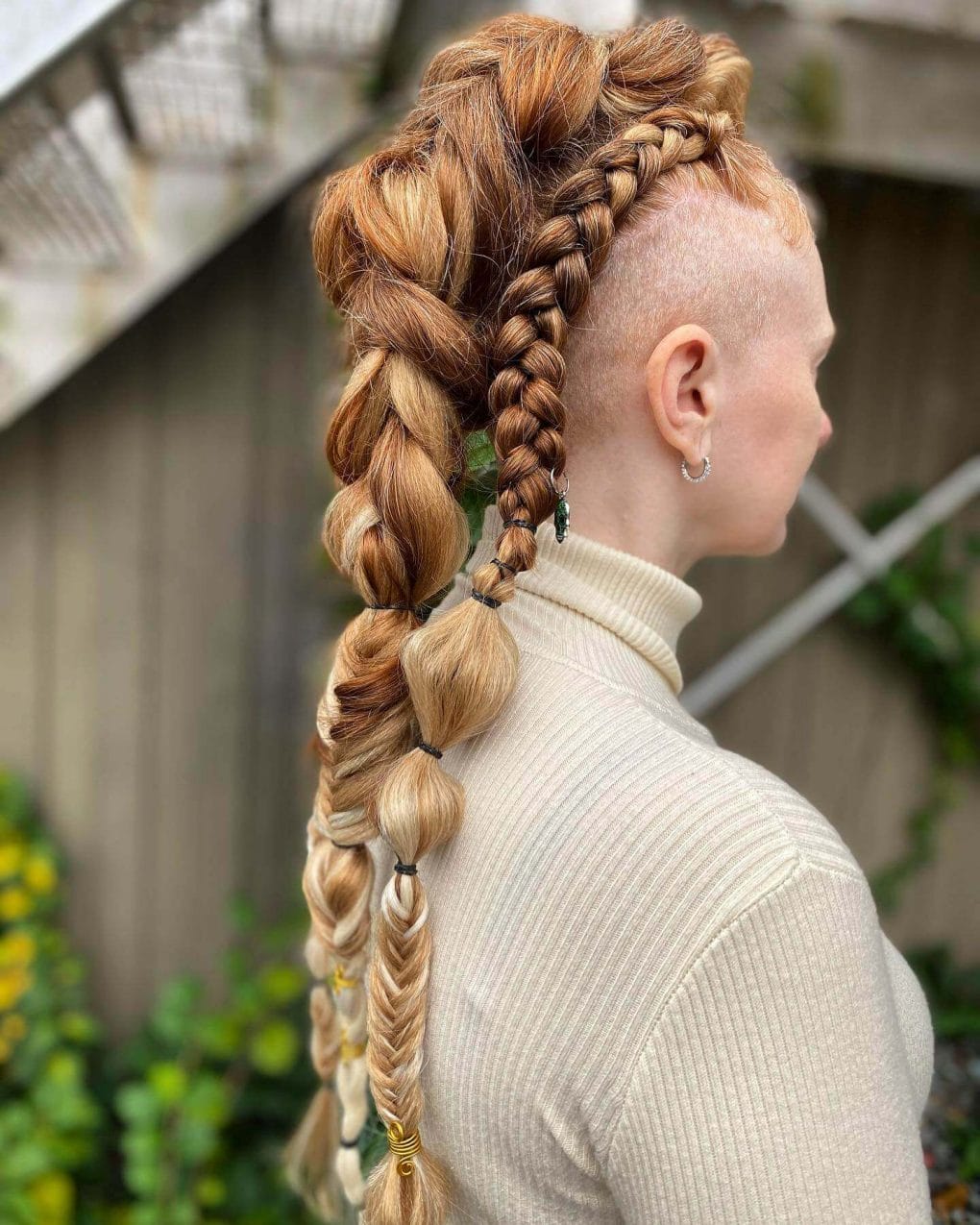
An undercut on the sides sets up this reddish blonde style, where a large, intricate braided structure cascades down the back to mid-back length. The contrast between the shaved sides and the voluminous braid is the point, and it suits thick, wavy hair that can hold the weight. Ask your stylist for: undercut with large, intricate braided structure. The undercut needs a trim every four to six weeks to keep its shape, and the braids themselves require serious styling time. It is an edgy, statement look, not a quick morning option, but once it is in, the style stays put.
Blue And Gray Ombre Braids With Buns
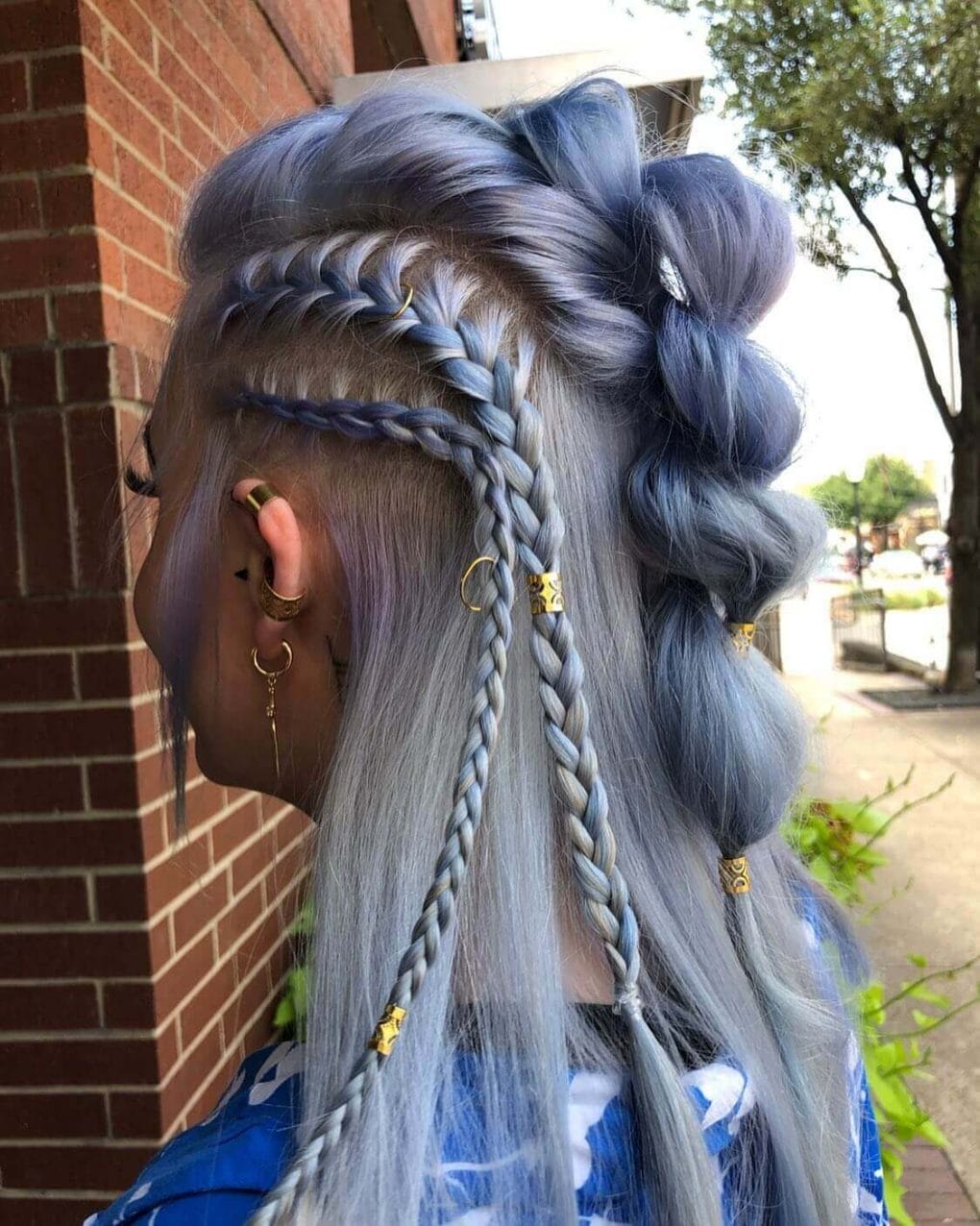
A blue and gray ombre shifts from deep navy at the roots to a pale silver at the ends, with several small buns tucked into the braided pattern and an undercut shaved clean on one side. This style works best in late fall or winter, when the cool tones match the shorter days and the intricate braiding works as a festive event style. Thick, straight hair at mid-back length gives the braids the weight they need to hold their shape. Ask your stylist for: braids and small buns with an undercut. A color-safe shampoo keeps the ombre from fading into one flat blue. The undercut needs a trim every three to four weeks to stay sharp.
Ash Blonde Collarbone Length With Side Braids
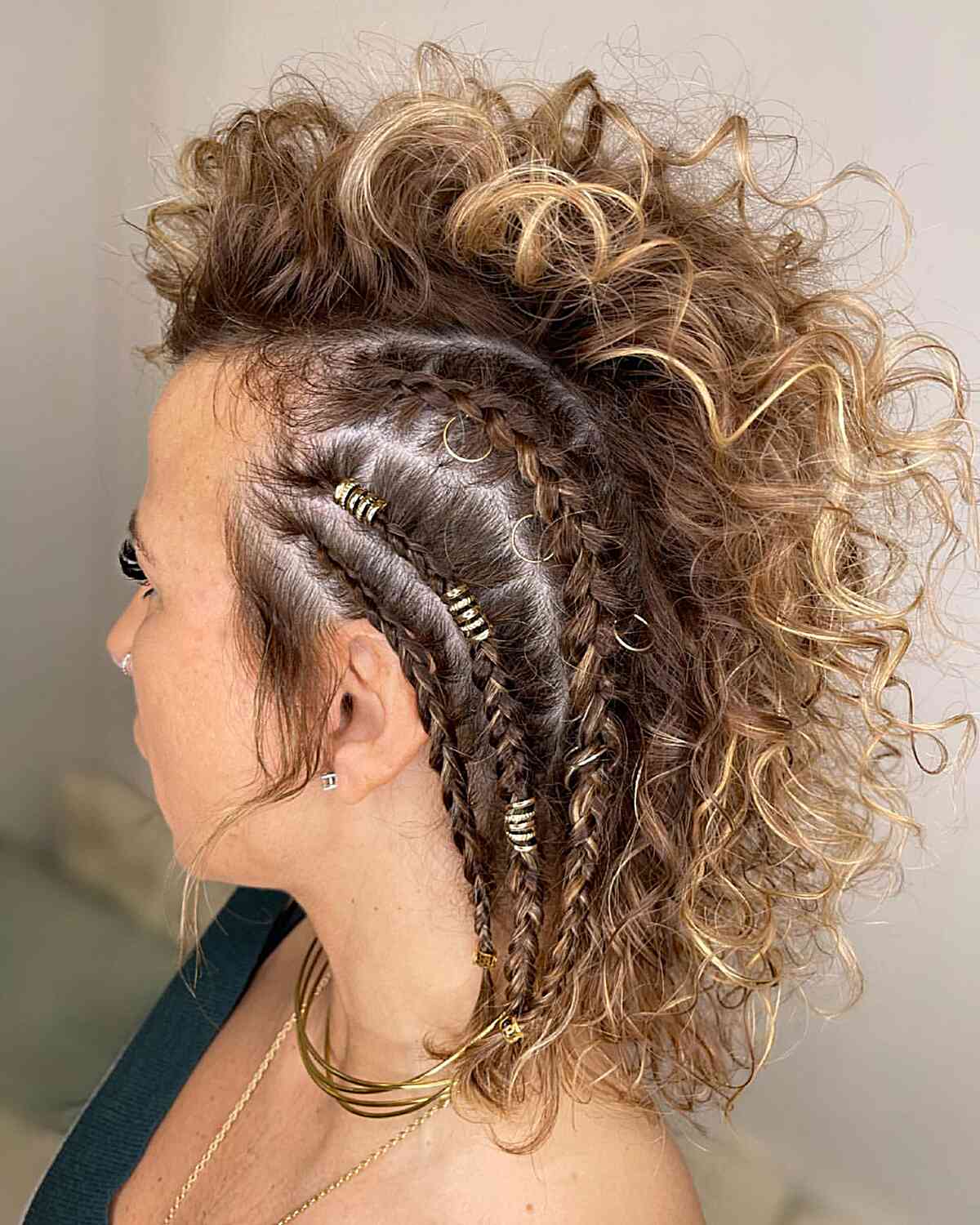
Can medium-density, wavy hair pull off a braided mohawk? Yes, when the braids are thin and the rest stays in loose waves. The side parting sends multiple fine braids across the crown, while the ash blonde waves fall to the collarbone and keep the overall weight low. Oval and heart-shaped faces benefit from the asymmetry. Ask your stylist for: multiple thin side braids with loose waves. A smoothing serum on the loose sections keeps the texture polished, and the side braids can be trimmed as they grow out without disrupting the shape.
Blonde Crown Braid With Side Swept Bangs
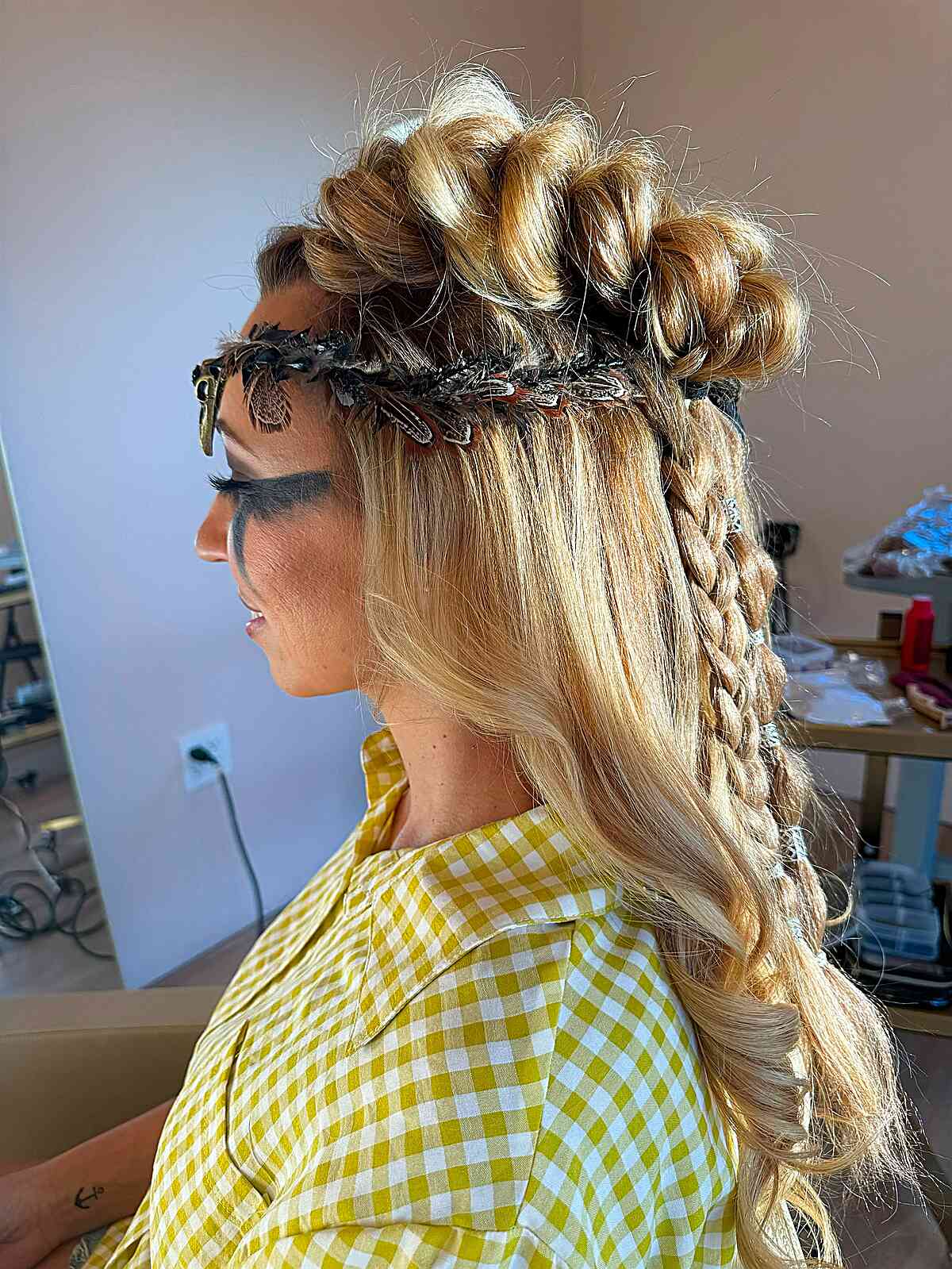
The crown braid is built by taking sections from the hairline and weaving them around the head, securing each pass with bobby pins before the next starts. This creates a continuous band of blonde braid that sits flat against the scalp, while side swept bangs break the symmetry and soften the line. Thick, wavy hair at collarbone length gives the braid enough volume to feel substantial. Ask your stylist for: crown braid with side swept bangs. The bangs need a trim every four to six weeks, and the braid itself holds for the full day once pinned correctly. For a special occasion, ask for clear elastics at the ends.
Blonde And Brown Balayage Braids And Curls
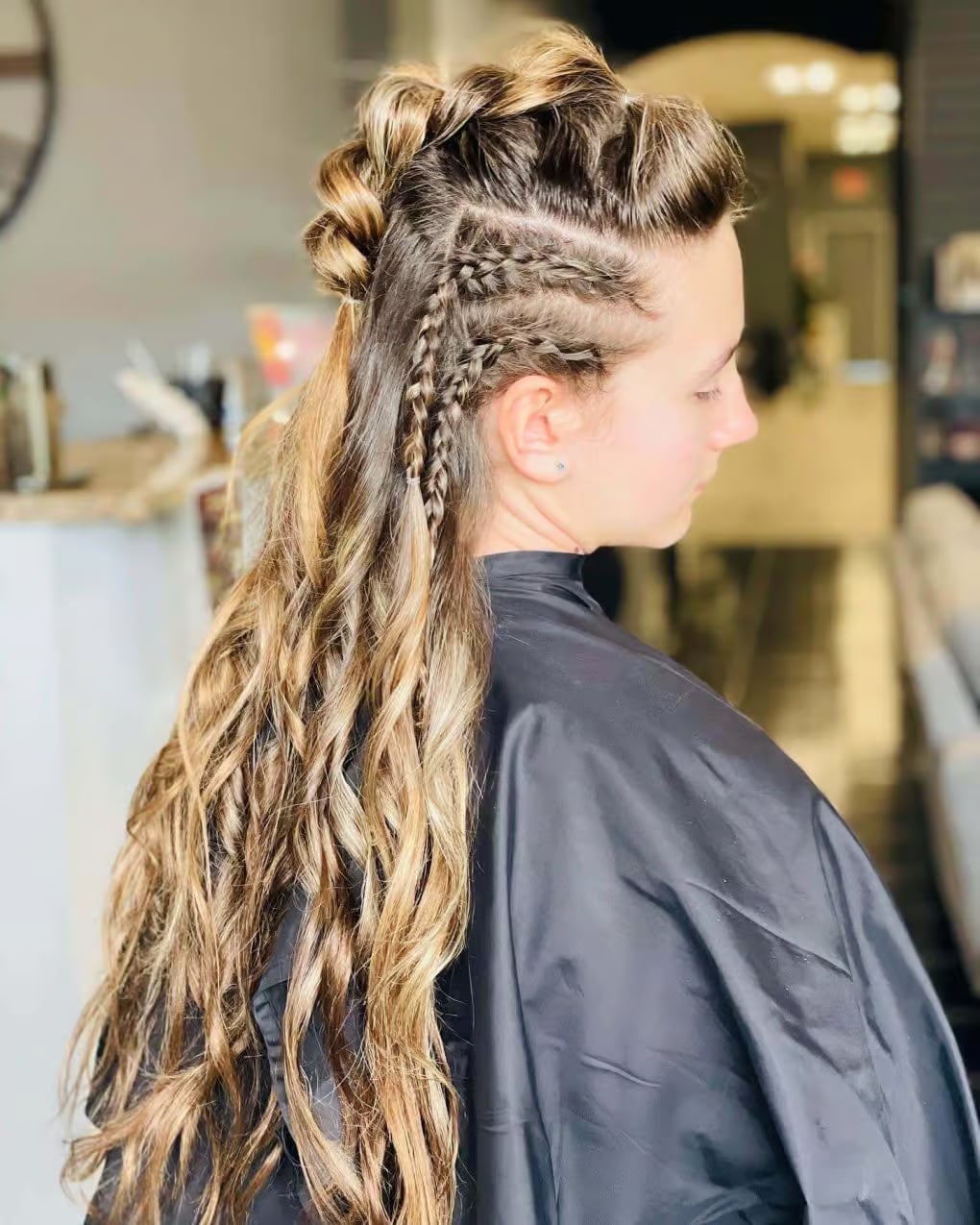
A fully braided look gets all the attention on the weave, but this style splits the difference: two braids run along the crown, then the mid-back length is left in loose waves and curls. The blonde and brown balayage shows up better in the curly sections than it would in a solid braid, because the light hits the high and low pieces separately. Thick, wavy hair holds both the braids and the curls without collapsing. Ask your stylist for: crown braids with loose waves and curls. The middle parting keeps it even, and alternating between heat styling and air-drying gives the curls a natural variation that the braids don’t need to compete with.
Shoulder Length Mohawk With Braids And Curls
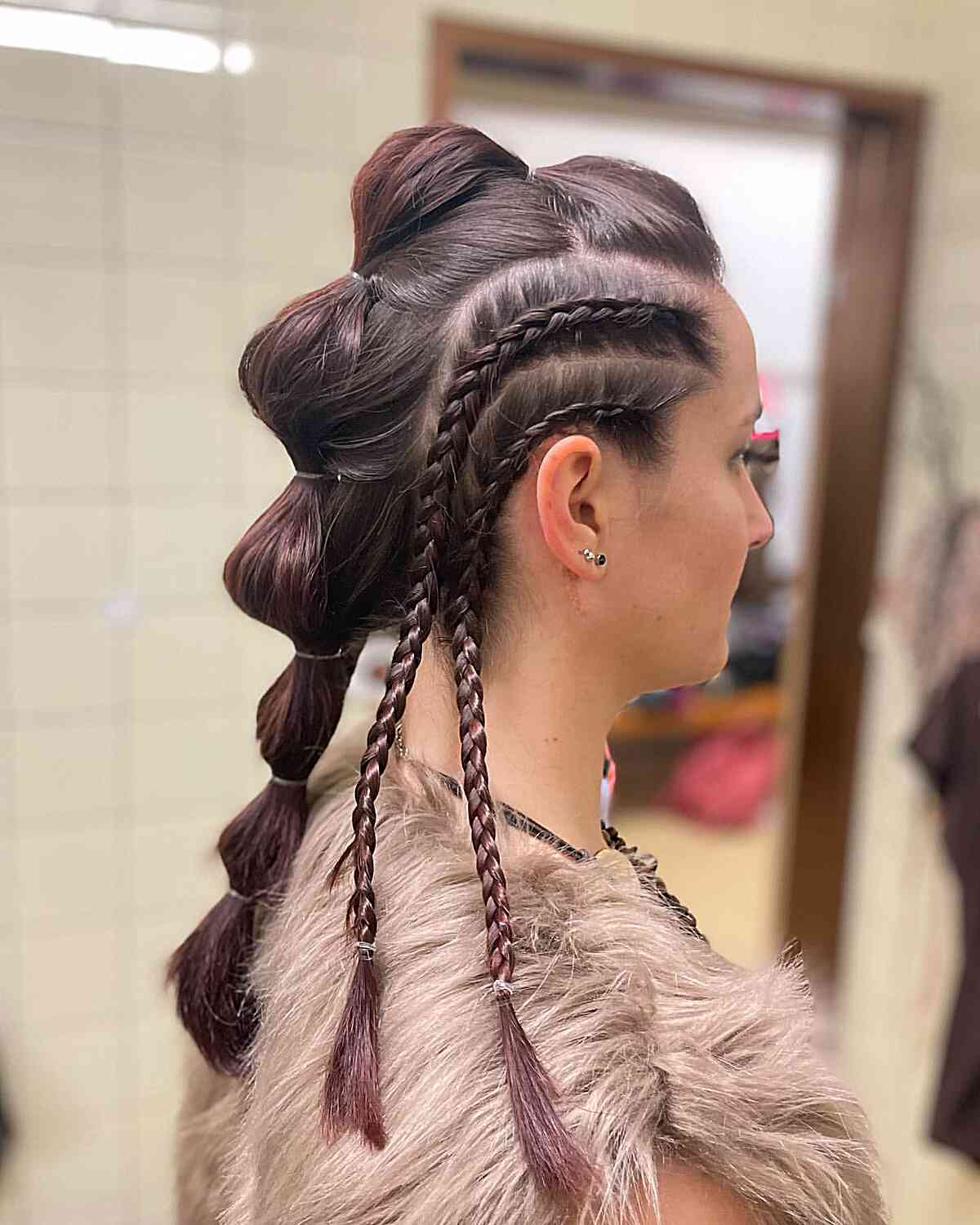
The mohawk here runs from the crown down the back, built from tight braids that transition into a bubble ponytail at the nape, while the sides are shaved clean. It wears well through a full day because the braids are secured close to the scalp and the bubble sections keep the length from tangling. Thick, straight hair at mid-back length gives each braid segment enough density to stay defined. Ask your stylist for: undercut with braided side and curly mohawk. A styling cream on the ponytail sections prevents frizz, and the undercut needs a clean-up every three weeks. The two thin braids with beads that hang in front add movement without interfering with the mohawk line.
Shoulder Length Dark Brown Braided Mohawk
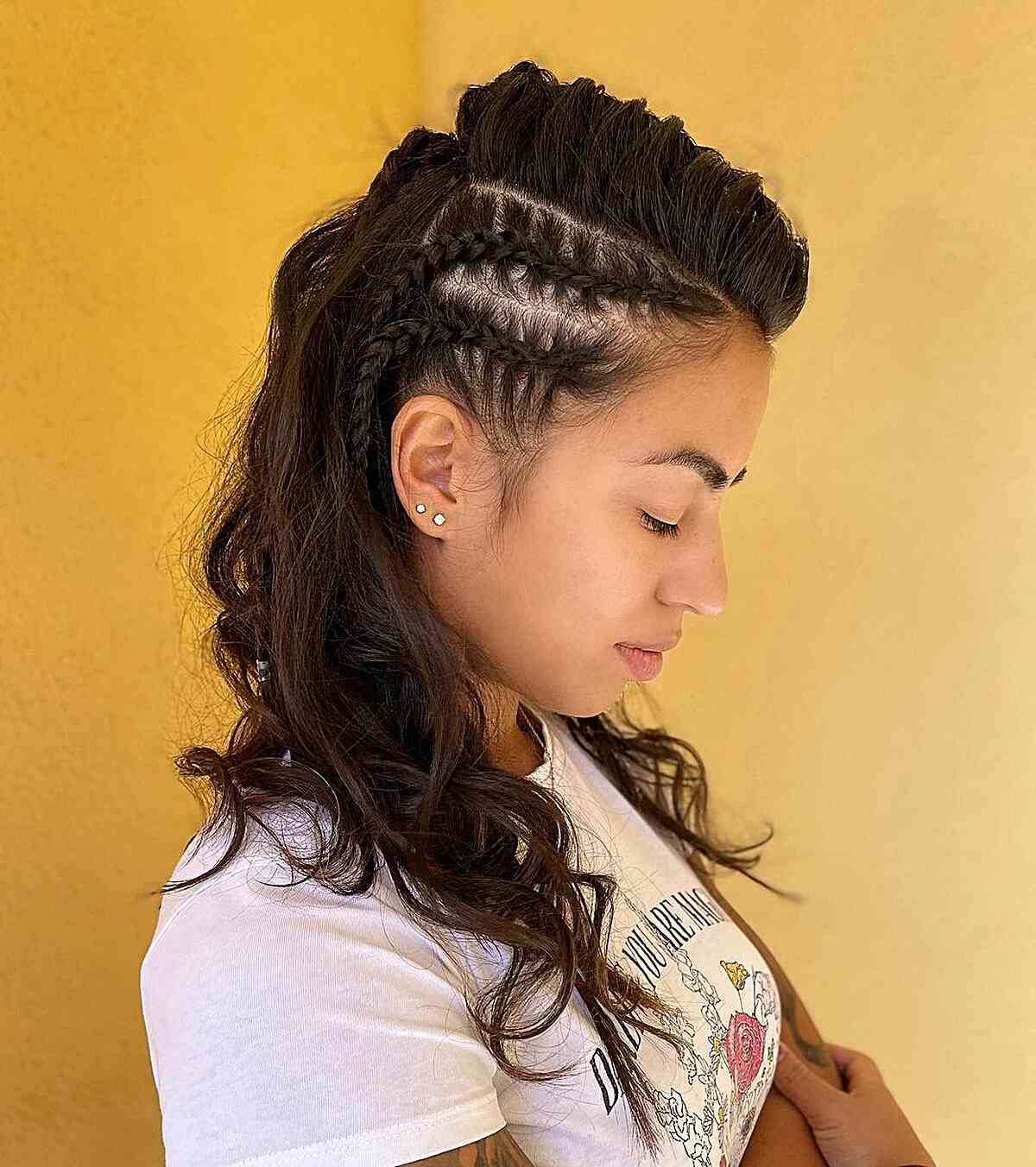
It suits thick, wavy hair and can balance a long face shape with the height at the crown. Ask your stylist for: braided mohawk with wavy texture. This one is a salon job, not a bathroom-mirror project, because the tight scalp braids need even tension to hold their line. The wavy sections keep it wearable for everyday, though the braids will need a refresh appointment to stay crisp.
Dark Brown Braids With Crimped Texture
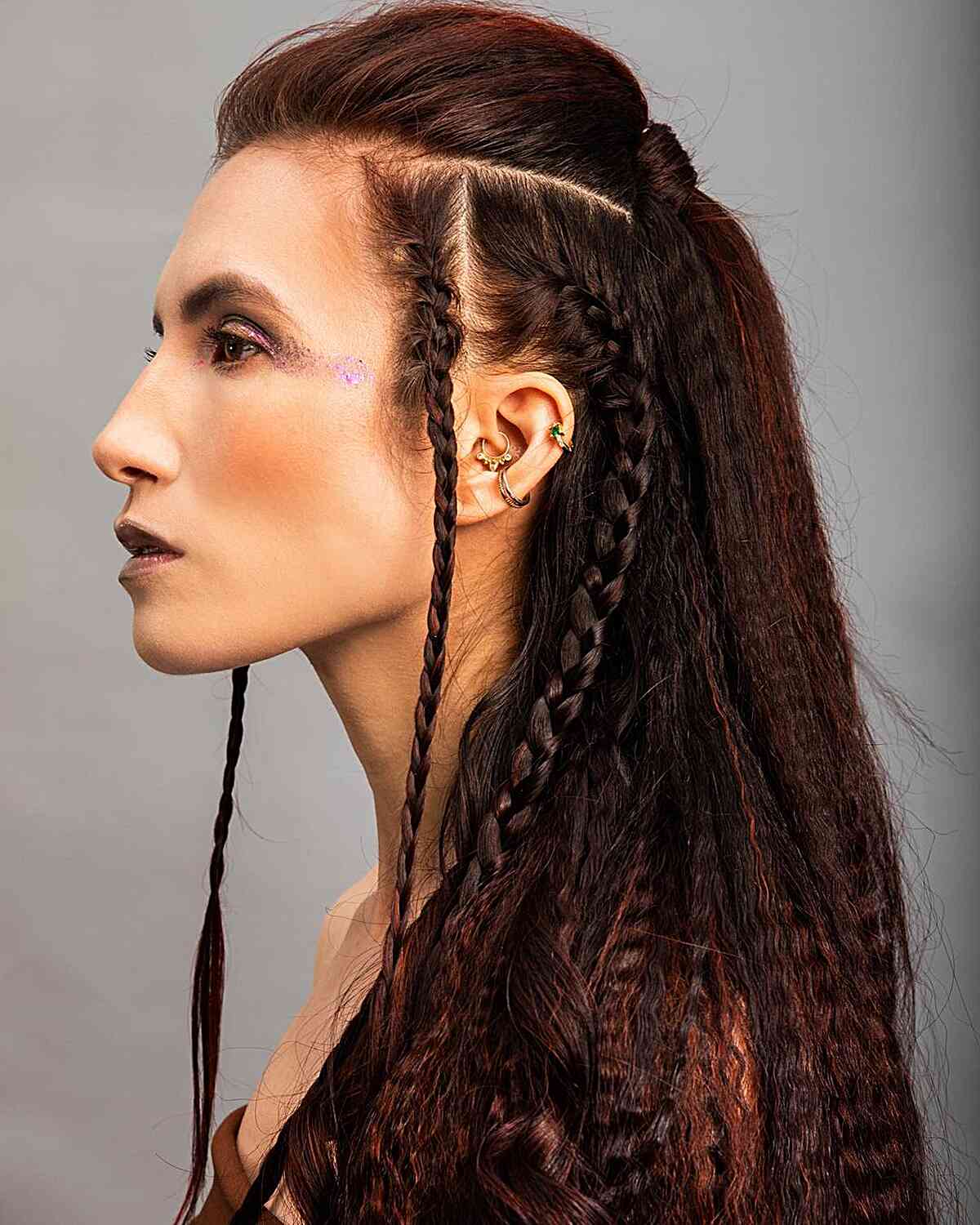
Can you get braids and crimped texture without the whole thing turning into a frizz situation? Yes, if the crimp is done on the lengths before braiding, so the wave pattern stays defined through the braid. This style works on thick, wavy hair that reaches mid-back, and a side parting keeps it friendly to most face shapes. Ask your stylist for: braids with overall crimped texture. The honest trade-off is that the crimp does not last forever, and once it drops, the braids can look flat. Plan on a touch-up every few weeks if you want the texture to stay obvious.
Dark Brown Mohawk Braids Into Bubble Ponytail
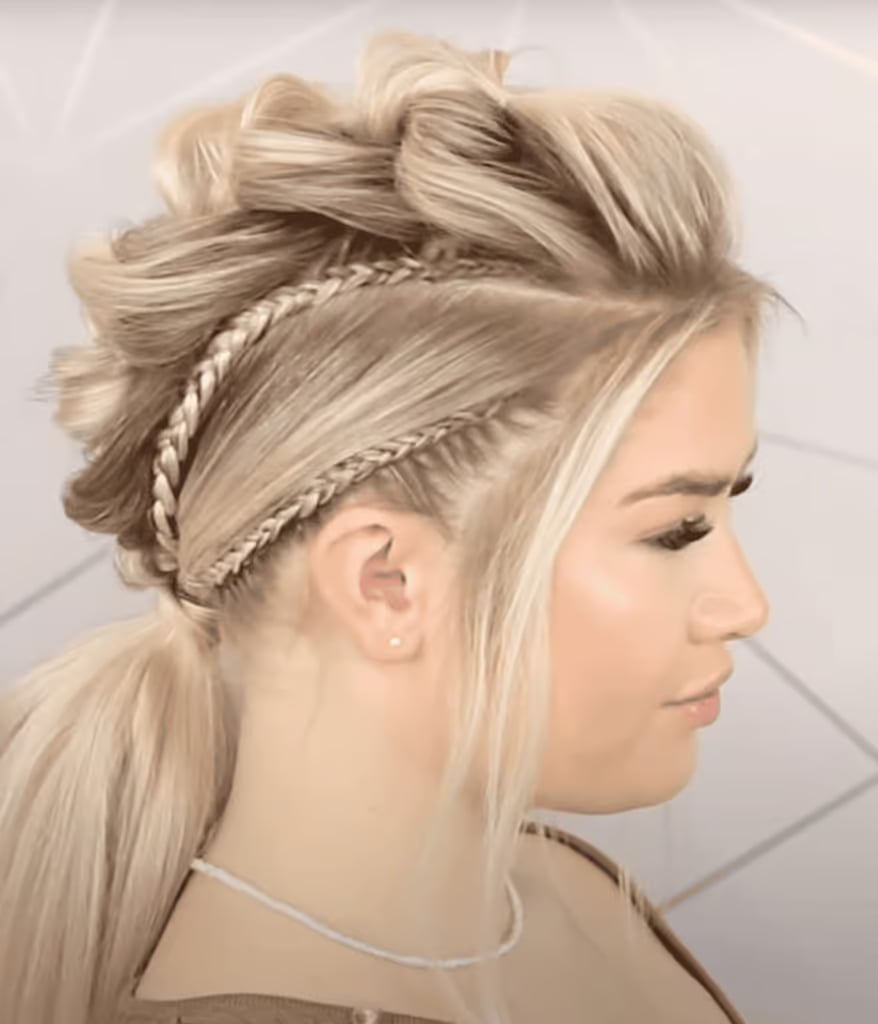
This design splits the difference between braided mohawk and ponytail: two parallel braids run along the scalp, the top is teased for height, and the rest gathers into a low bubble ponytail. The platinum blonde color makes the braid lines read clearly, and the wavy texture gives the tail some body. Ask your stylist for: two parallel braids with a teased top and low ponytail. Recreating this at home is possible but slow, since the braids need even tension and the bubbles require clear elastics placed at matching intervals. Budget a solid chunk of time if you attempt it, or book a salon seat for the cleaner version.
Dark Brown Fine Hair With Slicked Back Side Braids
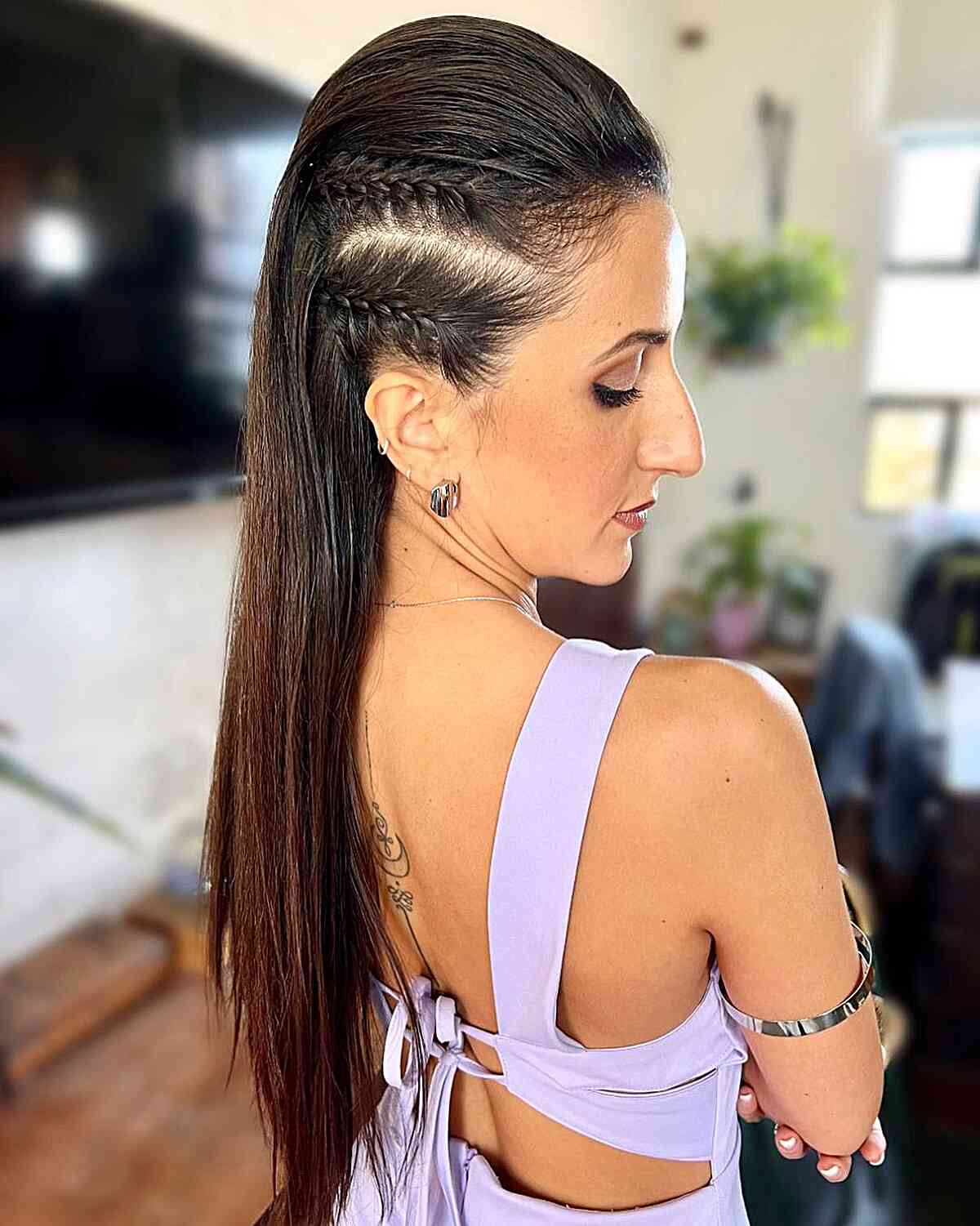
Two neat braids along the hairline keep fine, straight hair out of the face while the rest falls past the shoulders in a long, smooth sheet. The side braids add a little structure without weighing down the rest of the hair, which is the usual problem with fine textures. Ask your stylist for: two neat braids slicked back on one side. A strong hold gel or pomade keeps the braids sleek, but fine hair lets go of slick styles fast, so expect to re-smooth the front by midday. A trim every six to eight weeks keeps the ends from looking straggly.
Platinum Blonde Teased Top With Two Parallel Braids
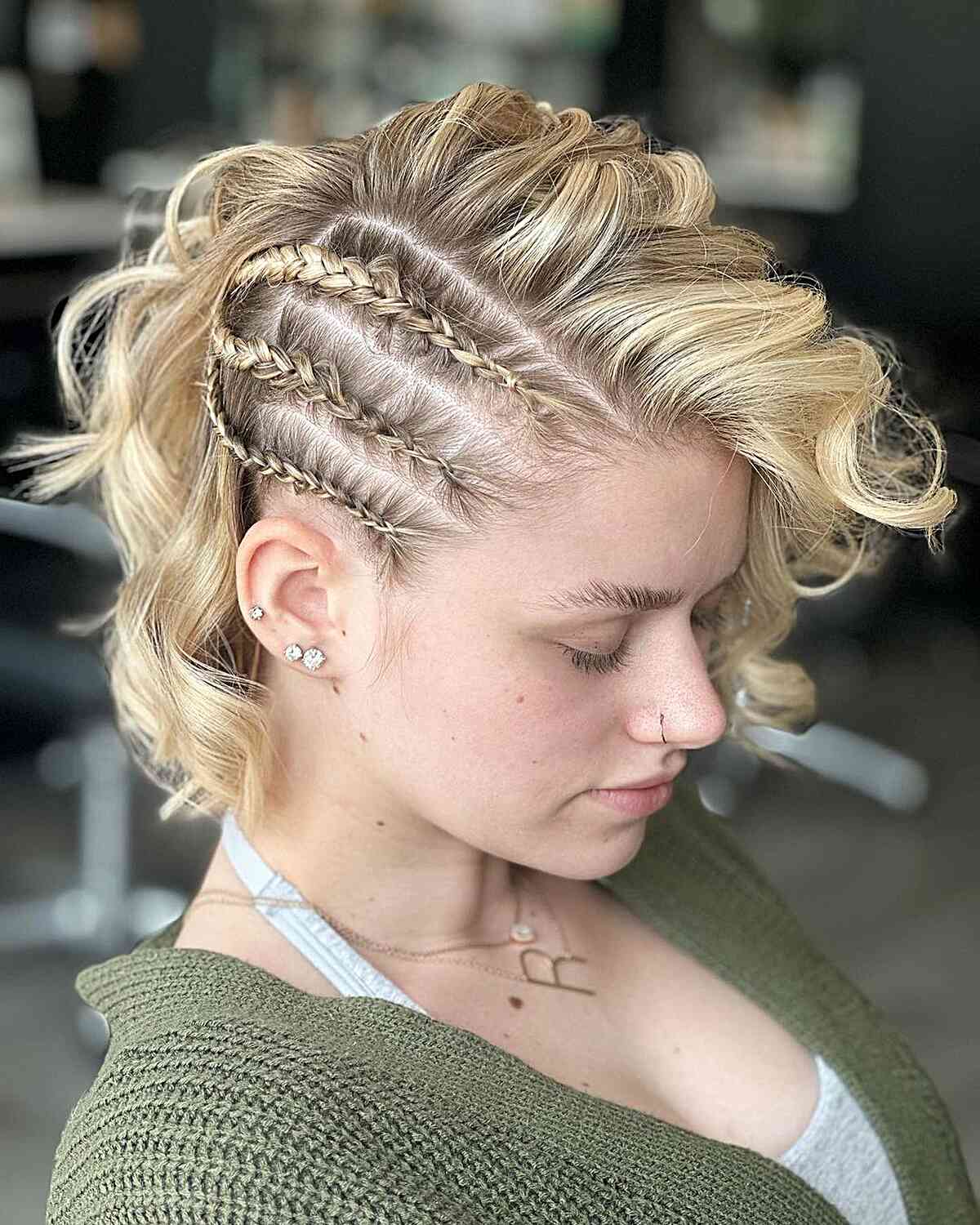
Who actually pulls off a teased top with two parallel braids and a low ponytail? Thick, wavy hair that reaches mid-back, because the volume at the crown needs weight below it to keep the proportions balanced. The ash blonde tone shows off the braid detail against the waves, and the teased section adds height that can flatter a long face. Ask your stylist for: two parallel braids with a teased top and low ponytail. A texturizing spray gives the teased section grip, but the braids need salon-level skill to sit evenly, so this is not a quick at-home job.
Final Thoughts
For thick, wavy hair, let your natural volume do the work and choose Dutch braids or layered patterns that showcase the bulk. For finer hair, add texture spray or a light backcomb at the roots before braiding, then stick to smaller accent braids that read as deliberate rather than sparse.
- Refresh braids by misting dry shampoo at the roots.
- Use a silk pillowcase to minimize frizz and preserve braid structure overnight.
- Deep condition weekly to maintain elasticity and prevent breakage.
- Avoid over-tightening braids to prevent tension headaches and scalp irritation.
- Plan for touch-ups or re-braiding every one to three weeks depending on style complexity.
Embrace the power and artistry of Viking braids.