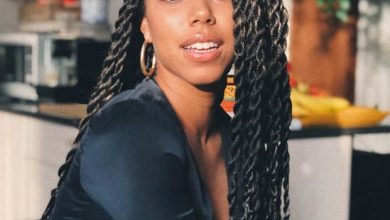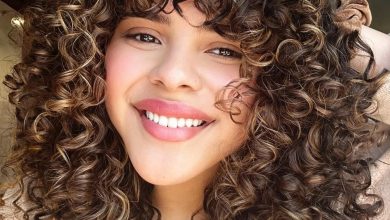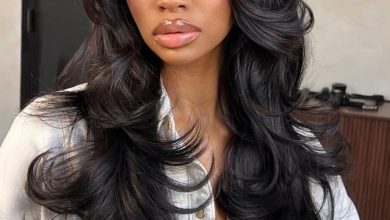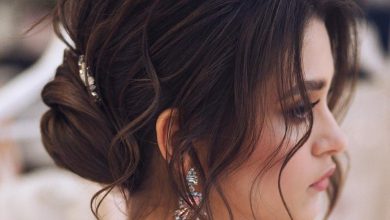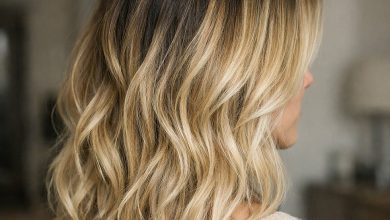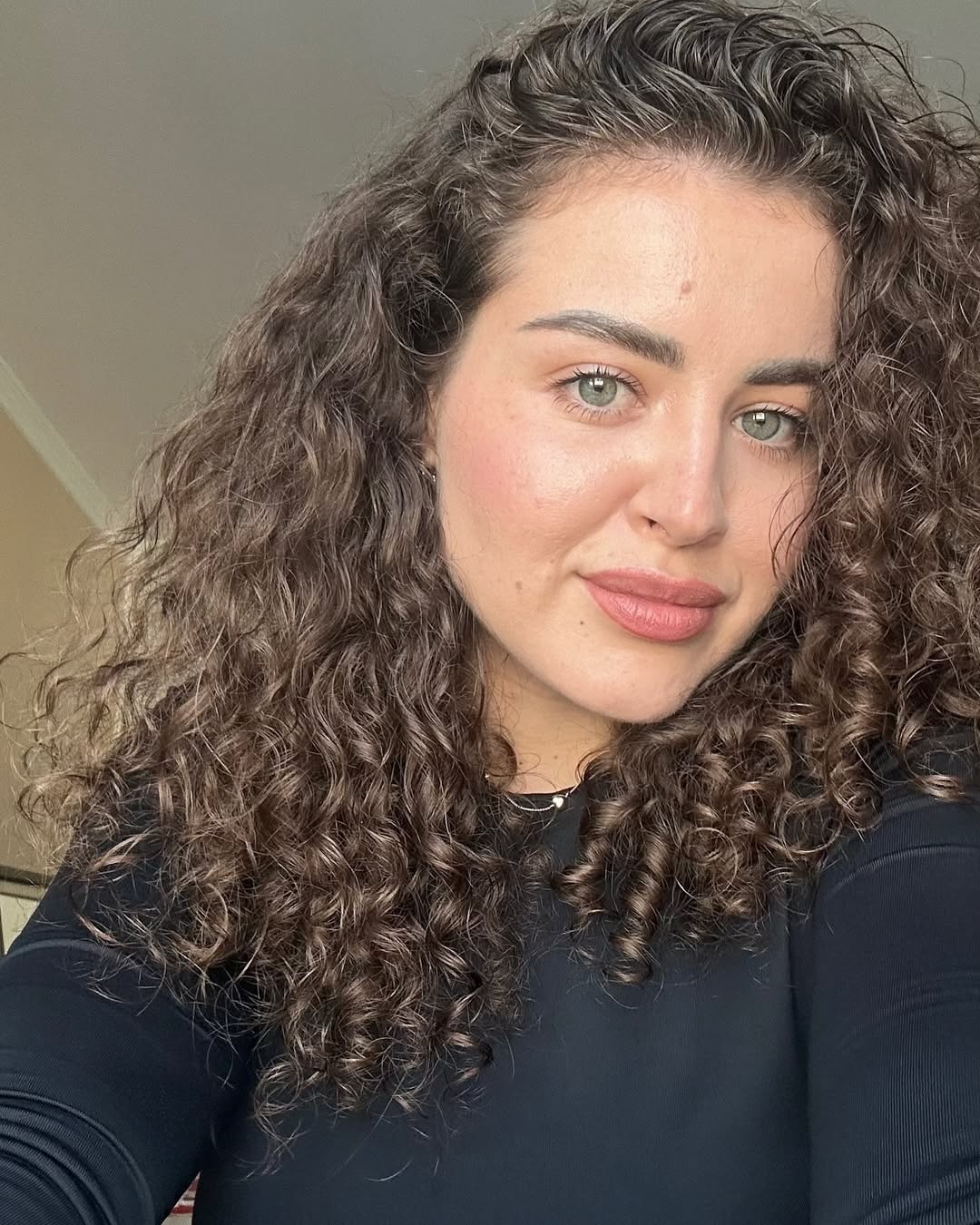
Braiding natural hair in 2027 means choosing a style that works with your texture, not against it. The current shift favors geometric scalp designs and soft, flowing ends over rigid, uniform rows.
This collection of 18 Trendy Natural Hair Braiding ideas covers the full range, from intricate updos that need a professional hand to simpler styles you can refresh at home. Whether your hair is fine and needs volume or thick and demands weight distribution, there is a braided look here that holds its shape without constant tucking or pinning.
Geometric Braided Updo With Face Framing Strands
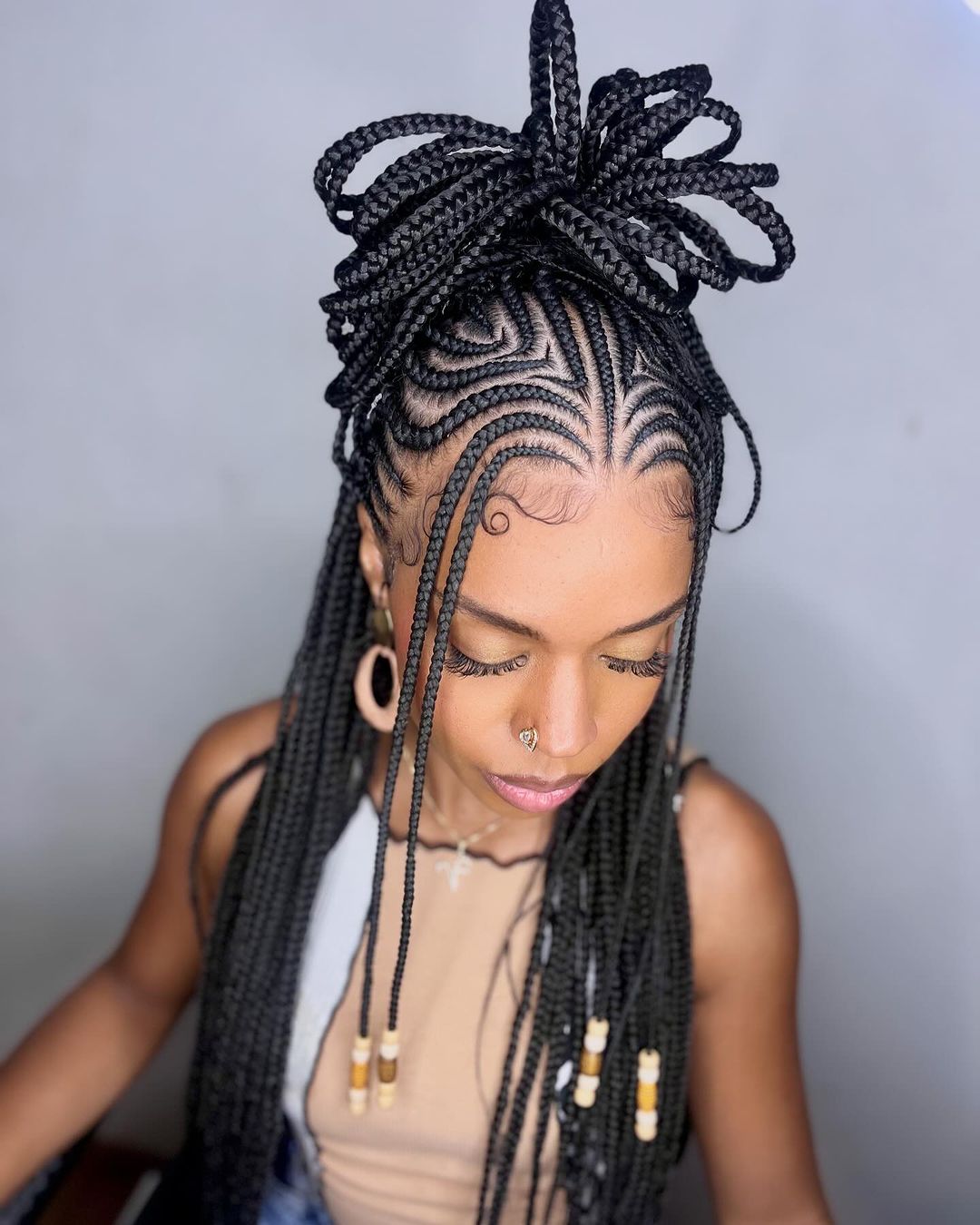
The scalp is the canvas here: a precise geometric pattern of braids leads into a structured bun, while loose strands with small beads and curly ends break the symmetry. This works best for thick, straight hair at mid-back length or longer, because the pattern needs density to read clearly and enough weight to hold the bun without slipping. Ask your stylist for: geometric braided updo with face-framing beaded curls. A smoothing serum on the loose strands keeps them glossy, and the curly ends need a trim every six to eight weeks to stay defined.
Thick Coily Black Hair High Ponytail With Braids
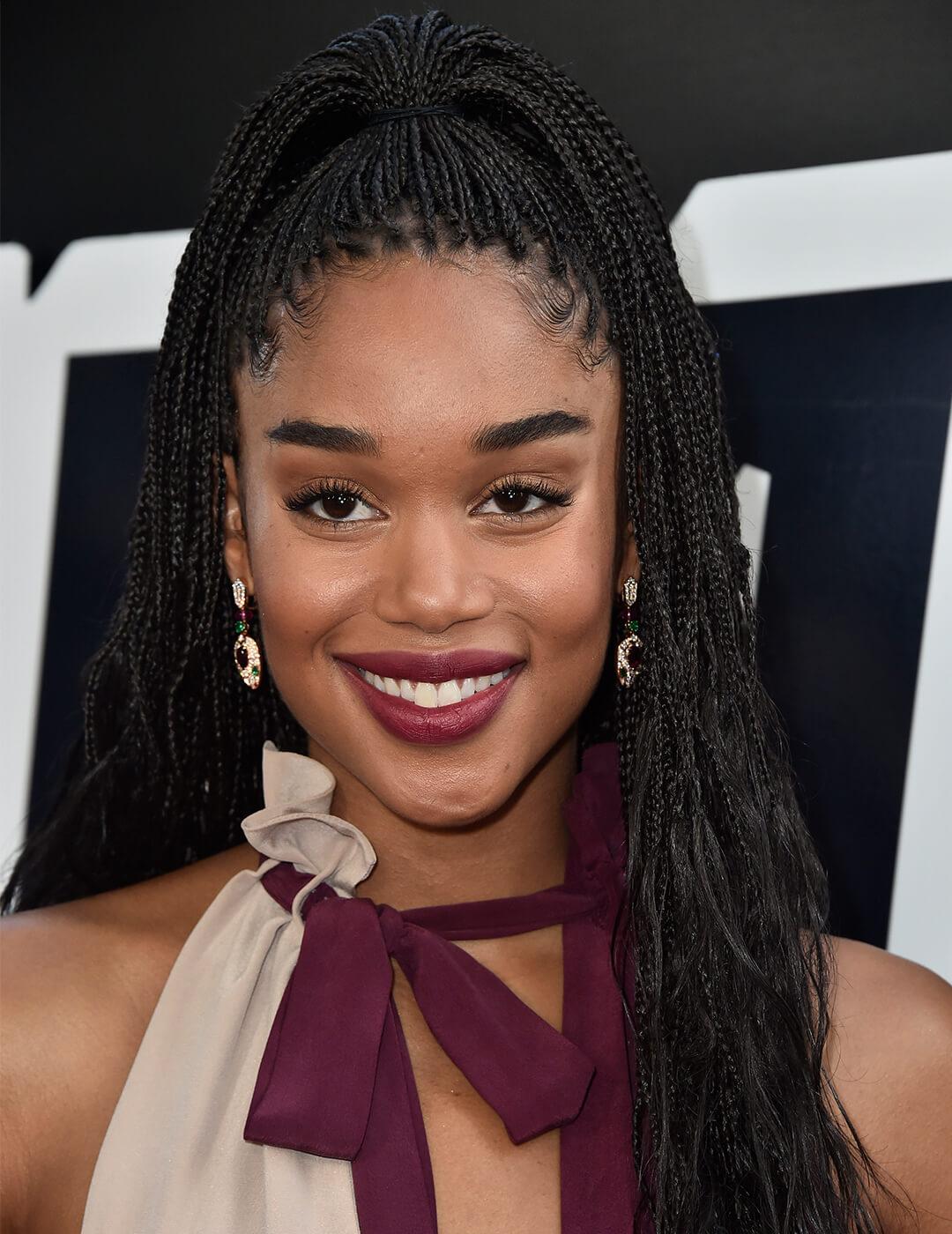
Can a ponytail actually stay put all day without tugging? When your hair is thick and coily, yes, especially when the braiding starts at the scalp and feeds into the ponytail for a secure anchor. The volume comes from the natural texture, not from added bulk, and loose strands around the hairline keep it from looking severe.
Ask your stylist for: high braided ponytail with face-framing pieces. A strong-hold gel along the hairline keeps baby hairs smooth between washes, and a light mist in the morning refreshes the braids without soaking them. This style holds its shape for about a week before the roots need attention.
Mid-Back Knotless Braids With Curly Ends
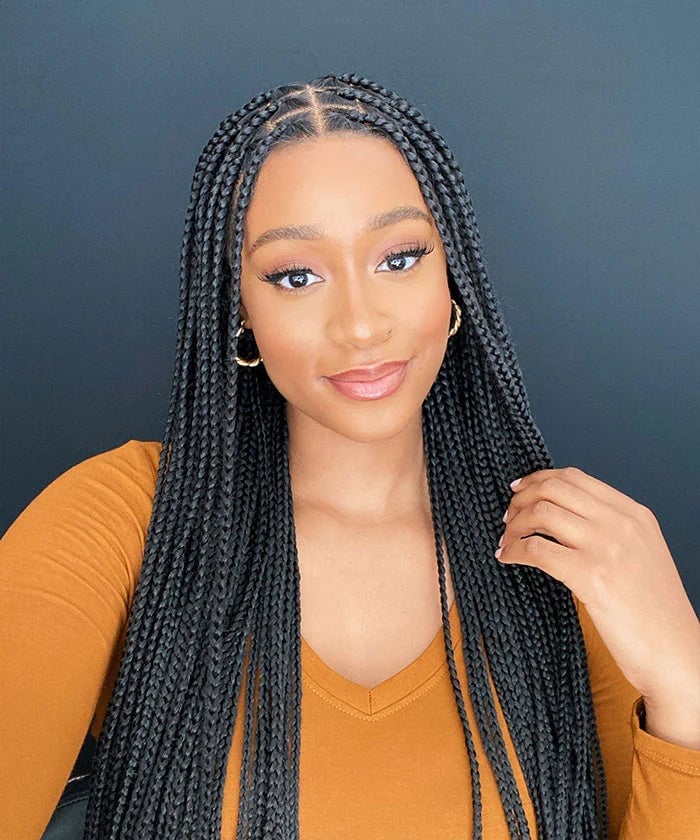
The knotless technique means the braids lie flat against the scalp from the start, so there is no bulky bump at the root. Here they run to mid-back length and end in a release of loose curls, with a few face-framing pieces pulled forward.
Ask your stylist for: mid-back knotless braids with loose curly ends. The curly ends need a curl-defining cream worked through them after washing, and any frayed ends should be trimmed as they appear. This combo of sleek braid and textured end holds for two to three weeks before the curls start to frizz.
Long Box Braids With Wavy Blonde Tips
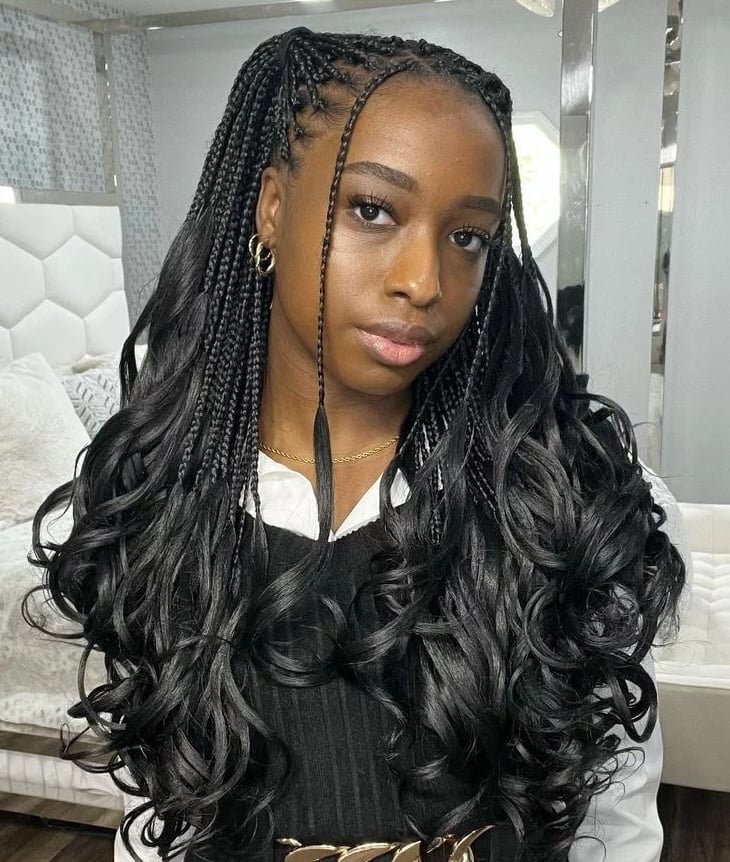
Solid-color box braids read as uniform; add blonde tips and the eye travels down the length instead of stopping at the scalp. Here small braids transition into loose, voluminous waves, with face-framing pieces softening the perimeter. This is the version to choose if you want the movement of loose hair with the longevity of braids, the waves at the ends hide any unevenness as the style ages. Ask your stylist for: long box braids with loose wavy ends and blonde tips. If you heat-style the wavy ends, use a heat protectant, and the blonde tips need a toning appointment every ten to twelve weeks to stay cool.
Short Curly Hair With Side Braids And Fringe
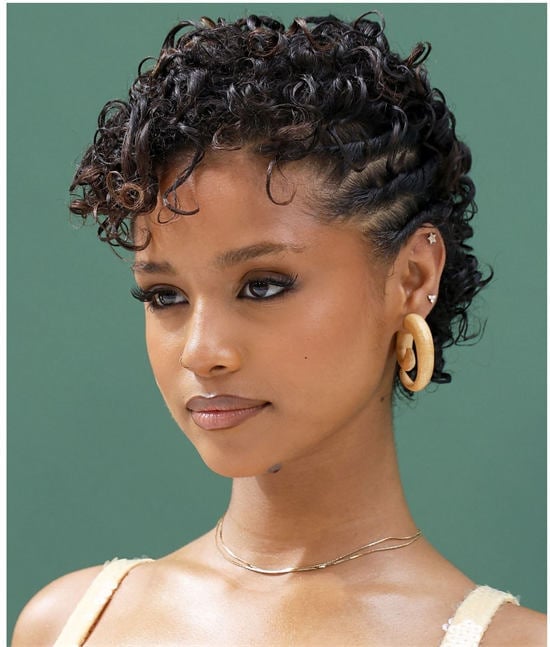
Is this cut actually wearable for fine or medium curly hair, or does it require a dense head of texture? Fine to medium curls at ear length can carry it, because the side braids add visual weight where the hair is thinnest. The textured fringe and subtle highlights give dimension without needing much product. Ask your stylist for: short curly cut with side braids and textured fringe. A curl enhancer on the fringe keeps it from separating into strings, and the braids need a trim every six to eight weeks to keep the edges sharp.
Cornrows To Twists With Curly Ends
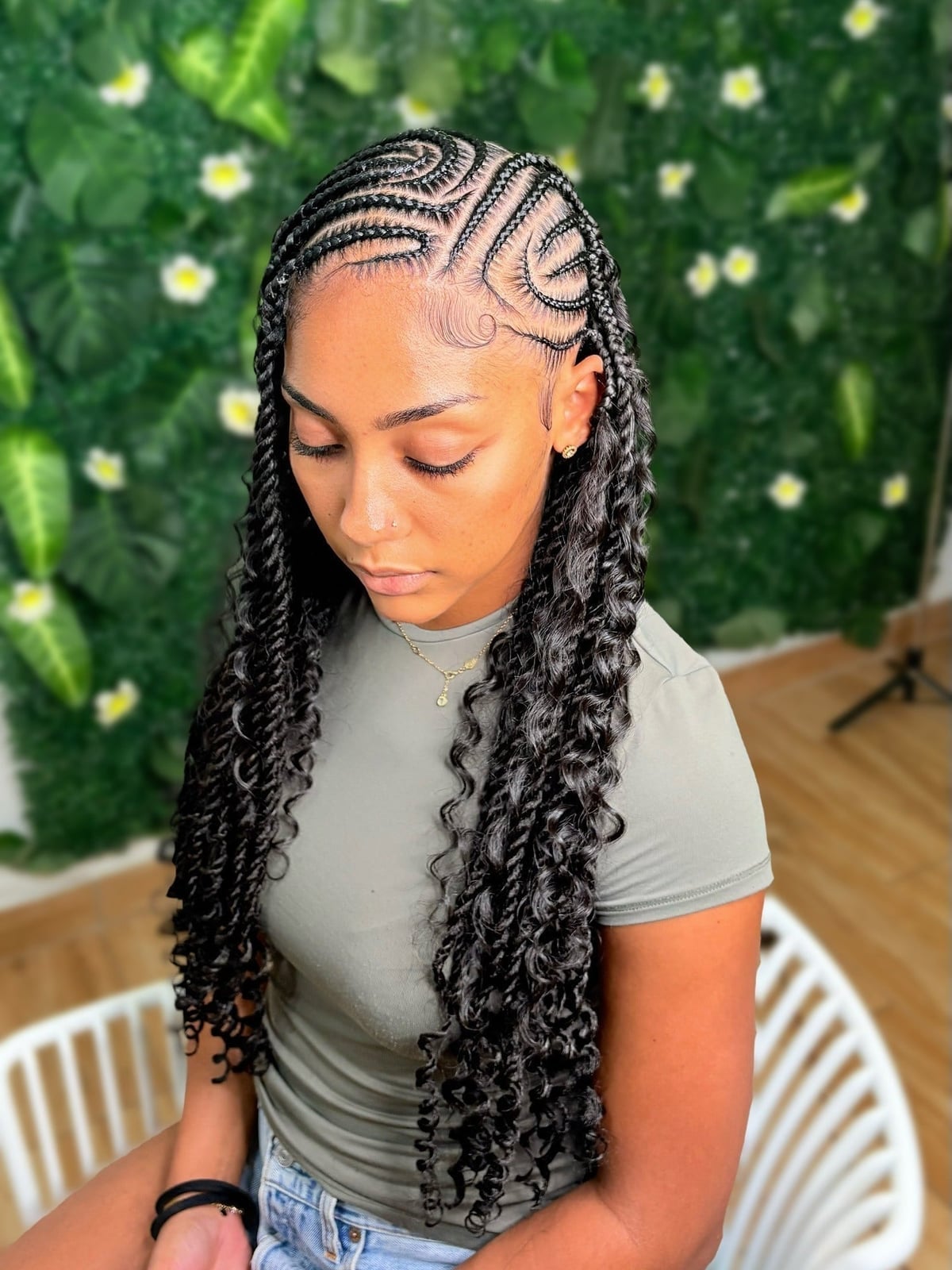
Cornrows hug the scalp in a middle part, then release into twisted braids that end in loose curls at the mid-back. Ask your stylist for cornrows transitioning to twisted braids with curly ends. This is not a quick install, since the scalp work and the twist-to-curl transition each take time.
Apply a lightweight oil to the scalp and the twisted sections every few days. Gently separate the curly ends if they start to clump together. The hold is solid for about three weeks, after which the twists may soften at the root and need a touch-up.
Mid-Back Cornrows With Sharp Parting Lines
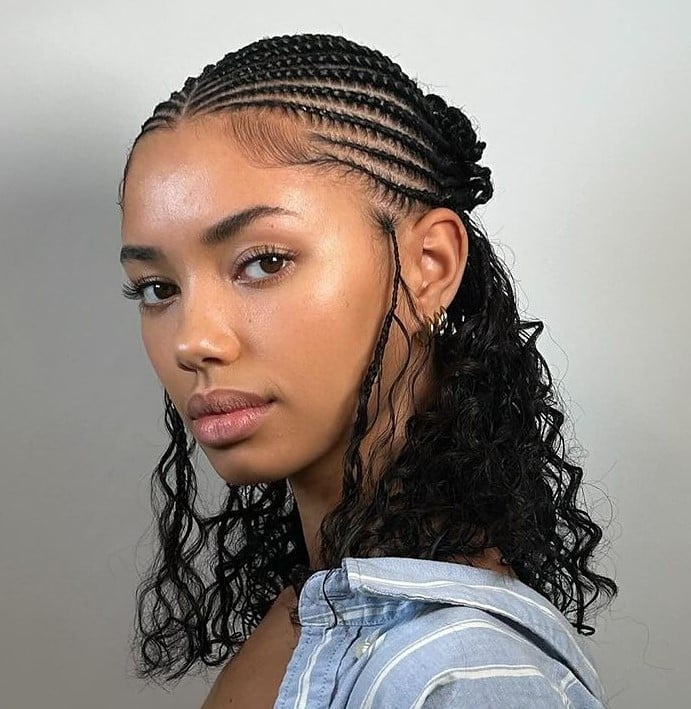
Meticulously crafted cornrows extend to the mid-back, and the parting lines here are sharp enough to read as a geometric pattern from the back view. Ask your stylist for cornrows with sharp, clean parting lines to mid-back. Precise parting on thick, coily hair of this length takes several hours. The braids themselves are thick and evenly textured, so the style holds its shape for up to four weeks with minimal maintenance.
Box Braids With Curly Ends And Highlights
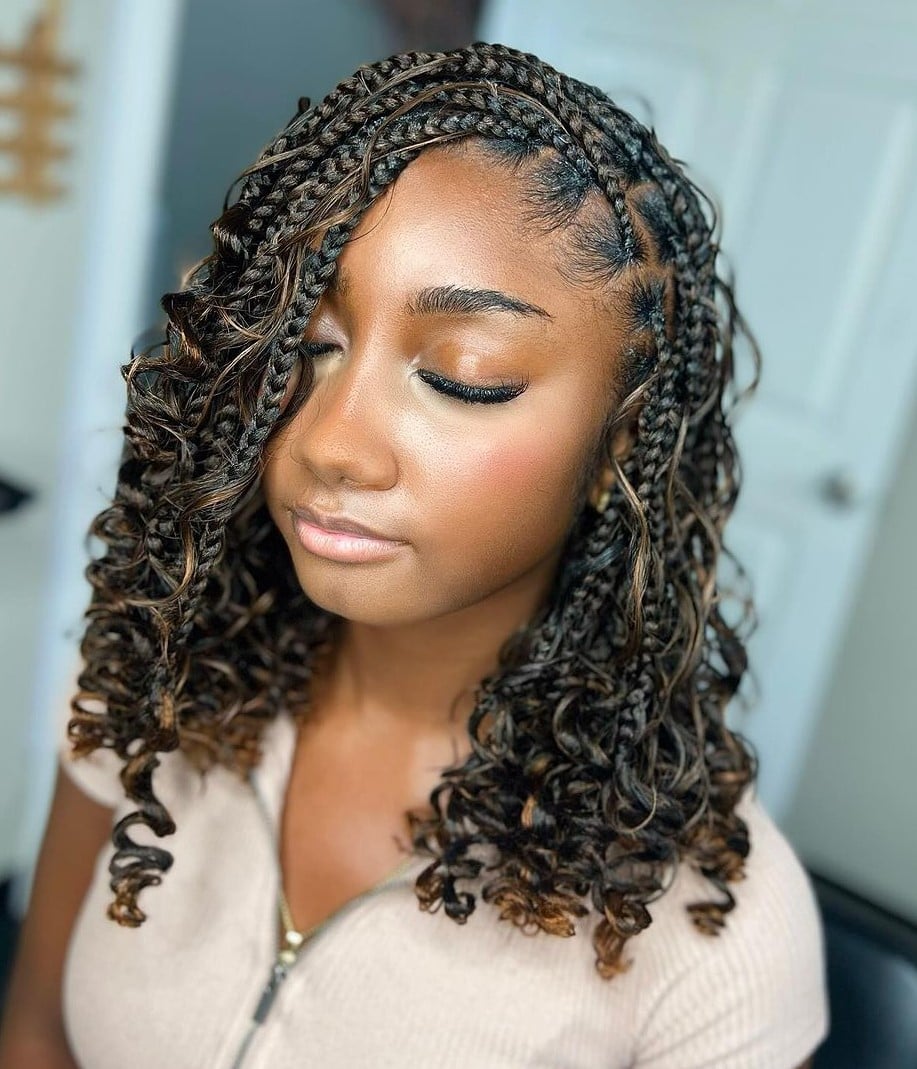
Box braids that end in loose curls can look like two separate styles unless the transition is handled carefully. Ask your colorist for box braids with curly ends and subtle blonde highlights. The braids here are dark brown and run to collarbone length, where they release into soft, wavy tendrils. The blonde highlights are spaced sparingly, so the dimension looks natural rather than striped.
- Request a middle part and ask for a few smaller braids near the hairline to frame the face.
- Specify that the curly ends should match the diameter of the braids for a seamless blend.
- Bring a reference photo of the exact highlight placement you want, since “subtle” means different things to different stylists.
Chin Length Micro Braids With Side Swept Bangs
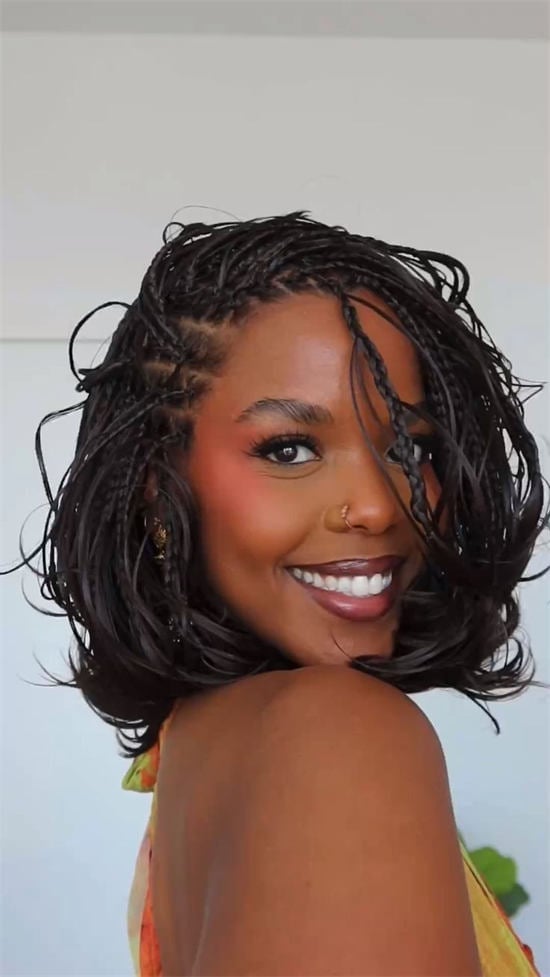
Short micro braids at chin length have a slightly wavy texture that keeps them from looking too rigid. Ask your stylist for chin length micro braids with side swept bangs. The side parting allows the bangs to fall forward and frame the face without overwhelming the shorter length. A light finishing spray controls any flyaways, and the ends of the braids should be trimmed every eight to ten weeks to prevent fraying. The hold is reliable for about two weeks before the roots need attention.
Honey Blonde Micro Braids High Ponytail
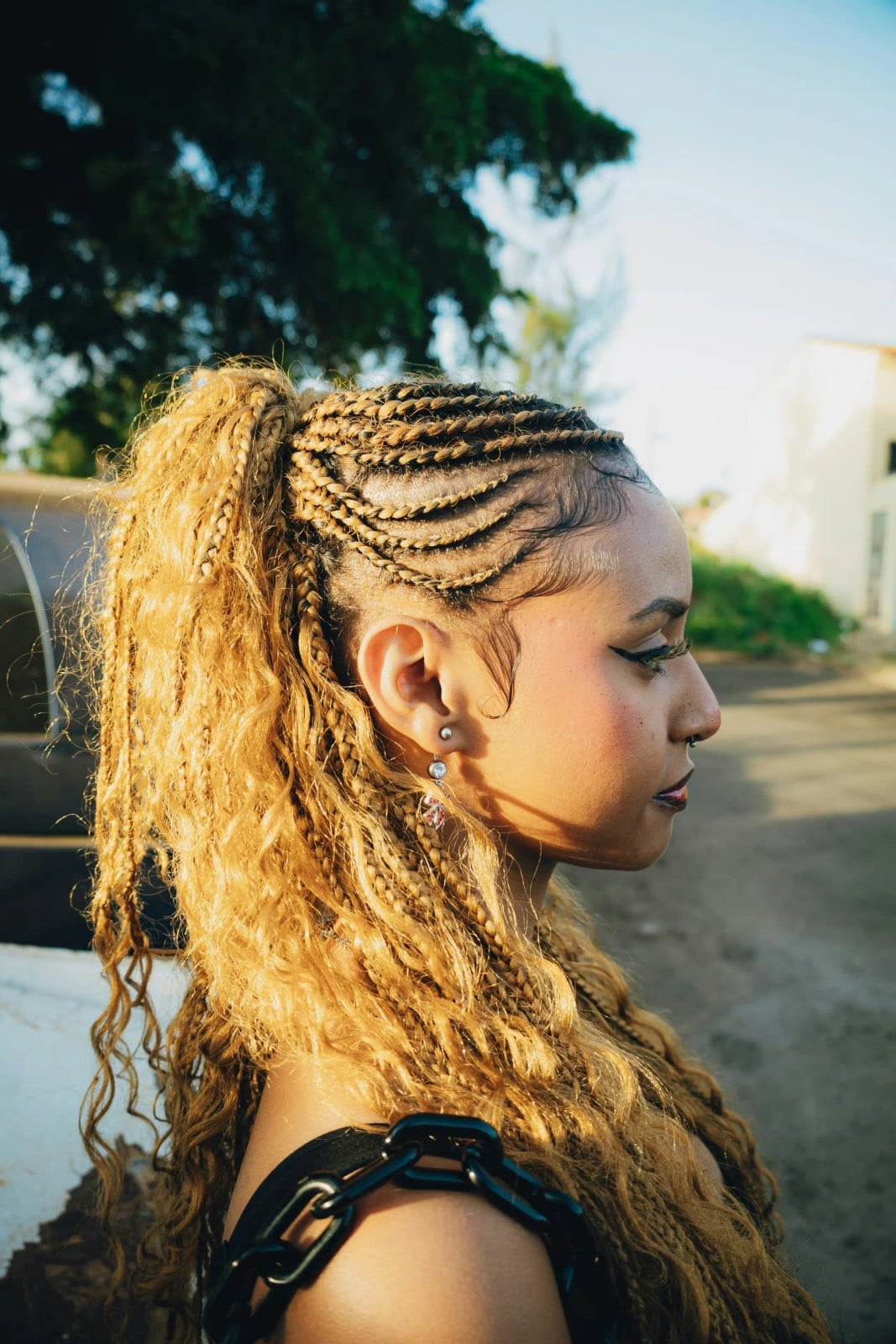
Honey blonde micro braids are pulled into a high ponytail with loose, curly ends and baby hairs left out to soften the hairline. Ask your stylist for honey blonde micro braids in a high ponytail with curly ends. This style lands naturally at summer festivals or outdoor events, where the lighter highlights catch the sun. The high ponytail keeps the weight off the neck, and the curly ends add movement. Use a silk scrunchie to tie the ponytail and mist the curls with water to keep them defined.
Wavy Micro Braids With Decorative Beads
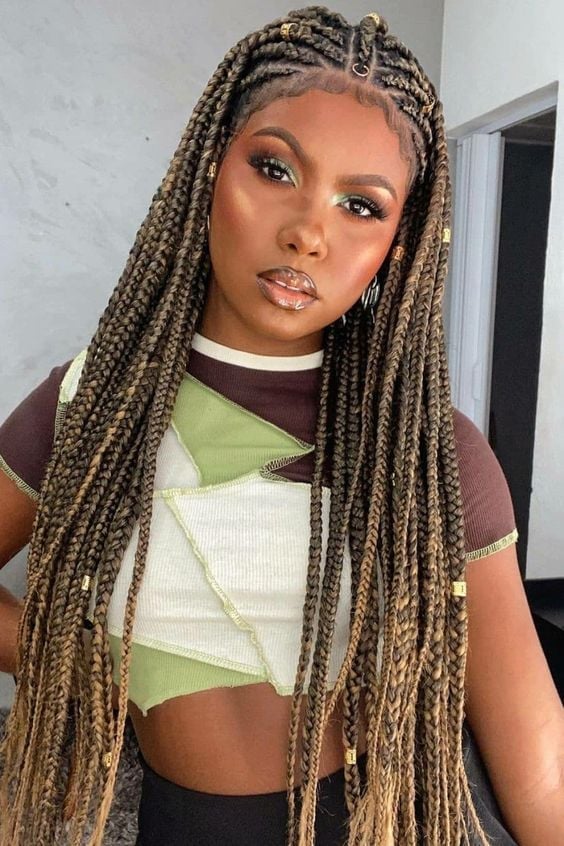
Every braid in this style gets its own tiny accessory moment. The micro braids are sectioned from a middle part and woven with a brown and blonde highlighted color, with wavy texture concentrated toward the ends. The decorative beads and metallic rings are threaded onto individual braids during the installation process, which is why this is strictly a salon project. Ask your stylist for: micro braids with wavy ends and decorative beads.
The technique itself is straightforward: each braid is formed, then a bead or ring is slid on before the braid is sealed. The order matters, because sliding a bead over a finished braid risks snagging the hair. Plan for a full day in the chair and a head that sounds like a wind chime every time you turn.
Ombre Braids With Loose Wavy Curls
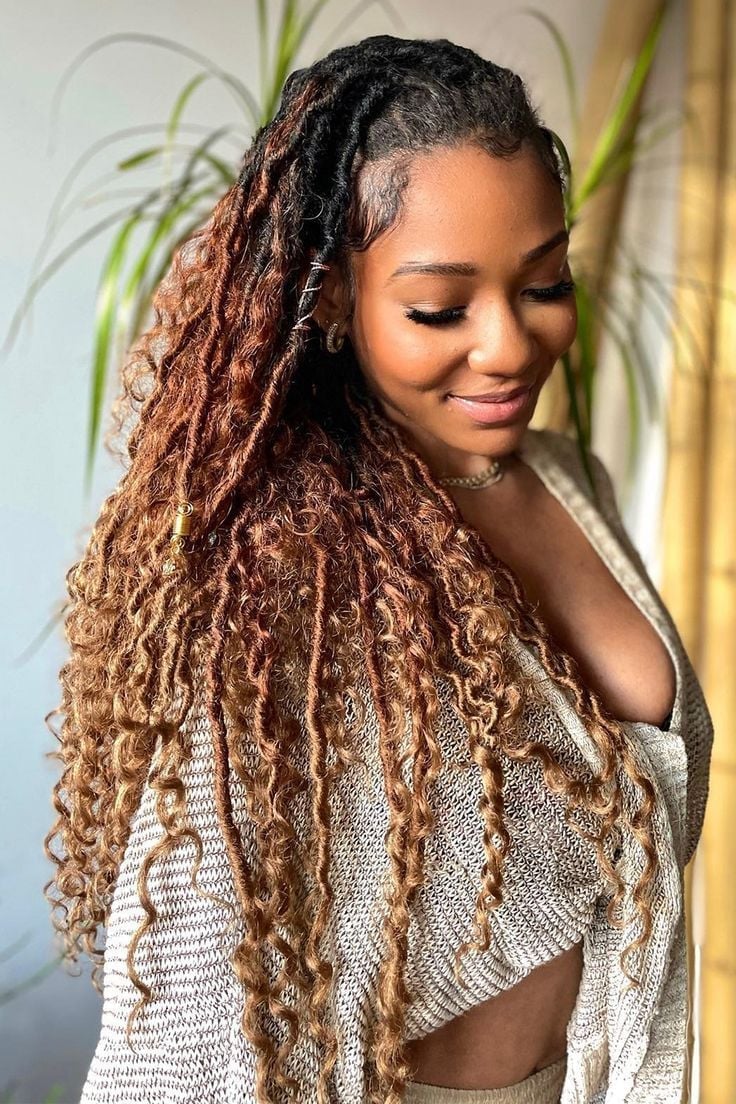
The ombre effect here is built into the braids themselves, with dark brown roots that graduate into blonde highlights at the wavy, loose ends. It is a dense, voluminous look that works best on thick natural hair of mid-back length or longer, because the braid-to-curl transition needs enough length to read clearly. Ask your colorist for: ombre braids with loose wavy curls. Those blonde highlights need a purple shampoo every two weeks to stay cool rather than brassy. Protect the wavy ends with a silk scarf overnight, and expect to refresh the curls with a curl refresher spray between washes.
Cornrows With Long Voluminous Loose Curls
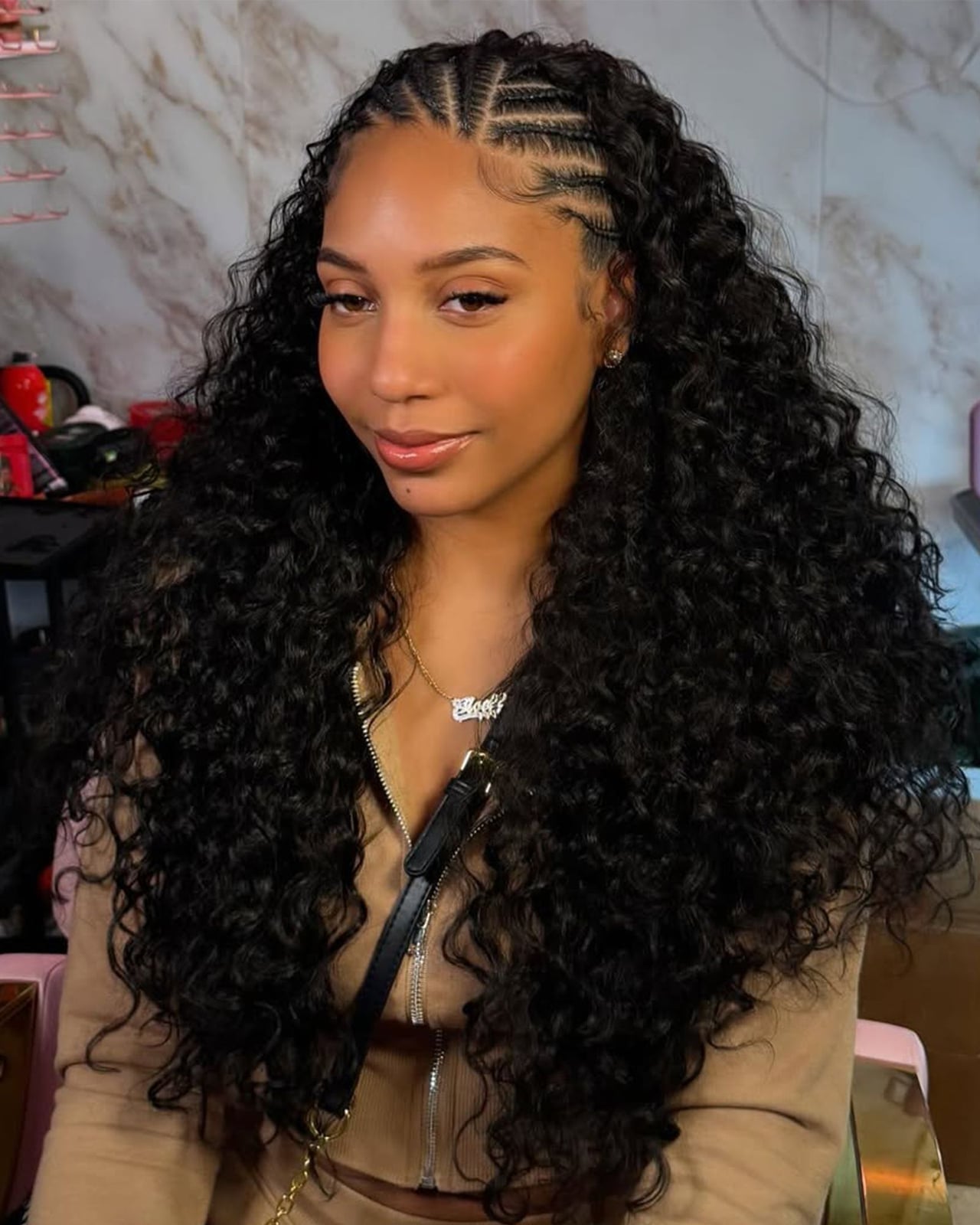
Does your hair density support both tight scalp braids and a curtain of full curls? The cornrows here are neat and close to the scalp, parted down the middle, then released into long, voluminous loose curls. The structured top frames the face while the curls provide the drama. This style works for anyone with long natural hair and medium to high density, because the braided section needs enough hair to sit flat and the curls need enough weight to hang. Ask your stylist for: cornrows with long, voluminous loose curls.
A middle part and the cornrow pattern itself work best on oval and round face shapes, since the vertical lines lengthen the silhouette. If your hair is fine or low density, the cornrows may pull too tight and the curls may not have enough body to balance the braids. Skip the style if you prefer a sleeker finish, because the loose texture is the feature, not an accident.
Box Braid Ponytail With Wavy Blonde Ends
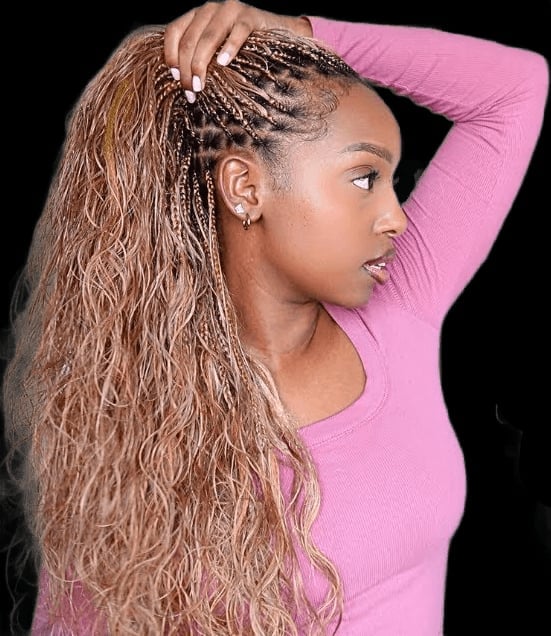
A sleek, high ponytail of small box braids that lets loose into long, wavy blonde ends is the contrast play here. The top is all structure and polish, while the bottom half is free and textured. This sits in a different lane than a fully braided ponytail, which stays uniform from root to tip. Ask your stylist for: high ponytail with box braids and loose wavy blonde ends. The blonde highlights land only on the wavy sections, so the color shift reinforces the texture change. If you prefer a single texture throughout, go with a traditional braided ponytail. If you want two looks in one, this is the one.
Sleek Cornrows With Ornate Baby Hairs Bun
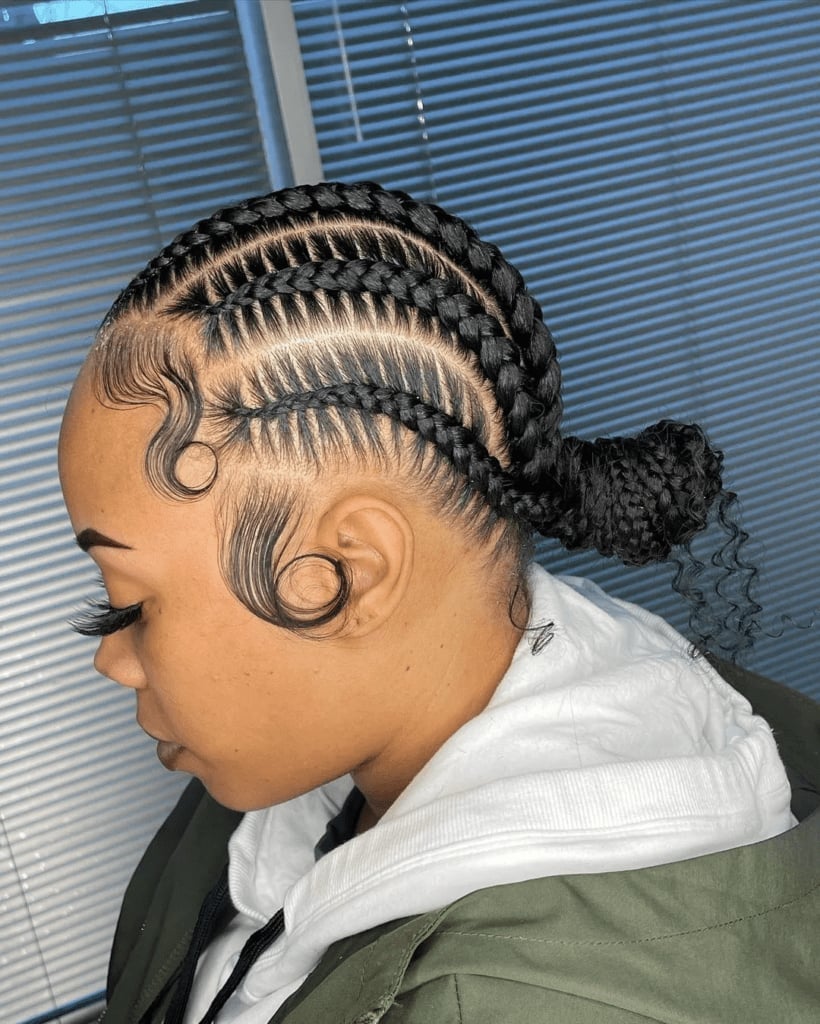
The precision here is in the details. Neat cornrows run from a middle part straight back into a sleek bun at the nape, but the real work is along the hairline. The baby hairs are sculpted into decorative swirls using a strong hold gel and a fine-tooth comb, a technique that requires a steady hand and patience. This is not a DIY project unless you have practiced the swirl pattern at least a few times. Ask your stylist for: cornrows pulled into a sleek bun with decorative baby hairs. The bun is secured tightly at the nape, which keeps the whole structure in place for days, but the baby hairs need a light spritz of water and a touch-up brush each morning to hold their shape.
Long Blonde Box Braids With Darker Roots
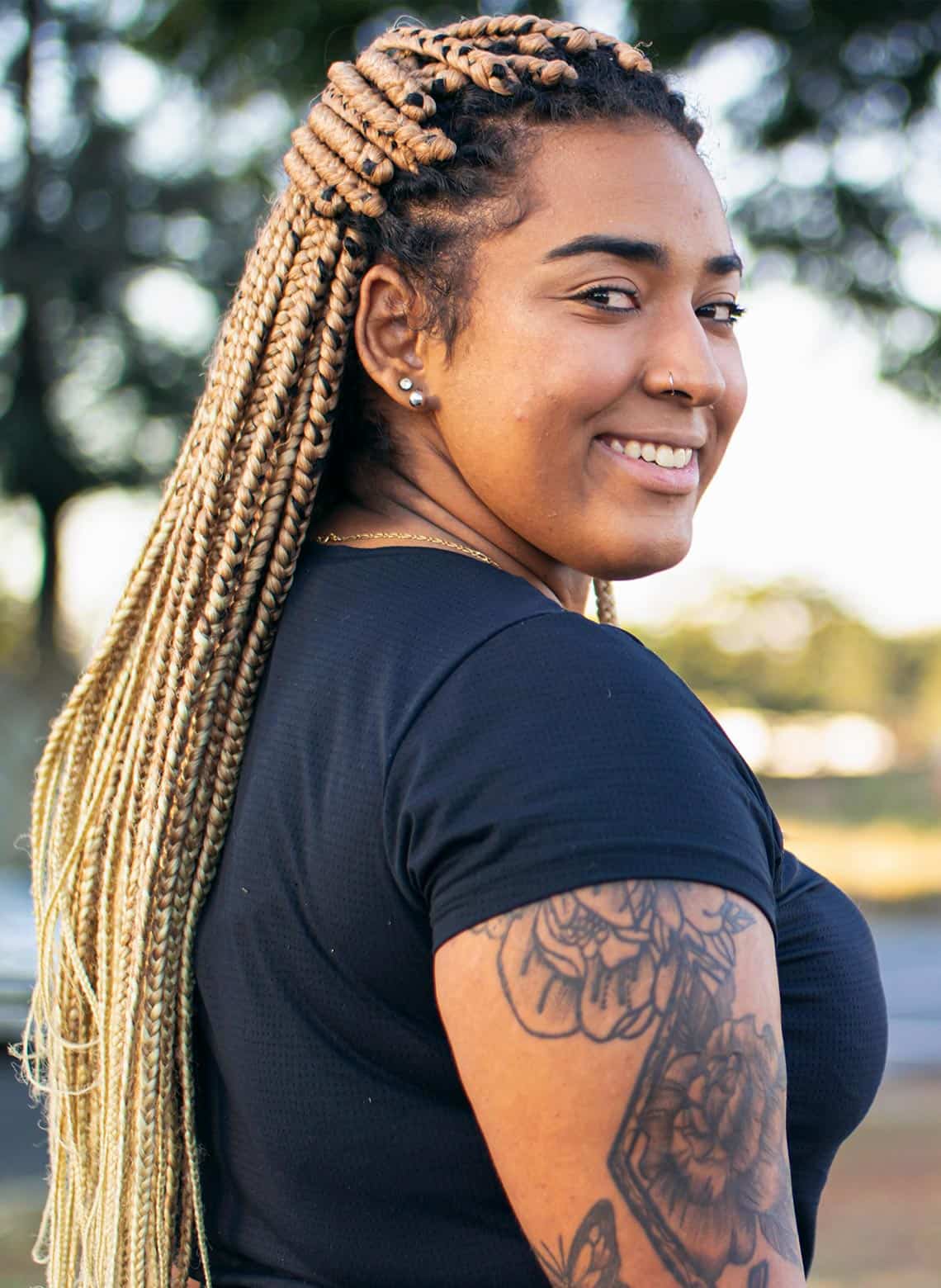
It works best on natural hair that reaches mid-back or longer, and it calls for a stylist who understands how to blend a vivid shade into a deeper starting point. Ask your colorist for: long blonde box braids with dark roots, side part. The real trick is in the upkeep: the dark root grows out without a harsh line, which buys you about six to eight weeks before the contrast starts feeling accidental. A silicone-free scalp spray helps manage the transition. The straight texture of the braid keeps the blonde looking clean.
Shoulder Length Cornrows With Neat Ends
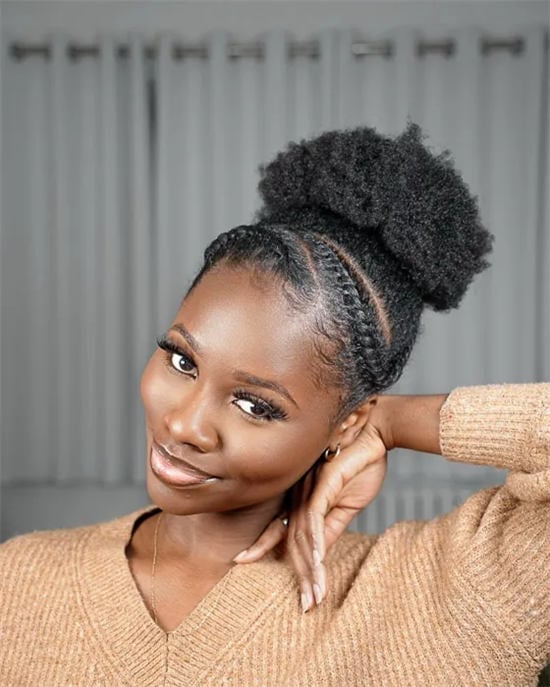
To get cornrows that end cleanly instead of unraveling into a fuzzy mess, start with thick, coily hair that has some weight to it, and ask your stylist for: shoulder length cornrows with neat, finished ends. The shoulder length keeps the braids from feeling heavy while still offering enough canvas for a visible pattern. The middle part creates symmetry. The neat ends come from a technique where the stylist braids all the way to the tip and seals it, usually with a quick dip in hot water. No loose strands, no rubber bands peeking out.
Large Braided Ponytail With Straight Texture
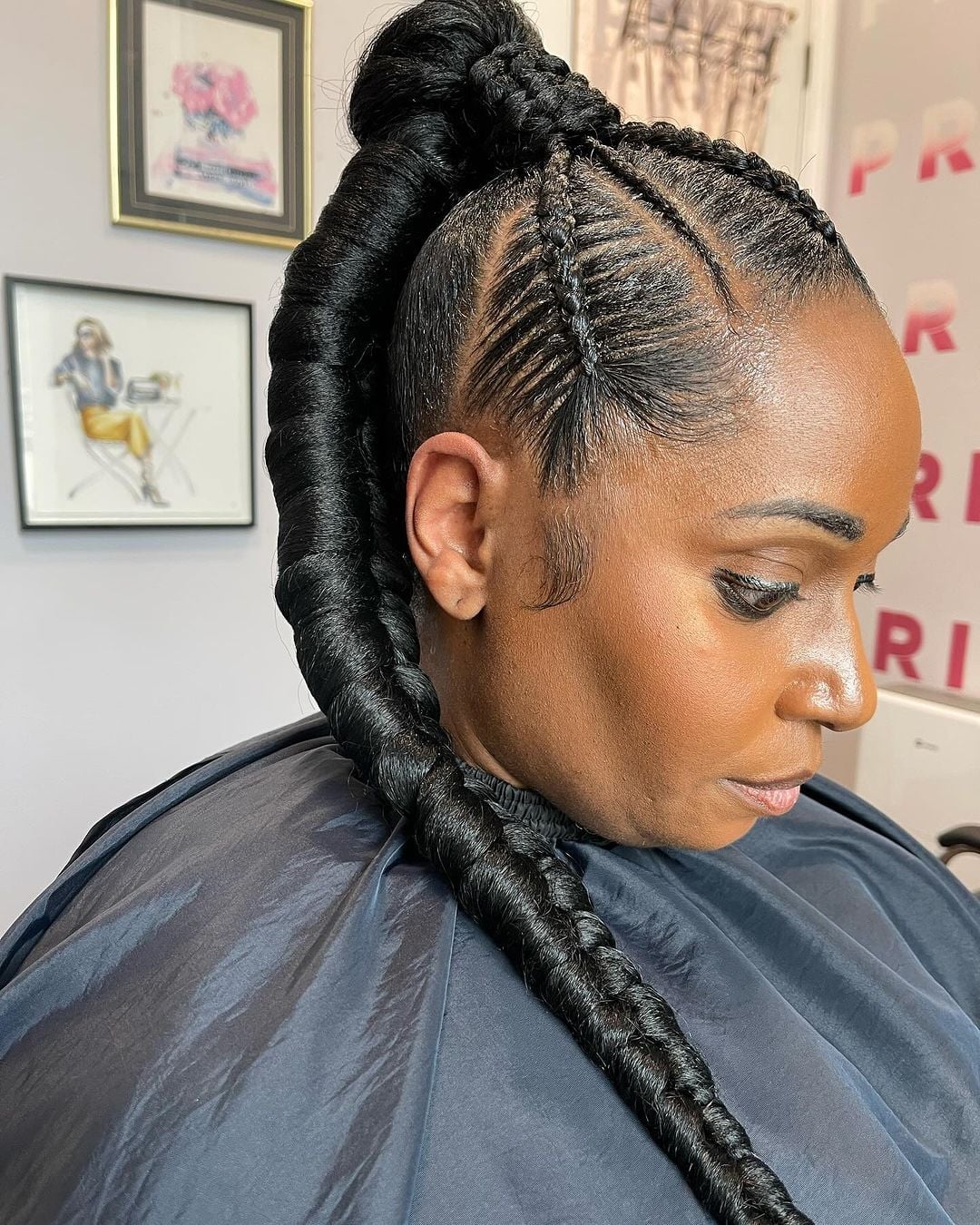
A large braided ponytail built from cornrows at the base is a striking silhouette, but the trade-off is weight. The straight texture and mid-back length mean the tail alone can pull on the scalp after a full day, especially if the cornrows are tight. It suits anyone who wants a bold, sculptural shape and has the hair length to support a thick ponytail without extensions. Ask your stylist for: large braided ponytail with intricate cornrow base. The honest drawback is that the tension required for that sleek finish can be too much for a sensitive scalp, so a test run with one braid first is wise.
Final Thoughts
For intricate scalp designs, book a professional for clean parting lines. For styles with loose ends, keep a leave-in spray and silk bonnet handy to maintain curl definition.
- Refresh braids with a light spritz of water and leave-in conditioner daily.
- Apply a light oil to the scalp to prevent dryness and flaking, focusing on the parting lines.
- Sleep in a silk or satin bonnet to protect braids from friction and preserve styling.
- Gently detangle loose ends or curls with a wide-tooth comb or fingers, avoiding pulling on the braids.
Embrace the artistry of braiding for a stylish protective transformation.