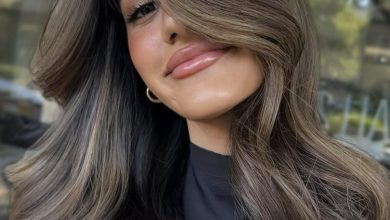
Ombre hair has moved past its streaky adolescence into a more deliberate, grown-up color placement. This season, the shift is toward softer transitions and natural base shades, making the grow-out period a non-issue rather than a calendar event.
These 20 Trendy Ombre Hair ideas cover the full spectrum, from a low-upkeep root smudge for fine hair to a high-contrast platinum fade for thick waves. Short bobs, long layers, curtain bangs, curls, straight textures. Every length and density gets a version that actually looks intentional. No more guessing where the light part should start.
Textured Bob With Dark Brown To Blonde Ombre
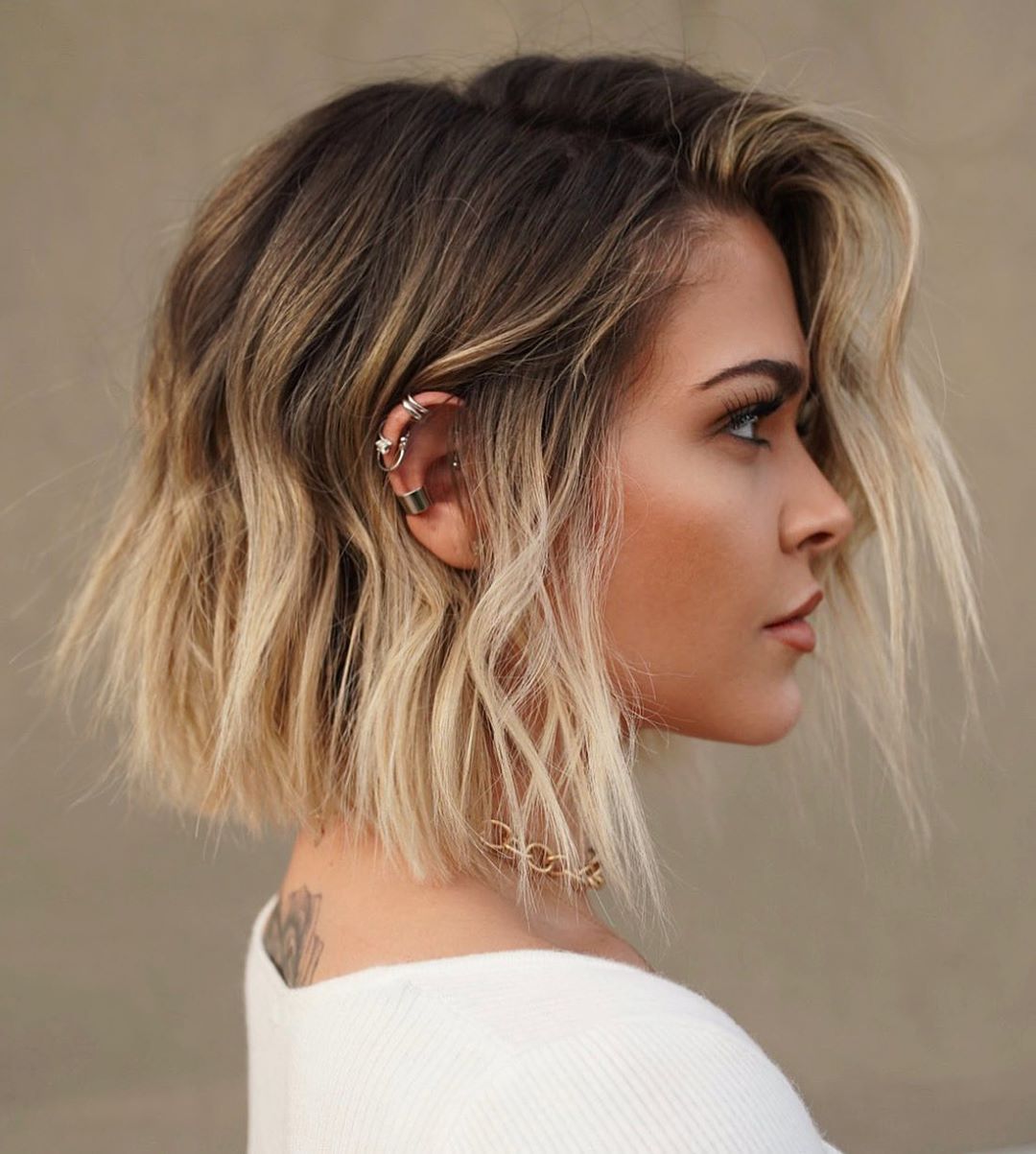
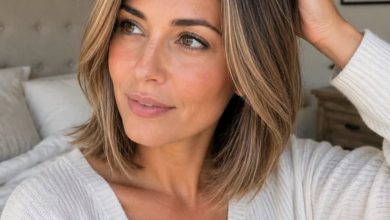
It suits fine to medium density hair starting at chin length and softens round or square face shapes. Ask your colorist for: chin length textured bob, choppy bangs, dark brown to blonde ombre. Tousle with sea salt spray for texture; plan a trim every six to eight weeks to keep the bob shape precise.
Long Layered Hair With Brown Blonde Ombre
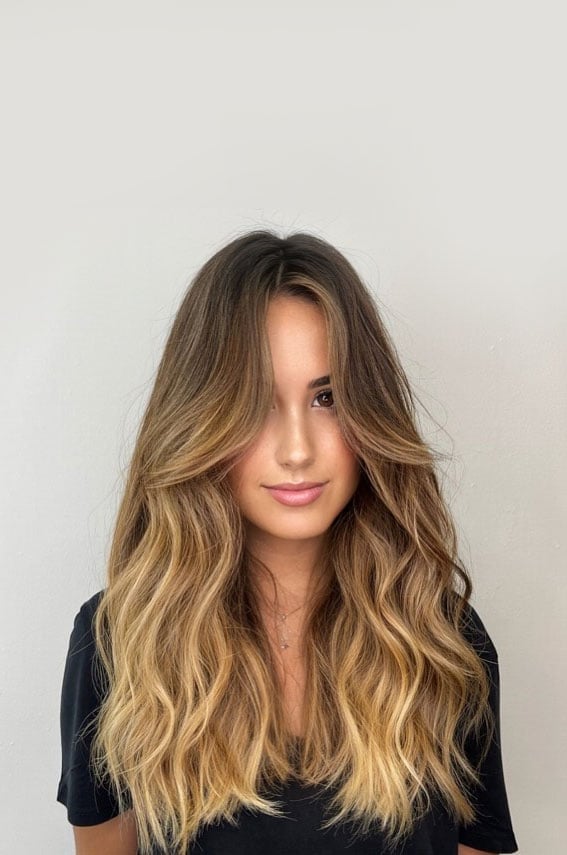
Enhance the waves with a diffuser attachment or a curling wand on low heat, then let the gloss finish do its work. Schedule a trim for the layers every ten to twelve weeks; the ombre tone itself needs a toning appointment every eight weeks to keep the blonde from drifting brassy.
Collarbone Layers With Curtain Bangs And Ombre
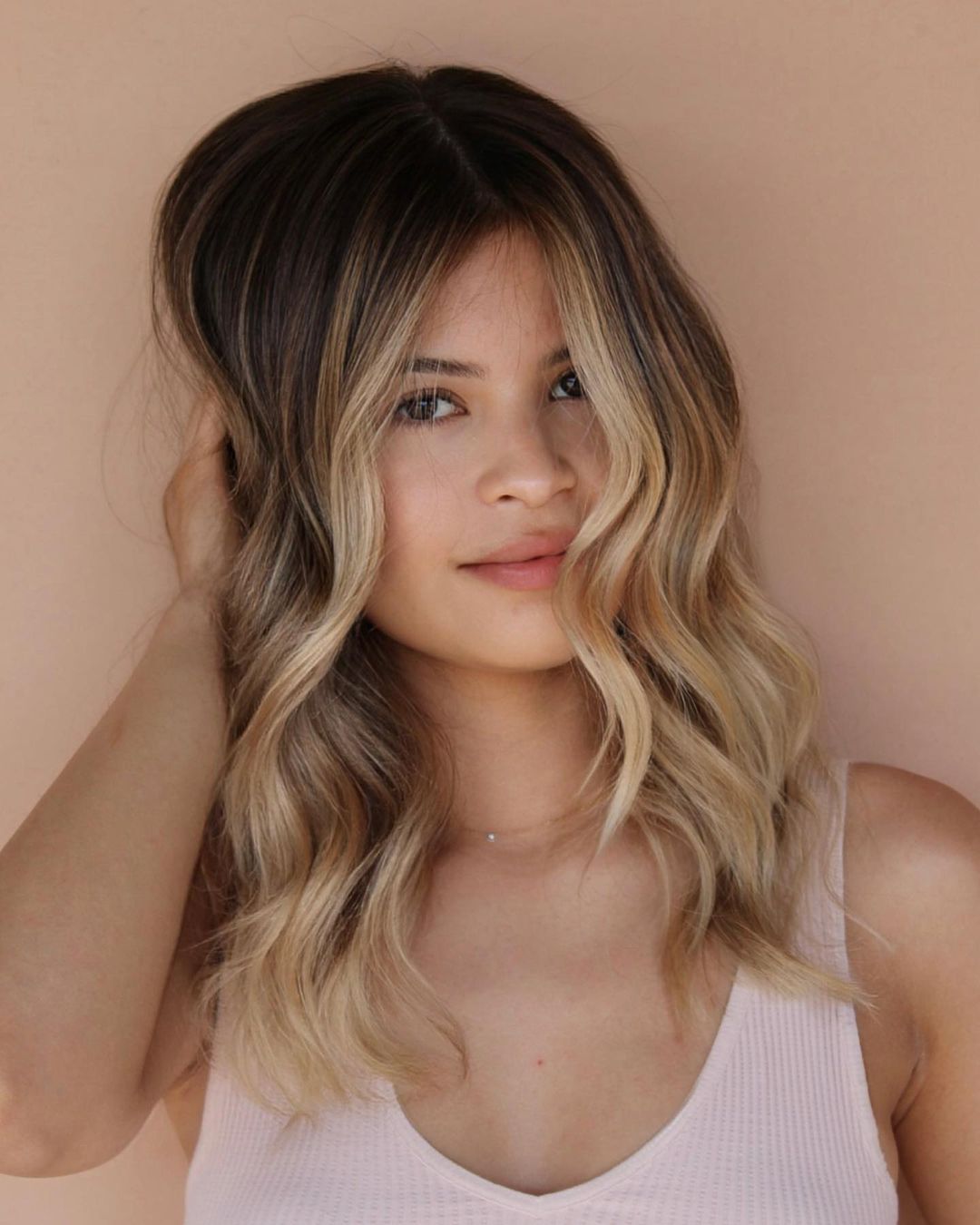
Wondering what to say at the salon to get curtain bangs that actually swing away from your face? Start with a collarbone-length layered cut, then ask for a dark brown to blonde ombre that begins just below the chin so the bangs stay dark. The curtain bangs frame the jaw without shortening the face, which makes this work for square and round shapes. Ask your colorist for: collarbone length layers, curtain bangs, dark brown to blonde ombre. Bring a photo of the wave pattern you want. The stylist can tailor the layer placement to support a wavy blowout rather than fighting it.
Shoulder Length Layers With Ombre And Curtain Bangs
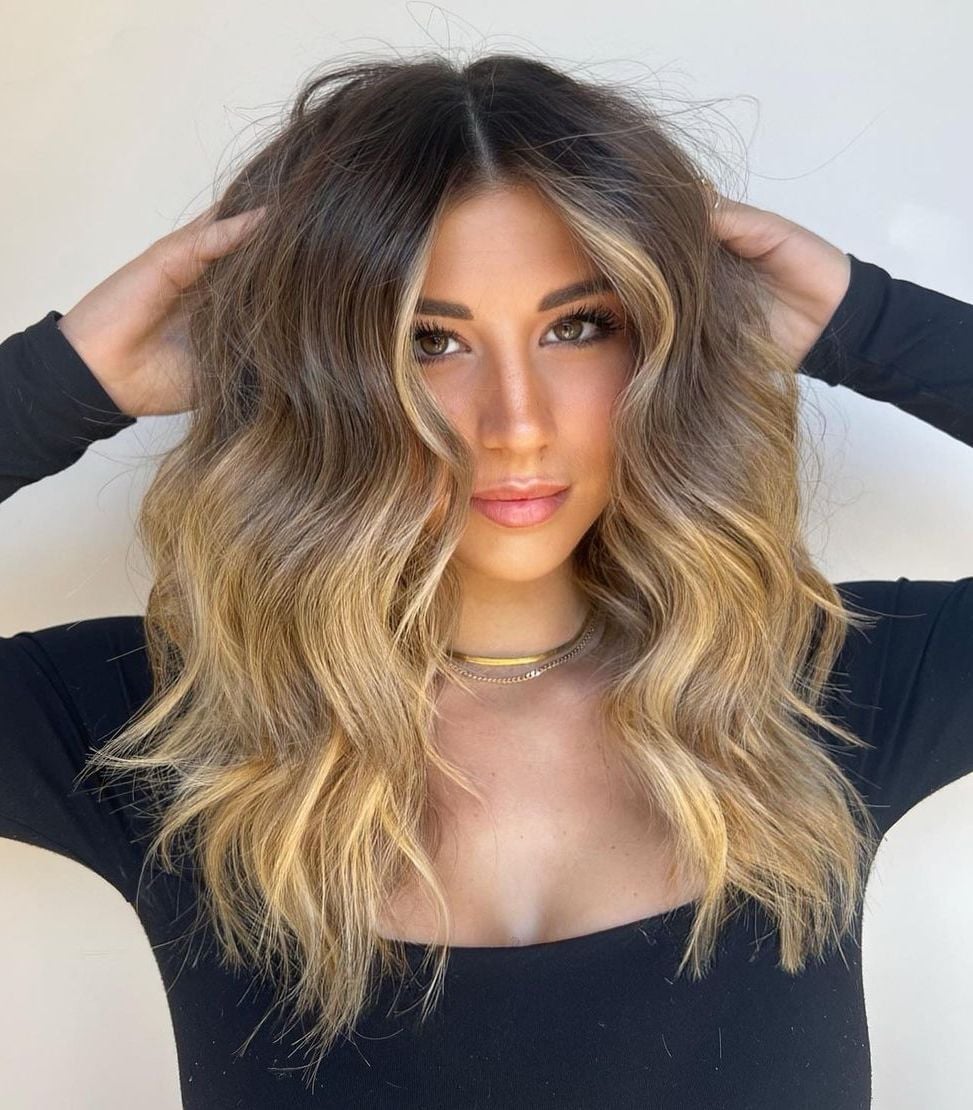
A shoulder-length version of the ombre with curtain bangs sits in a useful middle ground: it has enough length to show the dark brown to blonde transition but stops short of needing the heavy maintenance of a mid-back cut. The colour melt technique here blends the two tones closer to the roots than a standard ombre, so the grow-out line feels softer. Ask your colorist for: shoulder length layers, curtain bangs, dark brown to blonde ombre.
This approach works best for thick, wavy hair starting at shoulder length, and the face-framing layers soften round and heart shapes. A lightweight styling product at the mid-lengths will reinforce the wavy finish without weighing it down.
Mid-Back Waves With Curtain Bangs And Ombre
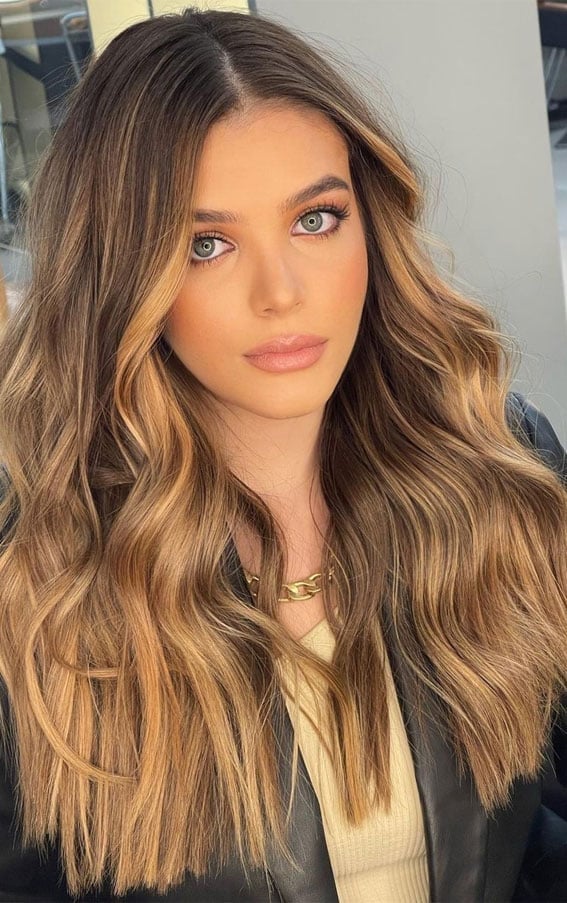
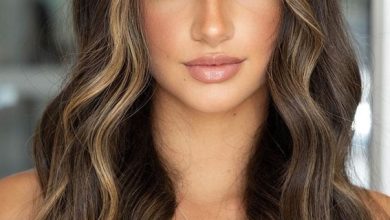
A mid-back wavy blowout with curtain bangs and a dark brown to blonde ombre is the kind of style that looks polished for a work week but also holds up at an evening event. The longer length allows the ombre gradient to stretch over several inches, giving the colour depth that shorter cuts cannot match. Ask your colorist for: mid-back length, curtain bangs, dark brown to blonde ombre.
For the blowout, use a large barrel curling iron to create loose waves that start below the chin, then brush through for a softer finish. The upkeep rhythm: a trim every eight to ten weeks and a toning session every six weeks to keep the blonde from warming up. The curtain bangs will need a trim every four to six weeks to stay at the right length.
Long Straight Hair With Caramel Blonde Ombre
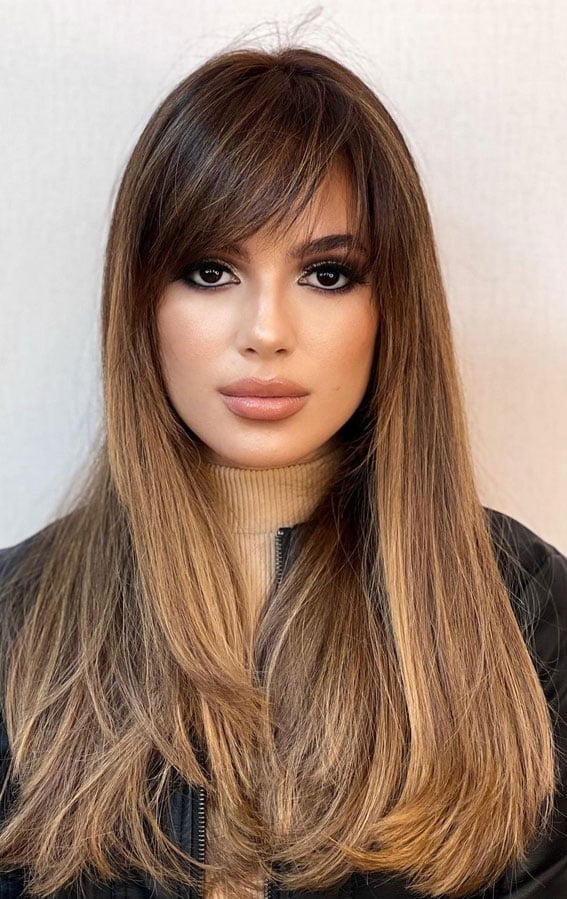
The caramel blonde ombre starts below the ears, letting the dark brown base keep its weight at the roots while the ends pick up warmth. On thick, straight hair, the contrast reads clearly because there is no wave to blur the transition. The middle parting and side-swept bangs balance a long face by breaking up the vertical line, and the length keeps the overall silhouette sleek rather than heavy.
Ask your colorist for: long straight hair, side-swept bangs, dark brown to caramel blonde ombre. A flat iron keeps the texture glassy, and a drop of serum at the ends stops the lighter sections from looking dry. Plan on a trim every ten to twelve weeks to keep the ends blunt and the color gradient sharp.
Mid-Back Straight Blowout With Blonde Ombre
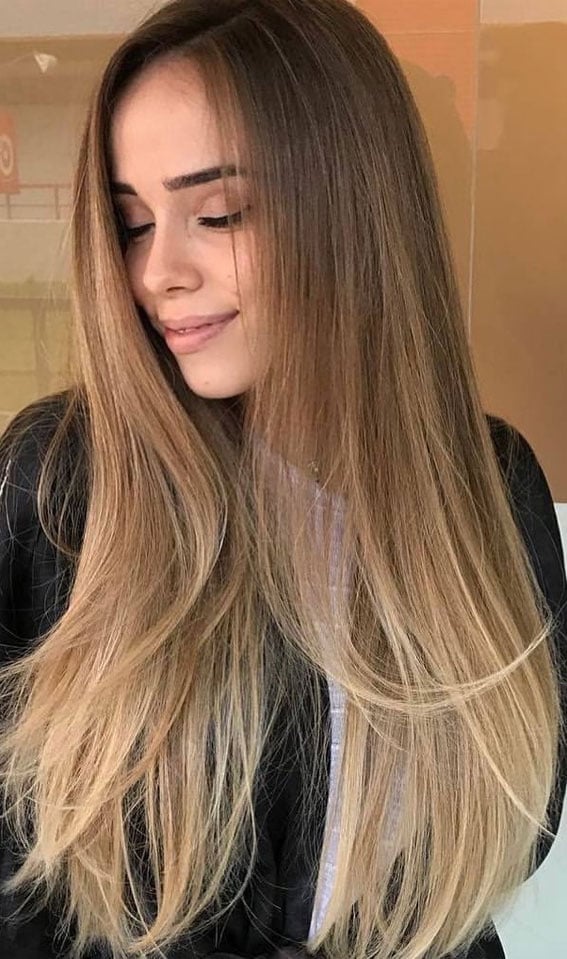
The seamless medium brown to blonde ombre is built with a root shadow that melts into the lighter lengths, so there is no visible line of demarcation. On thick, straight hair, the smooth blowout lets the color gradient show off without interruption. A middle parting adds symmetry, and the mid-back length gives the transition room to breathe. Ask your colorist for: mid-back length straight hair, medium brown to blonde ombre. This is a salon technique, not a box dye situation, since achieving that soft blend requires a colorist’s hand. The payoff is a glossy finish that reads as deliberately polished, not accidental.
Long Layered Ash Brown Ombre Waves
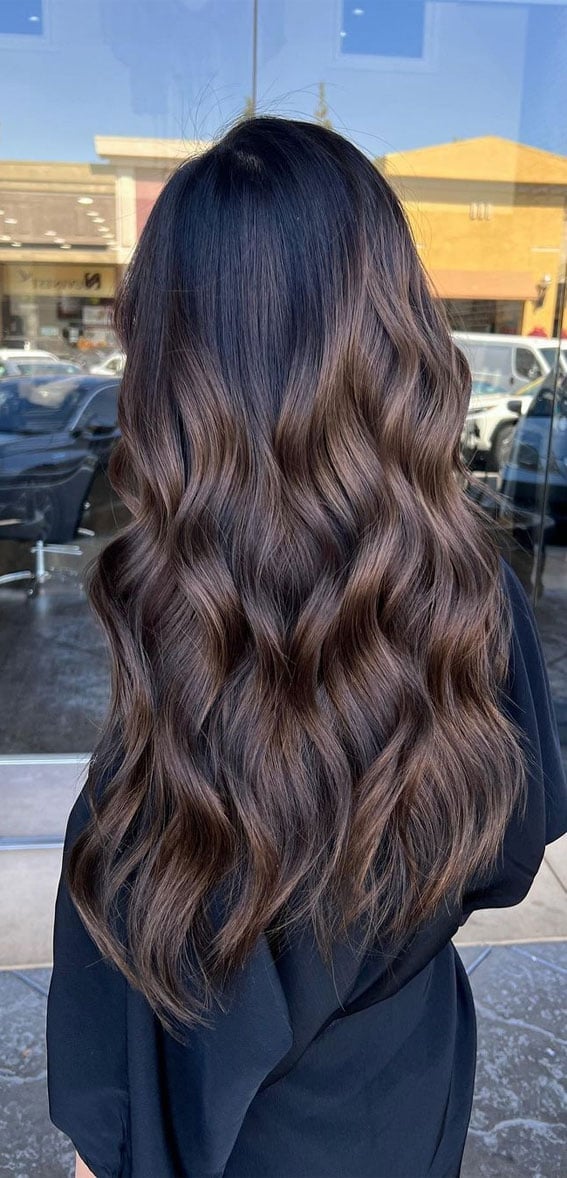
What happens when the ash tone starts to warm up? Ash brown ombre is a cool-toned commitment, and the seamless transition from darker roots to lighter ends means the lighter sections will pull brassy over time. The long layers and loose waves on thick hair help the color blend look natural, but the upkeep is real. Ask your colorist for: mid-back length layers, ash brown ombre. A purple shampoo once a week keeps the ash from going orange, and a trim every ten to twelve weeks maintains the shape. The honest trade-off: you get a dimensional, cool finish, but it demands more attention than a warm blonde would.
Collarbone Ash Brown To Ash Blonde Ombre
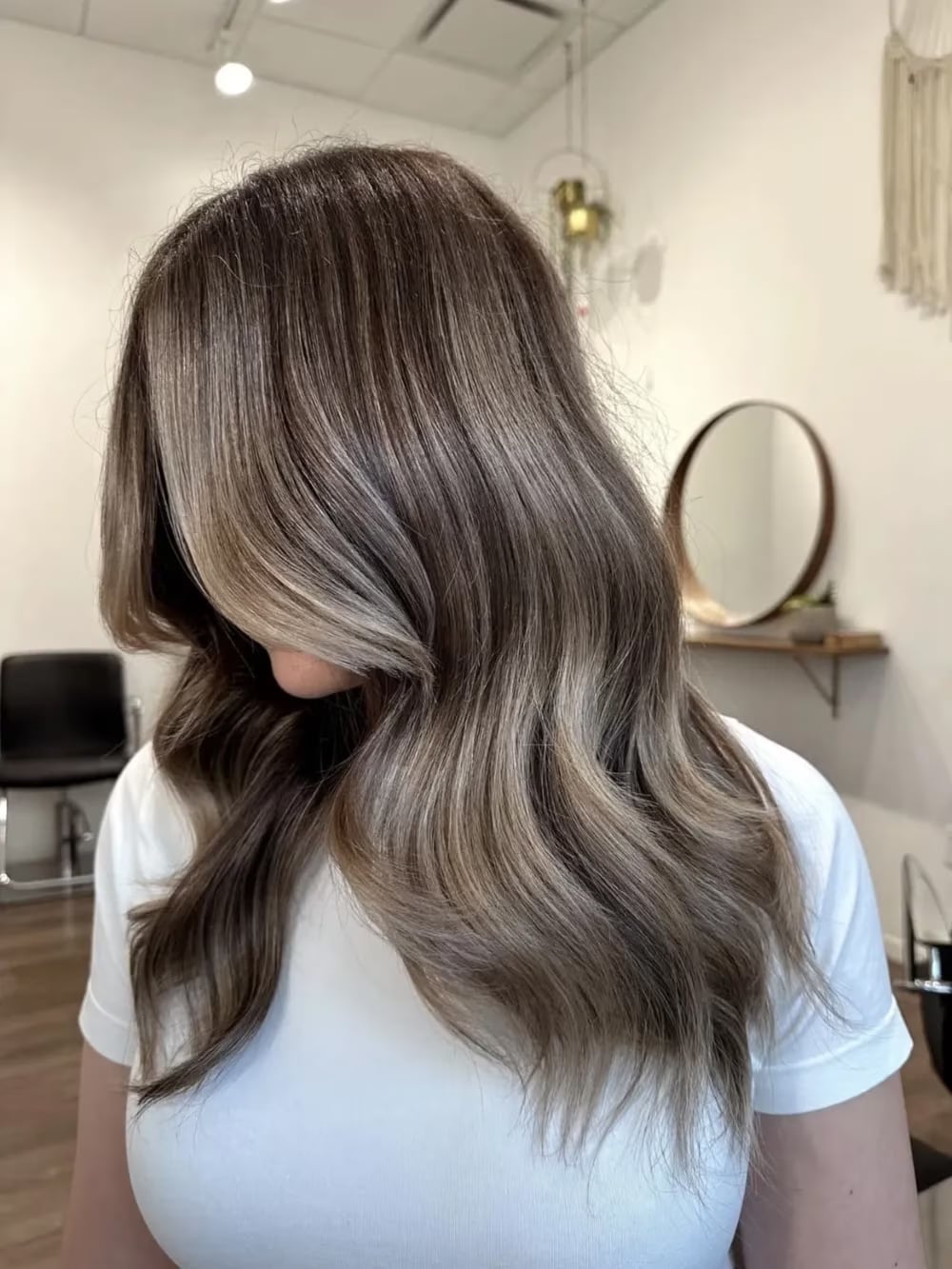
The ash brown base fades into an ashy blonde at the ends, and the side parting gives the collarbone length cut a softer line. On medium density wavy hair, the loose waves reflect light at different points, so the color transition appears gradual. Ask your colorist for: collarbone length layers, ash brown to ash blonde ombre. The grow out is forgiving because the darker root melts into the lighter ends, but a toning gloss every six to eight weeks keeps the ashy tone from turning muddy. A trim every two months keeps the ends from looking straggly.
Shoulder Length Curly Hair With Blonde Ombre
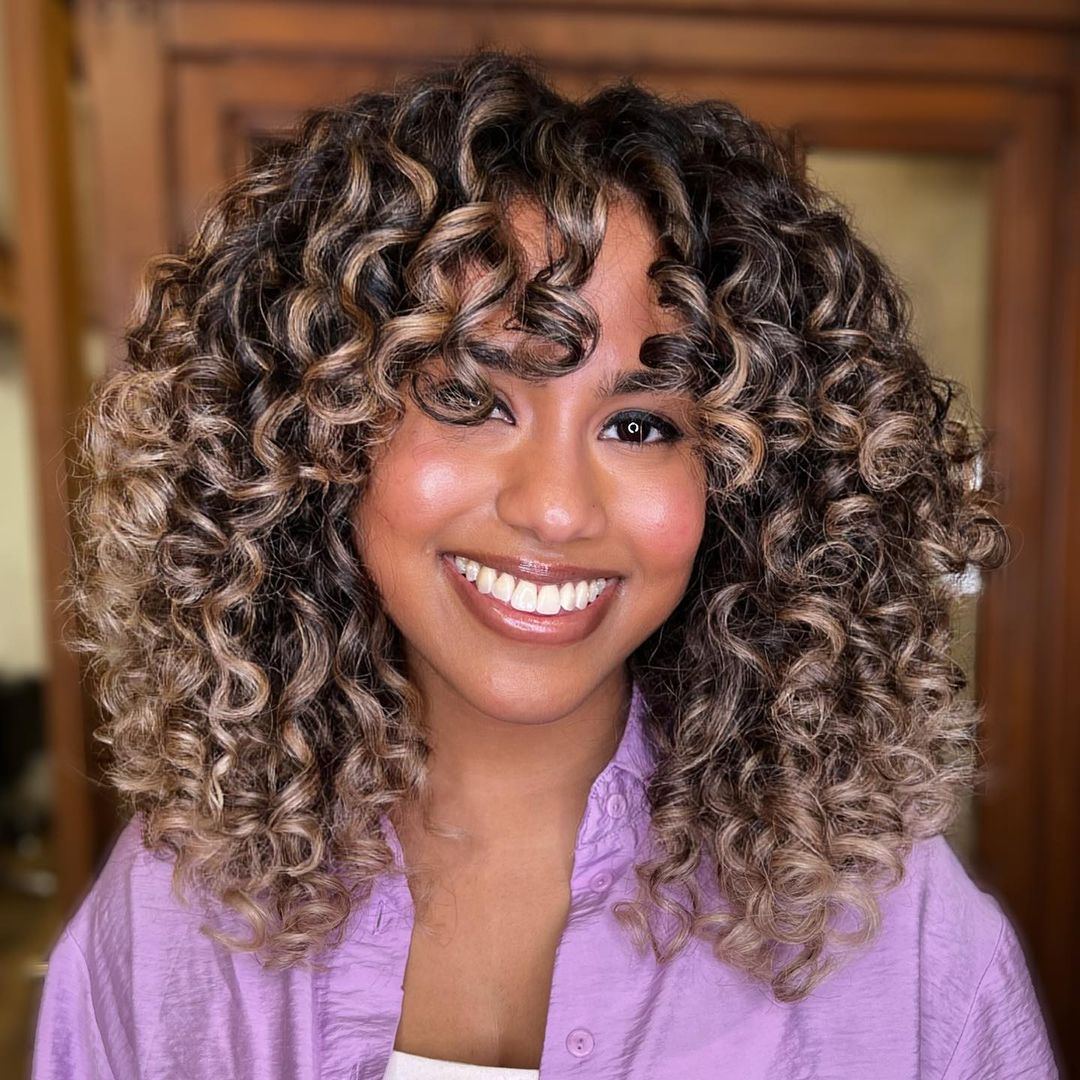
The dark brown base against the blonde ends is a high-contrast move, and on thick, curly hair it works because the curl pattern gives the color depth. The curly bangs and middle parting frame round and square faces by softening the angles. Ask your colorist for: shoulder length curly hair, curly bangs, dark brown to blonde ombre. Air drying with a curl cream is all it needs, and the texture hides any root line for a while. A trim every eight to ten weeks keeps the curls from getting heavy.
Chin Length Bob With Beige Blonde Ombre
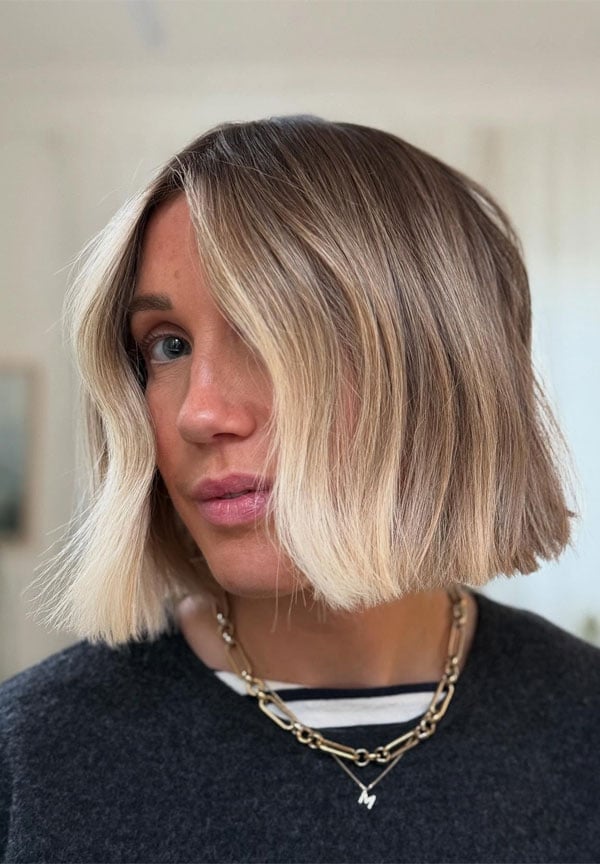
A blended ombre glides from dark to light. This one does the opposite: a chin-length blunt bob with side-swept bangs and a sharp, deliberate line where beige blonde meets dark roots. The contrast is the point, not the transition. Fine, wavy hair starting at chin length benefits from the blunt cut that adds the illusion of density, and the strong color block softens square and heart faces. Ask your colorist for: chin length blunt bob, side-swept bangs, beige blonde ombre. A small round brush during styling adds volume to the waves, and the bob needs a trim every six weeks to keep that blunt line sharp.
Textured Bob With Rose Gold Ombre Ends
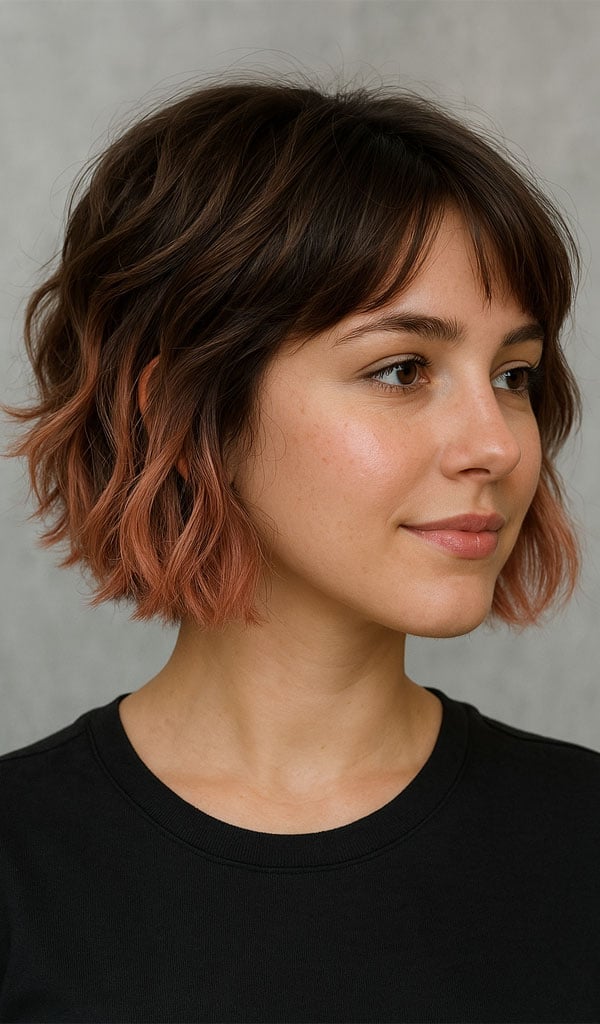
The design works backward: the colorist applies a dark brown base first, then lightens only the ends to a rose gold tone, keeping the transition zone short. On a chin-length textured bob with wispy bangs and a side parting, the rose gold appears as a deliberate accent. Fine, wavy hair suits this approach because the lighter ends add visual weight without actual bulk. Ask your colorist for: short textured bob, wispy bangs, dark brown to rose gold ombre. A texturizing spray at the roots keeps the lived-in wave structure, and a trim every six to eight weeks maintains the shape.
Lob With Fiery Orange Ombre Tips
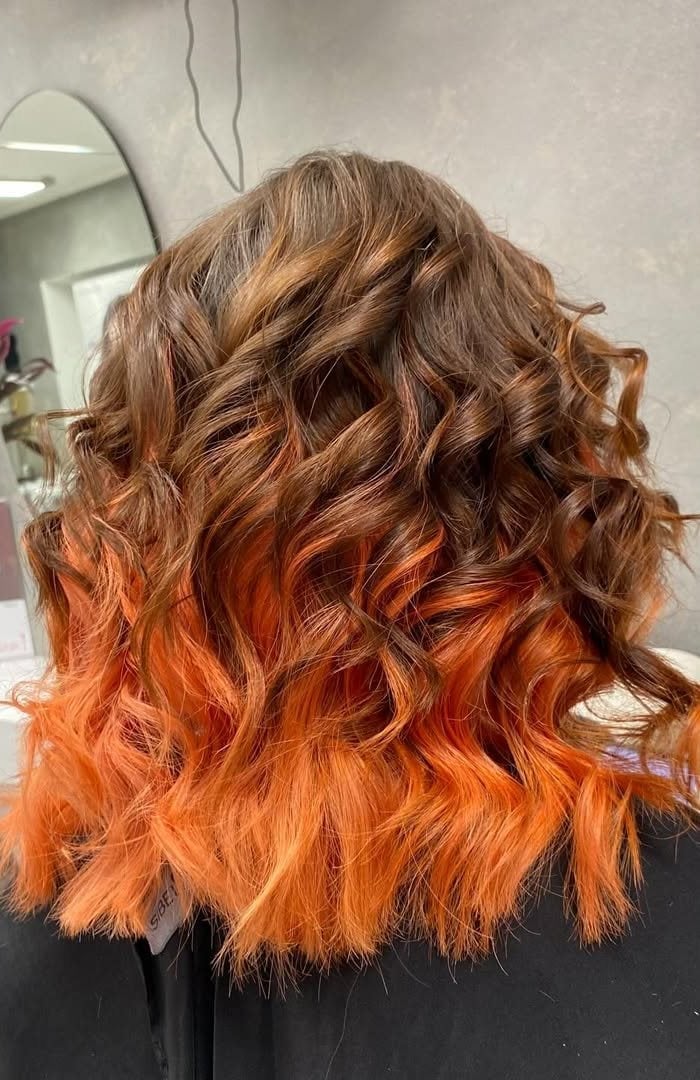
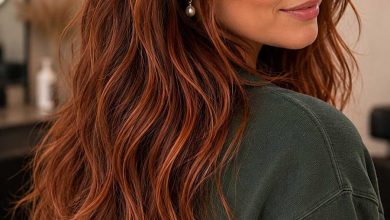
Does the color fade faster than the cut grows? Yes. A lob with a brown base and fiery orange ombre tips relies on a direct dye over pre-lightened ends, which means it starts losing saturation after about four washes. Thick, wavy hair starting at collarbone length shows the color best because the defined curls catch the orange at different angles. Ask your colorist for: lob, brown base, fiery orange ombre tips. The DIY option is risky: orange tones pull brassy on unbleached hair, so a salon lightening session is necessary. The one real drawback is the grow-out line: once the orange fades to peach, the ombre looks accidental. A color-depositing conditioner in a similar tone buys you an extra two weeks between touch-ups.
Mid-Back Layers With Vibrant Purple Ombre
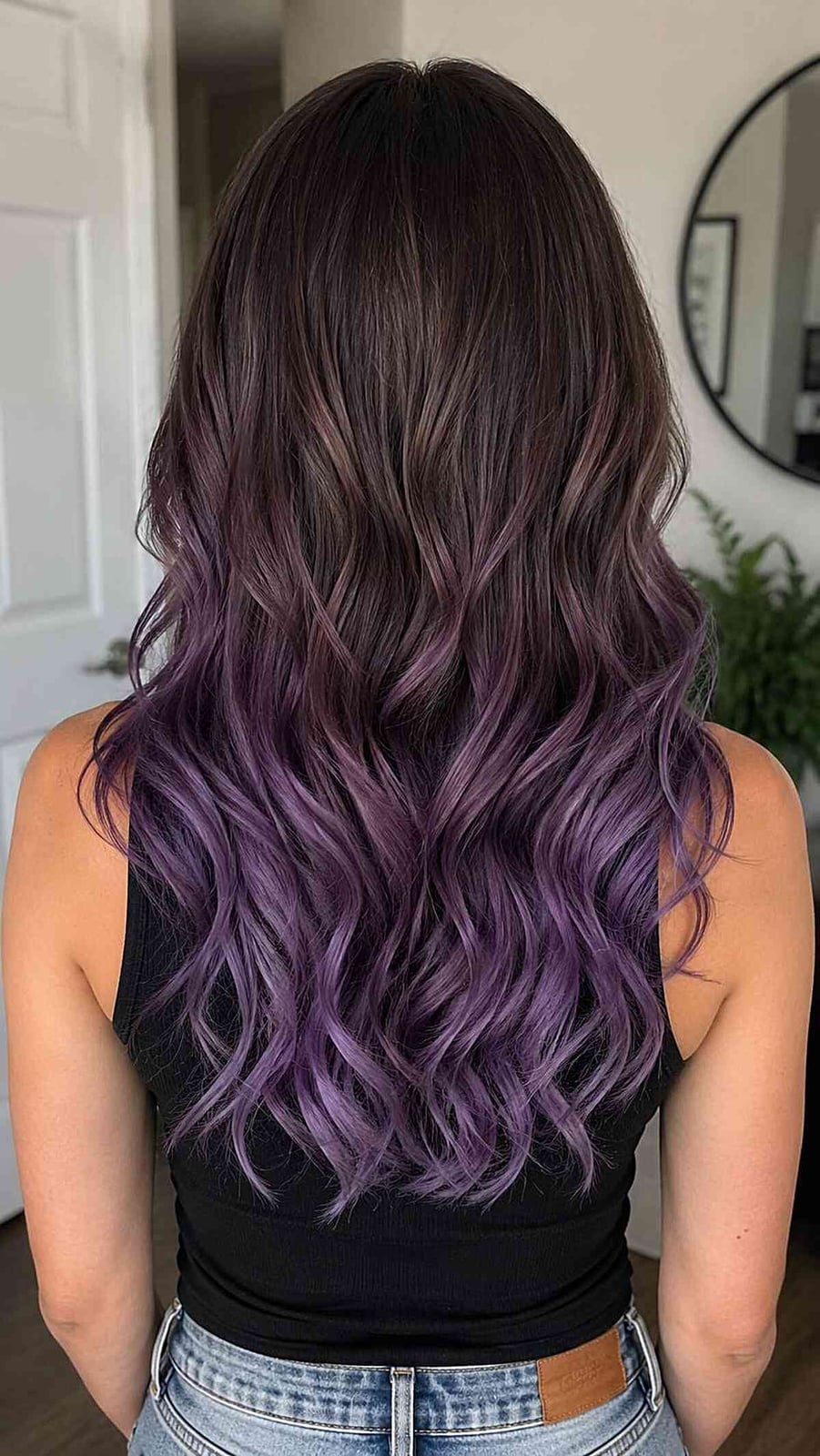
The precise observation about this design: the root color stays unaltered dark brown, and the vibrant purple starts about four inches down, so the grow-out is a non-issue. Mid-back length layers with soft waves and a middle parting give the purple enough surface area to appear dimensional. Thick, wavy hair works best here, because the layers prevent the color from pooling in one heavy block.
Ask your colorist for: mid-back length layers, dark base to vibrant purple ombre. Upkeep is straightforward: a color-depositing conditioner every second wash keeps the purple from turning toward magenta. The cut works for both everyday wear and creative occasions; the purple sits low enough that it can be pulled back into a low ponytail for a neutral office setting. Trim the layers every ten to twelve weeks to keep the ends healthy enough to hold the color.
Mid-Back Waves With Purple Lavender Ombre
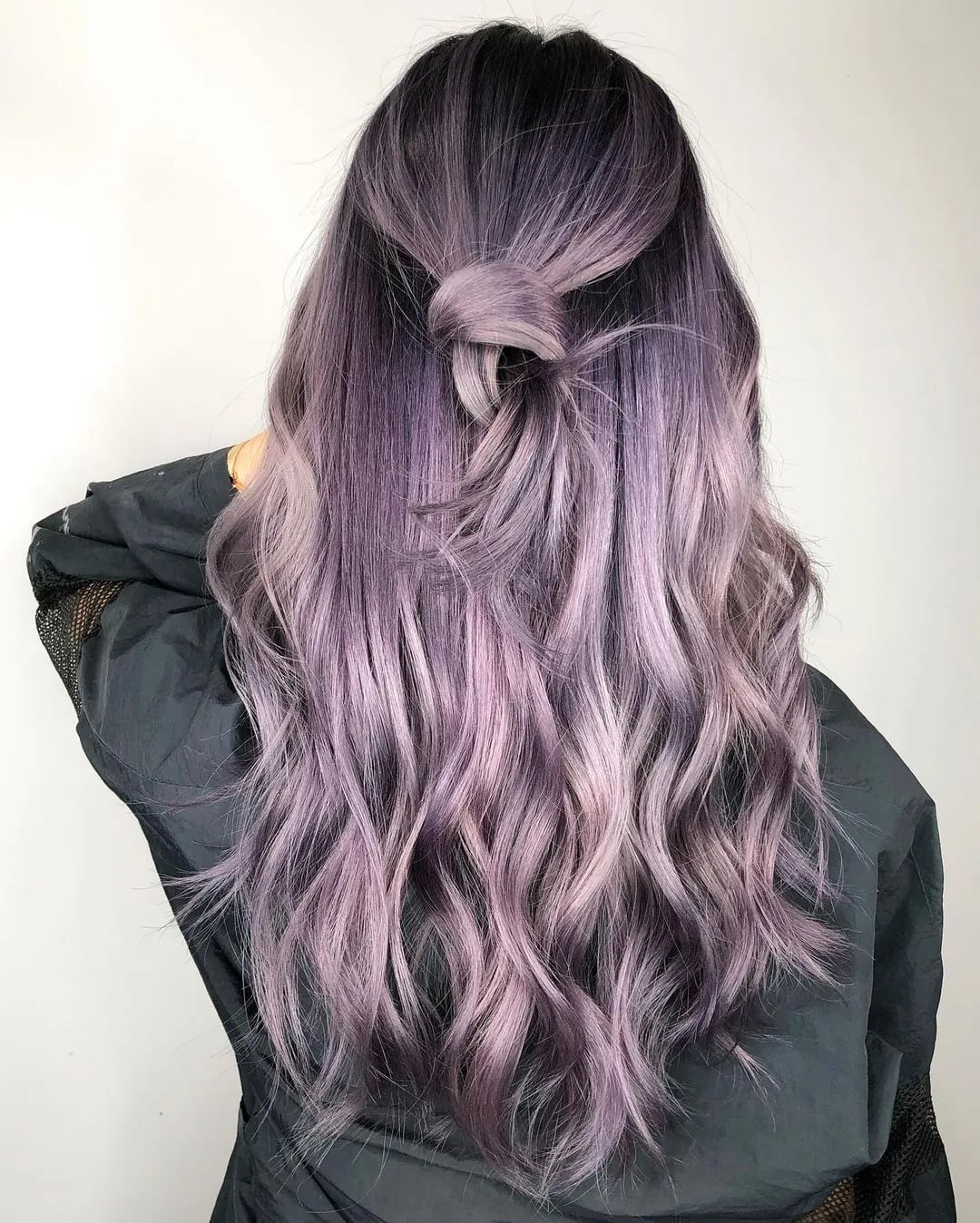
Medium density wavy hair with long layers and a middle parting shows the gradient from dark purple roots to lavender ends without the color overwhelming the texture. The half-up knot visible in the back view is a practical styling option: it exposes the lavender ends while the dark purple stays tucked. This color placement suits heart and oval faces because the darker root area draws the eye upward, and the lighter ends add movement without broadening the lower face.
Ask your colorist for: mid-back length layers, dark purple to lavender ombre. Medium density hair is the sweet spot here: too fine and the lavender washes out quickly, too thick and the gradient gets muddy. The cut works for festival season but also fits a casual setting. No trim is needed for the color to stay strong, but the layers benefit from a ten to twelve week schedule.
Collarbone Wavy Hair With Blue Ombre
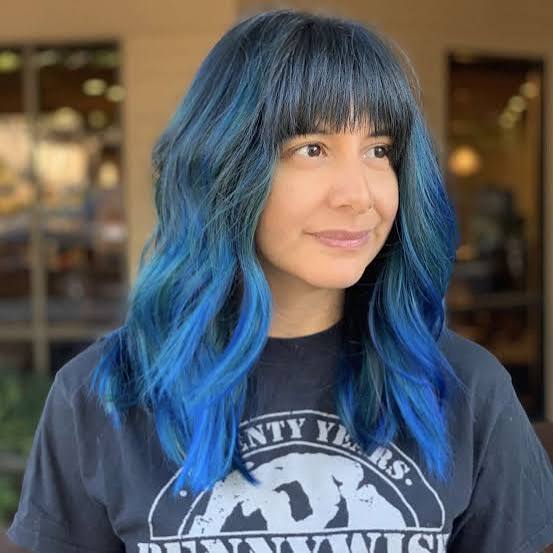
The middle parting and wavy blowout give the blue a glossy finish. Collarbone length keeps the whole effect wearable. Ask your colorist for: collarbone length, full fringe, dark base to blue ombre. Medium density wavy hair holds this kind of saturated tone best, and the full fringe works well for those who want to hide a high forehead. A color-depositing conditioner every other wash will keep the blue from fading into green.
Long Wavy Hair With Deep Red Ombre
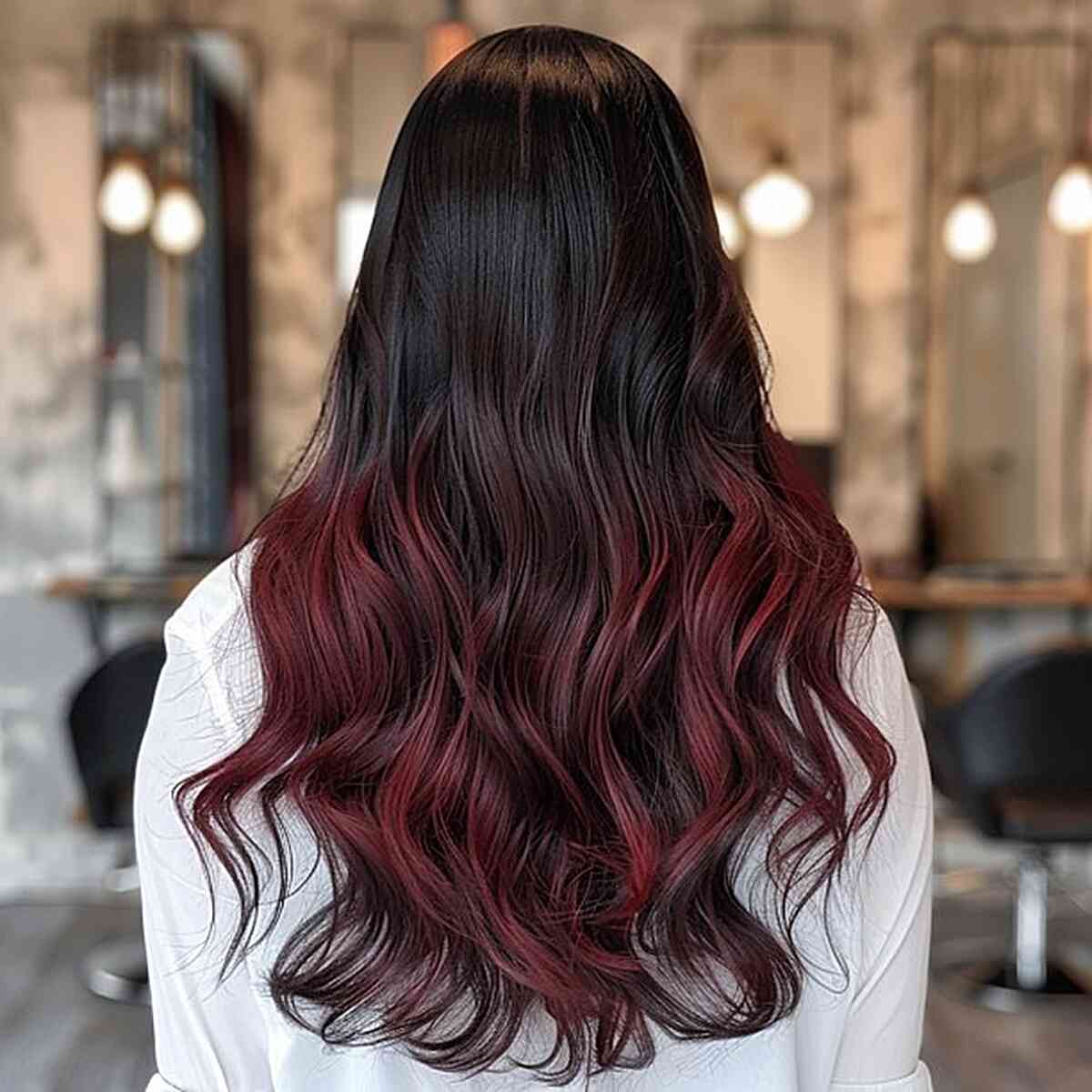
To achieve a deep red ombre that looks polished, start with a dark brown base and ask for the red to be concentrated on the last third of the length, with a soft melt instead of a hard line. The long layers here help the color move naturally with each wave. Ask your colorist for: long wavy hair, dark brown to deep red ombre. Thick, wavy hair at long length is the ideal canvas because the weight of the hair pulls the color down evenly. The back view shows how the red appears differently depending on the wave, that is the point.
- Specify a cool red tone to avoid pulling orange
- Request a root shadow that stays dark to extend grow-out time
- Ask for the red to be painted in a V-shape for natural depth
Very Long Hair With Platinum Blonde Ombre
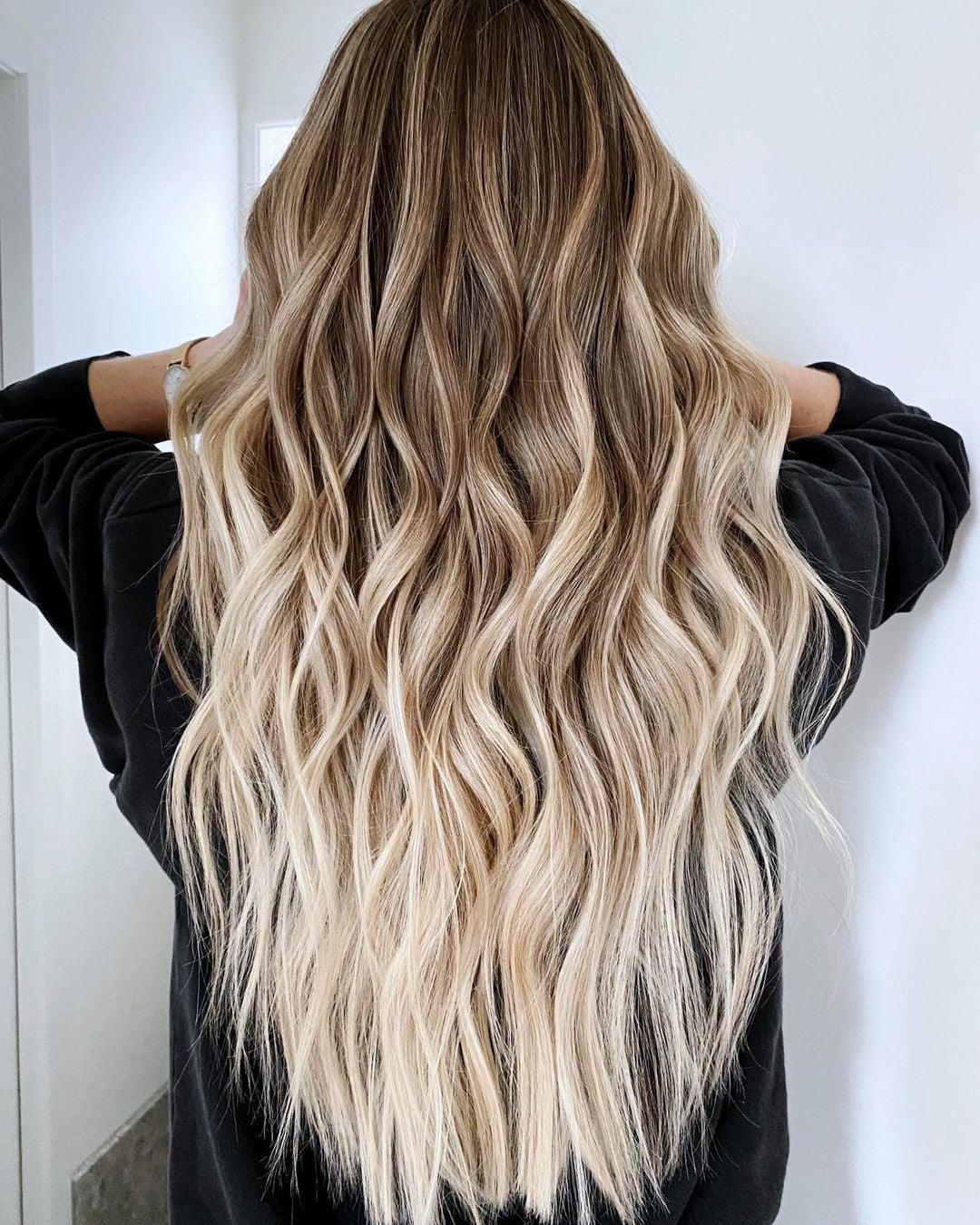
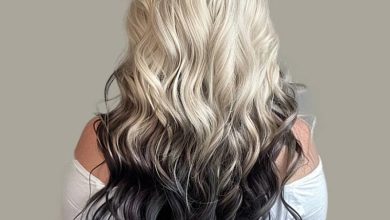
Platinum blonde ombre on very long hair looks dramatic, but the real question is the time it demands. A dark blonde base melting to bright platinum ends means the lighter sections are far from the root, so regrowth is less noticeable than an all-over platinum. The trade-off: the ends are porous and need regular deep conditioning. Ask your colorist for: very long hair, dark blonde to platinum blonde ombre. Thick, wavy hair at this length can handle the processing better than fine hair, but a purple toning mask once a week is necessary to keep the platinum from turning yellow.
For those who want the contrast without the upkeep, a warmer blonde at the ends is easier to maintain. The platinum version gives a sharper, more editorial finish, but it asks for a trim every twelve to fourteen weeks to keep the ends healthy enough to hold the tone.
Chin Length Bob With Dark Brown To Blonde
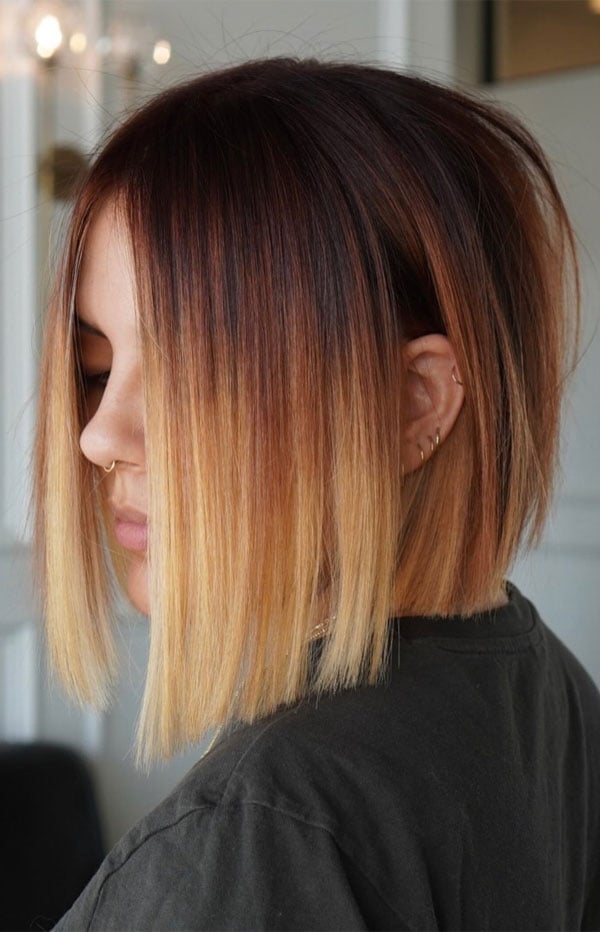
A blunt lob cut to collarbone length with a middle parting and straight styling puts the focus entirely on the color. The fiery copper blonde balayage here uses light blonde tones concentrated at the ends, with the dark base pulled through the top half for contrast. Fine, straight texture shows the color shift cleanly, with no waves to interrupt the line. Ask your colorist for: collarbone length, middle parting, fiery copper blonde balayage. This is a salon color. The balayage technique requires hand-painting that is difficult to replicate at home. The straight styling is simple: a heat protectant and a flat iron are enough to keep the finish sleek.
Mid-Back Balayage Ombre With Loose Waves
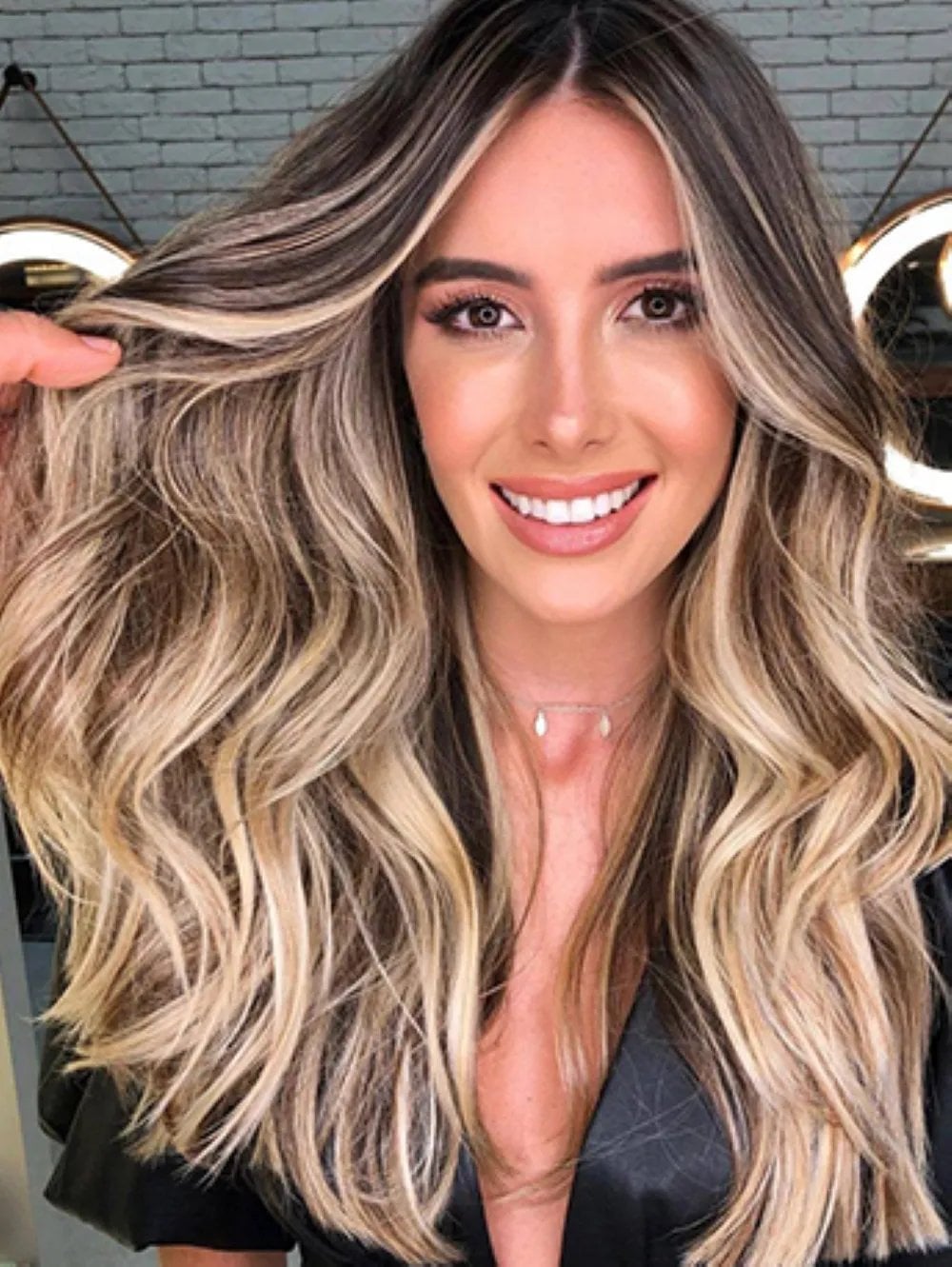
The seamless transition from dark brown to blonde here is the result of a balayage ombre technique where the color is painted in a graduated sweep instead of foiled in sections. The loose waves emphasize the gradient, with the lighter ends catching more light than the darker roots. Mid-back length gives enough canvas for the color to develop slowly along the length. Ask your colorist for: mid-back length, dark brown to blonde balayage ombre. Thick, wavy hair at this length holds the shape of a loose wave well, and the middle parting keeps the color balanced on both sides. A light hold spray is enough to keep the waves defined without stiffness.
This is a low-maintenance color in terms of regrowth: the dark base blends into the lighter ends naturally, so a toning appointment every eight to ten weeks is sufficient to refresh the blonde without a full redo.
Final Thoughts
For low maintenance, stick with a root shadow and a natural blonde or caramel tone that blends as it grows. For a bolder statement, go with a vivid hue or a higher contrast line near the jaw. Pick the transition point based on your trim schedule, not a trend.
- Trim the ends every 6-10 weeks to maintain shape and prevent split ends.
- Use color-safe shampoos and conditioners to preserve the ombre tones.
- Deep condition weekly to keep the lighter ends hydrated and glossy.
- Minimize heat styling; when necessary, use a heat protectant spray.
Ombre offers endless possibilities for personal expression.