You know that feeling when a single thought loops in your mind, replaying a conversation or worrying about something that hasn’t happened yet? That’s overthinking, and it can leave you feeling stuck and drained. This article breaks down practical, everyday strategies to help you calm your mind and break free from those repetitive thought patterns.

Key Takeaways
- Practice mindfulness daily to anchor your mind in the present moment and interrupt thought spirals.
- Set a designated 15-20 minute worry time each day to contain anxious thoughts.
- Shift from dwelling to problem-solving by asking if you can act on the concern.
- Engage in physical activity to redirect mental energy and break the overthinking cycle.
- Limit information overload by setting boundaries for news and social media consumption.
What is Overthinking and Why Does it Happen?
Overthinking is getting stuck in repetitive thought loops, either dwelling on past events (rumination) or worrying about future uncertainties. It’s often an attempt to gain control or find solutions, but it usually leads to feeling more stuck and can increase stress and anxiety. While some reflection is healthy, overthinking becomes problematic when it’s unproductive and interferes with daily life. Recognizing this pattern is the first step toward breaking it.
1. Practice Mindfulness Daily

Focus on the present moment to interrupt overthinking patterns. Engage your senses: notice what you see, hear, smell, taste, and feel right now. This sensory check-in pulls your mind away from spiraling thoughts and anchors you in the now.
- Start small: Try 5 minutes a day using a guided meditation app.
- Gradually increase: Add a minute or two each week as it becomes easier.
My tip: Set a daily reminder on your phone so you don’t forget your practice. Consistency matters more than duration, so keep it manageable from the start.
2. Set Aside Worry Time
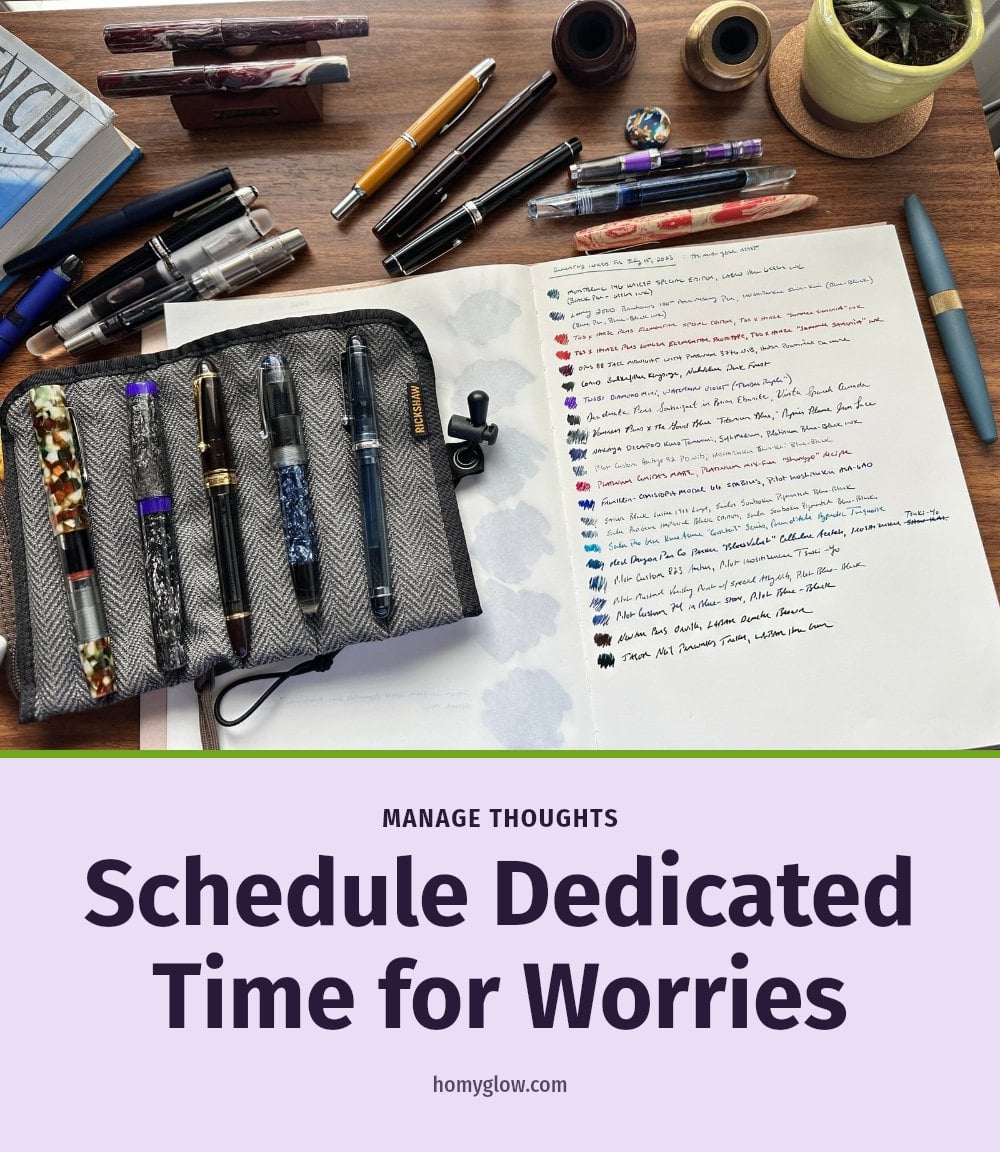
Dedicate 15-20 minutes each day to actively worry or ruminate. If an anxious thought comes outside this time, acknowledge it and tell yourself you’ll address it during your designated ‘worry time’. This helps contain anxious thoughts rather than letting them consume your entire day.
- Choose a consistent time: Pick a slot that works for you, like after lunch or before dinner.
- Write it down: Jot down the thought so you don’t forget to revisit it later.
Tip: Keep a small notebook just for this purpose to track recurring worries.
3. Get Moving with Physical Activity

Physical activity redirects mental energy and reduces overthinking. Anything that raises your heart rate works, even a brisk walk. Movement shifts focus from thoughts to your body, breaking the cycle.
- Start with a walk: A 10-minute brisk walk can clear your head and give you a mental reset.
- Try different options: Dancing, swimming, or cycling all work well to keep you engaged.
My tip: Find an activity you genuinely enjoy, making it easier to stick with consistently. I usually pair a podcast with my walk to keep it interesting.
4. Journal Your Thoughts
Writing down your thoughts can help externalize them, making them feel less overwhelming. It provides perspective and can help you identify patterns in your overthinking. Don’t censor yourself; just let the words flow onto the page. A journal or notebook works well for this, and you can do it anywhere.
- Externalize: Putting thoughts on paper gets them out of your head, reducing their intensity.
- Identify patterns: Review entries to spot recurring themes or triggers.
- No filters: Write freely without judging or editing. This is for you only.
5. Shift to Problem-Solving
When you catch yourself overthinking, ask: “Is this something I can act on?” If yes, break down the problem into small, actionable steps. For example, if you’re worried about a work deadline, list the next three tasks you can do. If no, acknowledge that it’s out of your control for now and try to redirect your focus. This shift from rumination to problem-solving can reduce the feeling of being stuck.
- Actionable? If yes, create a small task list.
- Not actionable? Accept it and move your attention elsewhere.
6. Engage in Distracting Activities

Sometimes a temporary but effective break from overthinking is all you need. Engage in hobbies or activities that fully capture your attention, like reading, painting, or playing an instrument. The goal is to immerse yourself in something else until the thought cycle breaks. This isn’t avoidance: it’s giving your brain a reset so you can return to the issue with a clearer mind.
- Choose wisely: Pick activities that require focus, not passive scrolling.
- Set a timer: Even 15 minutes of engagement can break the loop.
7. Challenge Negative Thoughts
Question the validity of your overthinking patterns. Ask yourself: “Is this thought truly factual, or is it an interpretation?” or “What’s the evidence for and against this thought?” This helps you gain perspective and reduces the power of overwhelming thoughts. Over time, this cognitive restructuring can make you less reactive to anxious thoughts.
- Fact vs. interpretation: Separate what is objectively true from what your mind adds.
- Evidence check: List proof for and against the thought to see it more clearly.
8. Practice Self-Compassion
It’s easy to be hard on yourself for overthinking, but that only adds to the stress. Treat yourself with the same kindness and understanding you would offer a close friend who is struggling.
- Name the feeling without judgment: Say to yourself, “I’m noticing I’m overthinking right now.” That simple acknowledgment can soften the spiral.
- Remember you’re not alone: Overthinking is a common human experience. You’re doing your best with the tools you have, and that’s enough.
9. Limit Information Overload
Constant exposure to news, social media, and other stimuli can fuel overthinking. Set boundaries for screen time and news consumption to quiet the mental noise.
Tip: Designate specific times to check social media or news, rather than passively scrolling throughout the day. For example, allow yourself 10 minutes in the morning and 10 minutes in the evening. This prevents the constant drip of information that feeds worry.
10. Connect with Others

Isolation can make overthinking feel more intense. Share your feelings with trusted friends or family members. Sometimes just vocalizing your thoughts can make them feel less overwhelming and help you gain new perspectives.
- Pick one person: Reach out to a friend who listens without offering immediate solutions.
- Be specific: Say, “I’ve been stuck in a thought loop about [topic]. Can I talk it out with you?”
11. Create a Wind-Down Routine
Overthinking often spikes at night when your mind is less distracted. Establish a calming routine before bed, like reading, taking a warm bath, or gentle stretching. The key is consistency: your brain learns to associate these activities with winding down.
Pro move: Avoid screens and stimulating activities for at least an hour before sleep. Blue light and fast-paced content keep your brain alert, making it harder to break the thought cycle.
When to Seek Professional Help
If overthinking is causing significant distress or getting in the way of your work, relationships, or sleep, it may be time to talk to a professional. The same goes if you notice it paired with symptoms like persistent sadness, constant worry, or panic attacks. Using alcohol, drugs, or other unhealthy habits to cope with your thoughts is another clear signal to reach out.
A mental health professional can help you understand what is driving the cycle and offer structured approaches. Cognitive Behavioral Therapy (CBT) is one recognized method that many people find useful for breaking unproductive thought patterns. You do not have to figure this out alone, and asking for help is a practical step, not a failure.
Frequently Asked Questions
What is the difference between reflection and overthinking?
Reflection is a purposeful and constructive process where you learn from past experiences or plan for the future. Overthinking, on the other hand, is repetitive, unproductive, and often negative, leaving you feeling more stuck and anxious rather than gaining clarity.
Can overthinking be a positive trait?
While some people may see overthinking as thoroughness, it’s generally not a positive trait because it leads to increased stress and inaction. True careful thinking involves analyzing options and making decisions, while overthinking keeps you trapped in a loop without resolution.
How long does it take to stop overthinking?
There is no set timeline, but many people find that practicing strategies like mindfulness and worry time consistently for a few weeks can lead to noticeable improvements. Long-term change takes sustained effort, and it’s normal to have ups and downs along the way.
Is overthinking a symptom of anxiety?
Overthinking is closely linked to anxiety and can be a symptom of an anxiety disorder. It often involves excessive worry about future events or rumination on past ones. If overthinking is causing significant distress, it’s a good idea to speak with a mental health professional.
Final Thoughts
Start with just one strategy that feels manageable, like a five-minute mindfulness check-in or a short walk. Consistency is key, and you may notice initial improvements within a few weeks. Remember, the goal isn’t to eliminate all worries but to build a healthier relationship with your thoughts.
This article provides general information and is not a substitute for professional medical or mental health advice. If you are experiencing persistent overthinking that interferes with your daily life, please consult a qualified mental health professional.