Feeling tired all the time, dealing with brain fog, or noticing a strange tingling in your hands and feet? These can be signs that your vitamin B12 levels are low. B12 is an essential nutrient your body needs for red blood cell production, nerve health, and DNA synthesis, but it can’t make it on its own. This article covers the common signs of B12 deficiency, the best food sources, who’s at higher risk, and how to get diagnosed and treated.

Key Takeaways
- B12 is found mainly in animal products like meat, fish, eggs, and dairy.
- Vegetarians and vegans should eat fortified foods or take supplements regularly.
- Common deficiency signs include fatigue, weakness, numbness, and memory problems.
- Older adults, people with GI conditions, and those on metformin are at higher risk.
- A blood test is the only way to confirm a deficiency; see a doctor if you suspect one.
What is Vitamin B12 and Why It Matters
Vitamin B12, also called cobalamin, is a water-soluble vitamin your body needs for red blood cell formation, DNA synthesis, and nerve function. Your body cannot produce B12 on its own, so you must get it from food or supplements. When levels drop too low, deficiency can lead to fatigue, weakness, and neurological issues.
1. Persistent Fatigue and Weakness

Feeling unusually tired and weak, even after a full night’s sleep, is one of the earliest signs of low B12. This happens because B12 is essential for producing red blood cells, which carry oxygen throughout your body. Without enough B12, your cells don’t get enough oxygen, and your energy takes a hit.
2. Numbness and Tingling Sensations
If you notice a ‘pins and needles’ sensation in your hands or feet, it may be linked to B12 deficiency affecting your nervous system. B12 is vital for maintaining the myelin sheath, the protective coating around your nerves. Damage to this sheath can trigger those unusual tingling feelings.
3. Memory Problems and Brain Fog
Difficulty concentrating, memory lapses, or a general brain fog can be subtle clues your B12 is low. B12 plays a role in cognitive function, and a deficiency may impact your mental clarity and sharpness. If these symptoms persist, it’s worth discussing with a doctor.
4. Changes in Mood and Irritability
Mood changes can creep up with B12 deficiency. Some people notice they feel more irritable, anxious, or even down without a clear reason. B12 is involved in synthesizing neurotransmitters like serotonin and dopamine, which help regulate mood. While low B12 isn’t the only cause of mood shifts, it’s worth considering if you’ve been feeling off-balance lately.
Tip: If your mood has changed and you’re also dealing with fatigue or brain fog, mention all of these to your doctor. They can help connect the dots with a simple blood test.
5. Pale or Jaundiced Skin

Pale skin that seems to lack its usual color, or a slight yellow tint, can point to low B12. This happens because a deficiency may lead to megaloblastic anemia, a condition where your body produces fewer, larger, and paler red blood cells. Those cells don’t carry oxygen as efficiently, which shows up on your skin.
If the skin looks slightly yellow, that’s jaundice, and it comes from red blood cells breaking down faster than normal. The yellow is bilirubin, a byproduct of that breakdown. Not everyone with B12 deficiency sees this, but it’s a visible clue worth mentioning to your doctor.
6. Sore, Red Tongue (Glossitis)
A smooth, beefy-red, and sometimes painful tongue is a surprising but real sign of low B12. This condition, called glossitis, happens because the cells on your tongue turn over rapidly and need B12 for DNA synthesis. Without enough B12, those cells can’t form properly, leaving your tongue looking red, swollen, and smooth instead of bumpy.
My tip: If your tongue looks redder than usual or feels sore, don’t assume it’s just from hot food. Mention it to your doctor, especially if you have other B12 symptoms like fatigue or tingling.
7. Animal Products: Your Primary Source

Animal products are your most dependable source of B12, but portion sizes matter. Lean meats like beef and pork, poultry such as chicken and turkey, and fish like salmon and tuna all contain B12, though amounts vary per serving. Eggs and dairy (milk, yogurt, cheese) also contribute, making them valuable for omnivores.
- Beef and pork: A 3-ounce serving of cooked beef provides about 1.5 mcg, so you may need more than one serving to hit the 2.4 mcg daily target.
- Salmon and tuna: A 3-ounce serving of cooked salmon has roughly 4.8 mcg, which covers the daily need, while tuna offers about 2.5 mcg, close but not quite enough alone.
- Eggs and dairy: One large egg has 0.6 mcg, and a cup of milk adds about 1.2 mcg, so combine them with other sources across meals.
My tip: Spread your intake across the day, since your body absorbs B12 better in smaller, more frequent amounts. If you rely on animal products, aim for variety rather than one large portion.
8. Fortified Plant-Based Foods

For vegetarians and vegans, natural B12 sources are scarce. Look for fortified plant milks (soy, almond, oat), breakfast cereals, and nutritional yeast. These products have B12 added during processing, but they may not provide enough on their own to meet daily needs.
Tip: Always check the nutrition label. Not all plant milks or cereals are fortified, and the amount can vary. Consider combining fortified foods with a B12 supplement to ensure adequate intake, especially if you rely solely on plant-based options.
9. B12 Supplements and Injections
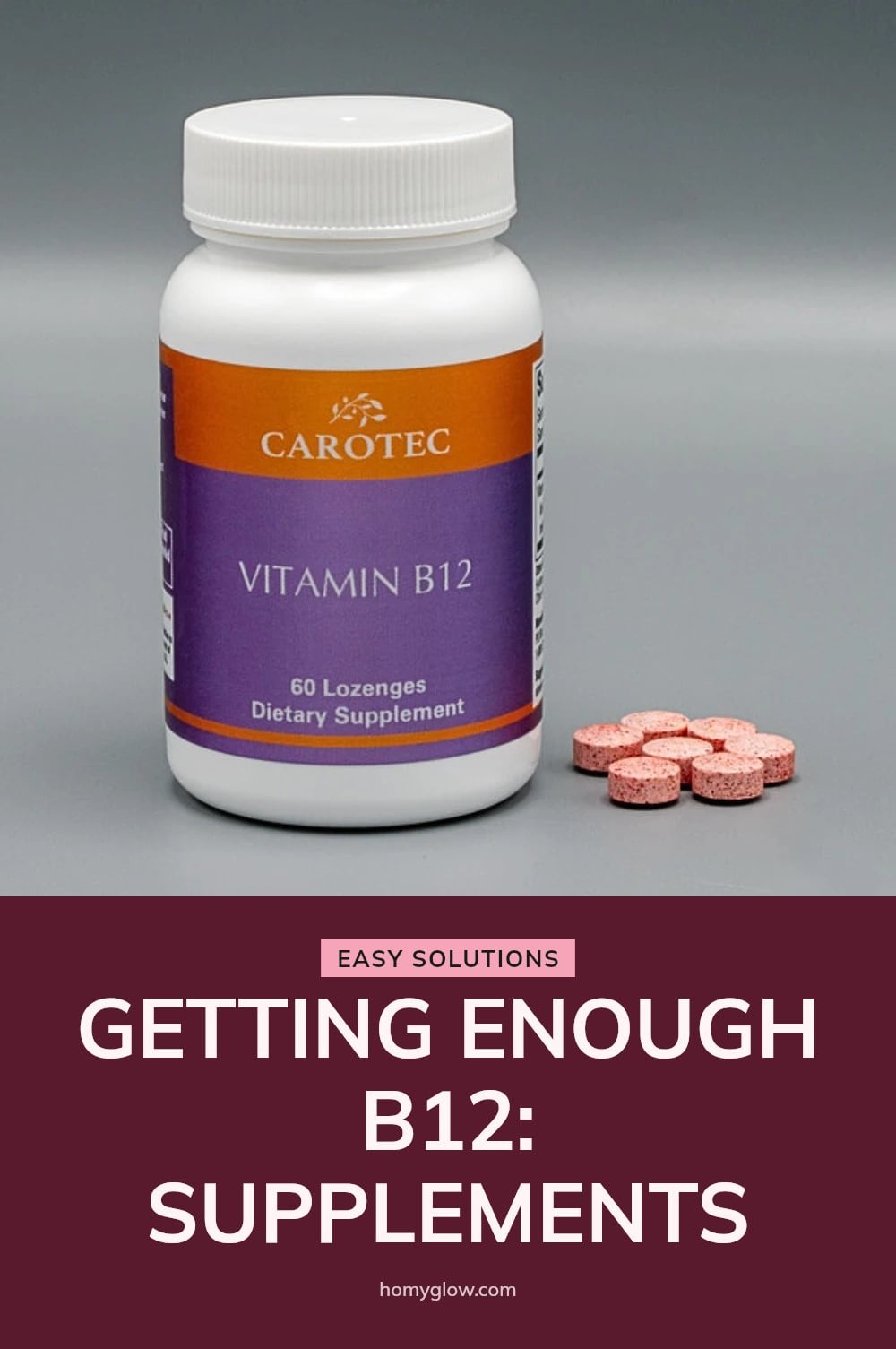
When diet falls short, supplements can fill the gap. You’ll find B12 in pill form (cyanocobalamin or methylcobalamin) and sublingual tablets that dissolve under your tongue. Both work well for most people, but your doctor should confirm the right form and dosage for your situation, especially if you’re vegetarian or vegan.
Pro move: For severe deficiencies or absorption problems, your doctor may recommend B12 injections. These bypass the digestive system entirely, delivering the vitamin directly into your muscle. If you have absorption issues or follow a plant-based diet, ask your healthcare provider about the best approach for you.
10. Who is at Higher Risk?
Some groups are more likely to develop B12 deficiency. Older adults often have reduced stomach acid, which impairs absorption. Vegetarians and vegans may lack dietary sources entirely.
People with gastrointestinal conditions like Crohn’s disease or celiac disease struggle to absorb B12, as do those who’ve had weight-loss surgery. Even a common diabetes medication, metformin, can interfere with B12 absorption over time.
11. Getting Diagnosed and Treated
A simple blood test can confirm whether your B12 levels are low. If you have symptoms like fatigue or neurological issues, or fall into a high-risk group, talk to your doctor about getting tested.
Treatment typically involves B12 supplements or injections, with the dose and form tailored to your needs. Early treatment is important to prevent long-term nerve damage. Never self-treat without professional advice.
When to Consult a Healthcare Professional
My tip: See a doctor if you have persistent fatigue, weakness, or any neurological symptoms like numbness or tingling. These can be signs of B12 deficiency, but they also overlap with other serious conditions, so a proper diagnosis is essential.
If you are a vegetarian or vegan and have not been regularly supplementing B12, schedule a blood test. The same goes if you are in a high-risk group, such as an older adult, someone with a gastrointestinal condition like Crohn’s or celiac disease, or if you take metformin.
Caution: If you are already taking B12 supplements and your symptoms are not improving or are worsening, do not adjust your dose on your own. Talk to your healthcare provider to rule out other causes or to adjust your treatment plan.
Frequently Asked Questions
What is the best form of B12 to take?
Both cyanocobalamin and methylcobalamin are effective forms of B12 in supplements. Cyanocobalamin is common and stable, while methylcobalamin is the active form your body uses directly. The best choice depends on your needs and what your doctor recommends. For absorption issues, injections may be more effective than pills.
Can B12 deficiency cause anxiety?
Yes, low B12 can affect your mood. B12 is involved in making neurotransmitters like serotonin and dopamine, which help regulate mood. Some people with a deficiency report feeling anxious, irritable, or down. If you notice mood changes along with other symptoms, it’s worth discussing with a doctor.
How long does it take to recover from B12 deficiency?
Recovery time varies. With treatment, many people start to feel better within a few weeks, but full improvement can take several months, especially if neurological symptoms are present. Your doctor will monitor your levels and adjust treatment as needed. Be patient and follow their guidance.
Is B12 deficiency hereditary?
Some causes of B12 deficiency can run in families. Pernicious anemia, where the body can’t absorb B12 due to a lack of intrinsic factor, has a genetic component. If you have a family history of this condition, you may be at higher risk. A blood test can help determine if you’re affected.
Can B12 deficiency affect your hair?
While not one of the most common signs, B12 deficiency can contribute to hair changes. Since B12 is important for cell division and red blood cell production, a deficiency may affect hair follicle health and lead to thinning. If you notice hair loss along with other symptoms, see a doctor for evaluation.
Final Thoughts
If you’re experiencing persistent fatigue, weakness, or neurological symptoms like numbness or tingling, don’t brush them off. My tip: talk to your doctor about getting a B12 blood test. Early diagnosis can prevent more serious issues, and treatment with supplements or injections often brings improvement within weeks to months. Remember, B12 deficiency is manageable, but only a healthcare professional can guide you to the right approach.
This article provides general information and is not a substitute for professional medical advice. If you suspect a B12 deficiency or have persistent symptoms, consult a doctor or qualified healthcare provider for proper diagnosis and treatment. Do not self-diagnose or change your medication without medical guidance.